iHEALTH Winter School 2025 Brought Together 50 Students from Universities Across Chile
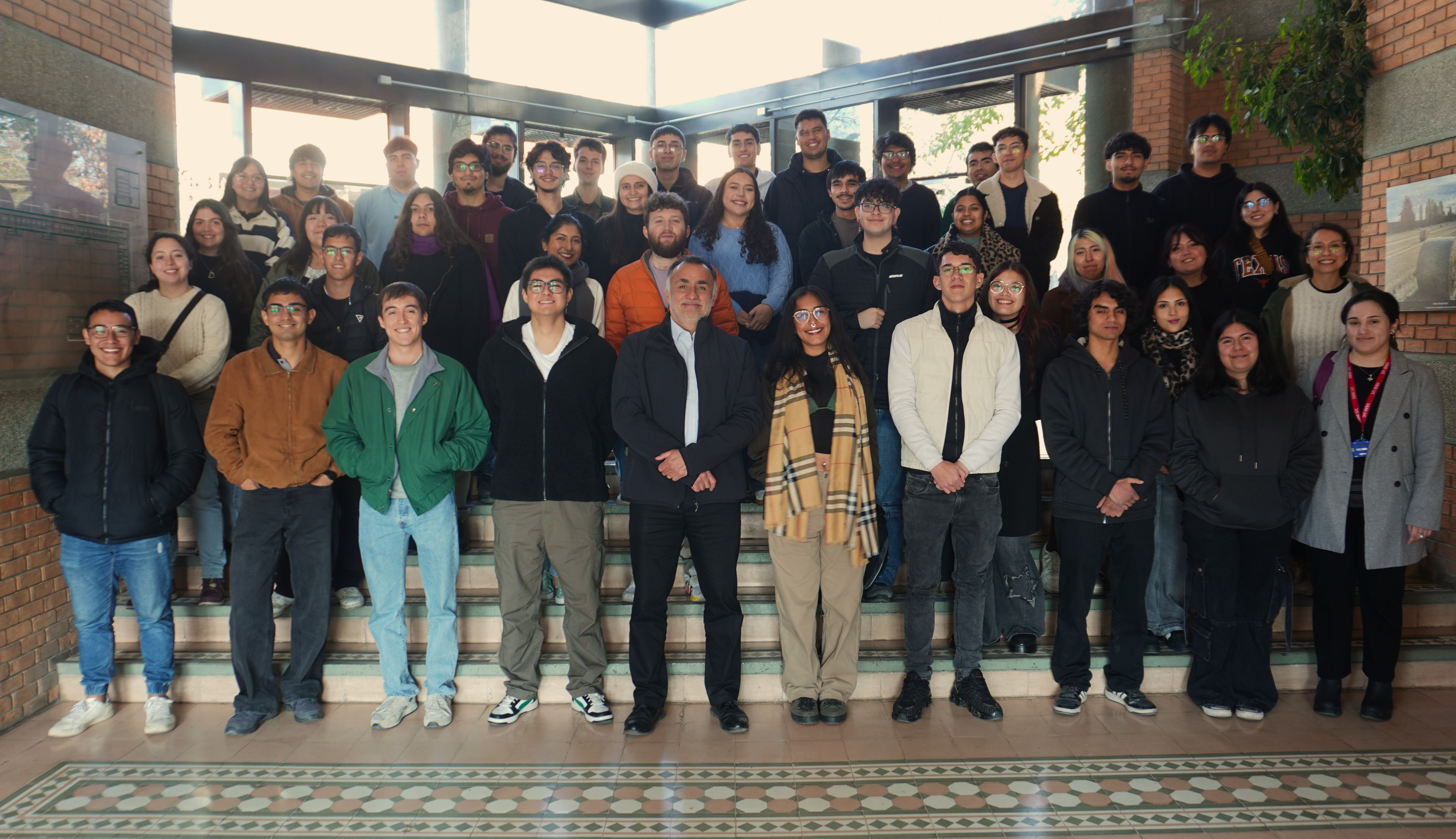
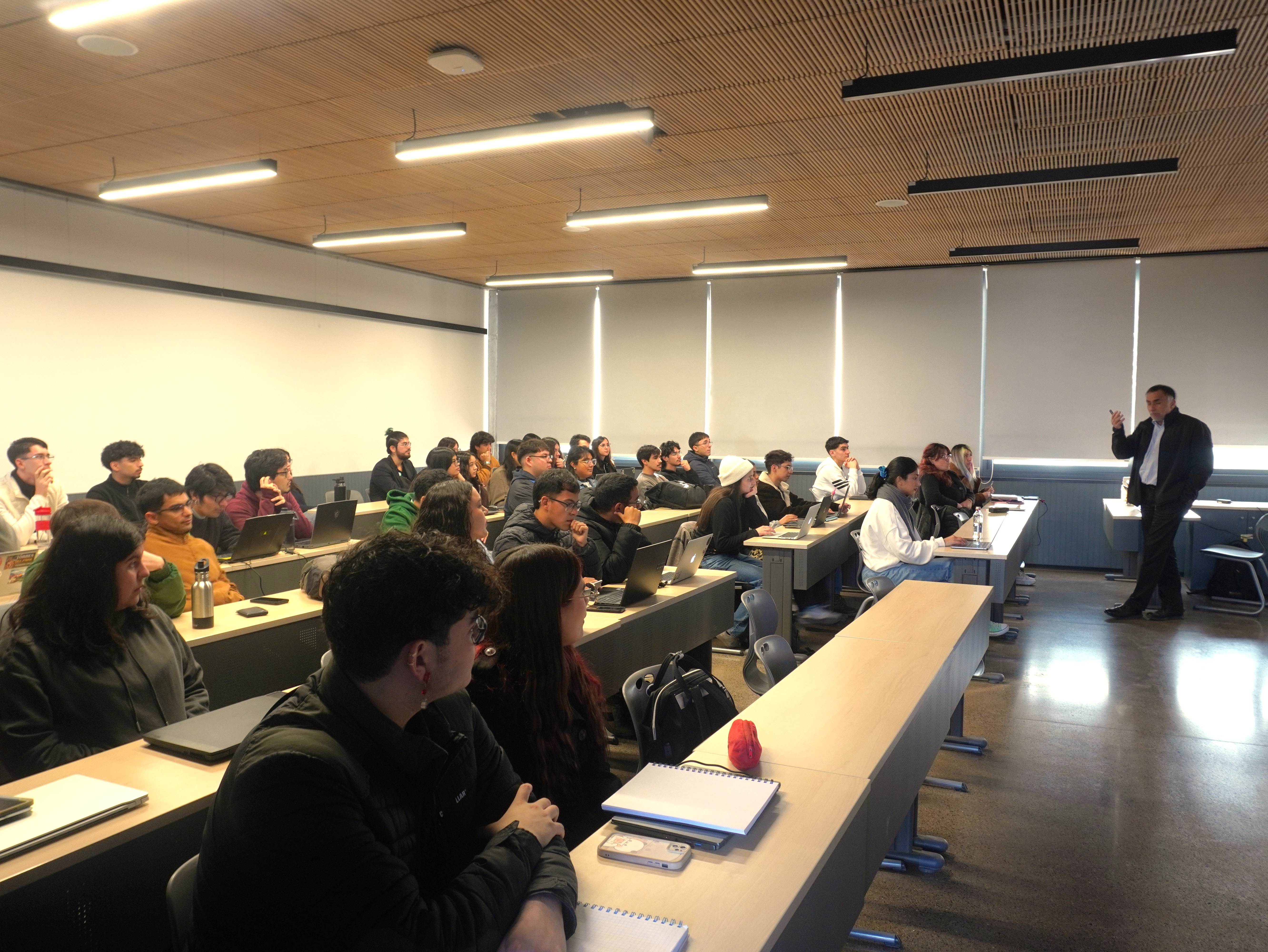
On July 24 and 25, 2025, the San Joaquín Campus of Pontificia Universidad Católica de Chile hosted the first Winter School on Artificial Intelligence Applied to Health, organized by the Millennium Institute iHEALTH. The initiative received more than 100 applications from students nationwide, selecting 50 participants from various universities.
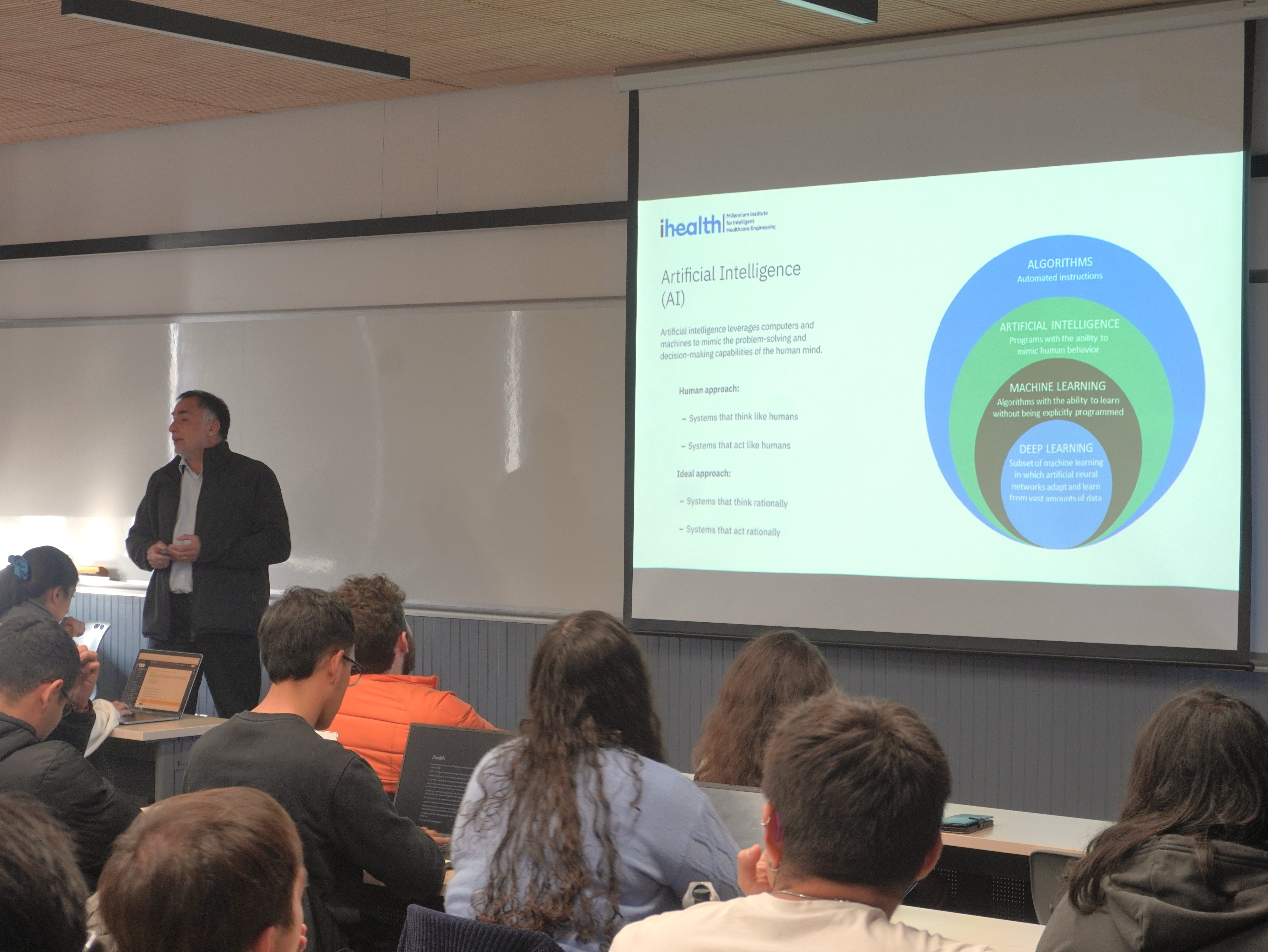
The event was inaugurated by Dr. Marcelo Andia, professor at the UC School of Medicine and Deputy Director of iHEALTH, who delivered the welcoming remarks and taught the opening lecture, “The Role of AI in Health.” His presentation explored concrete applications of this technology—based on research conducted at the institute—in diagnosis, treatment, and support for clinical decision-making.
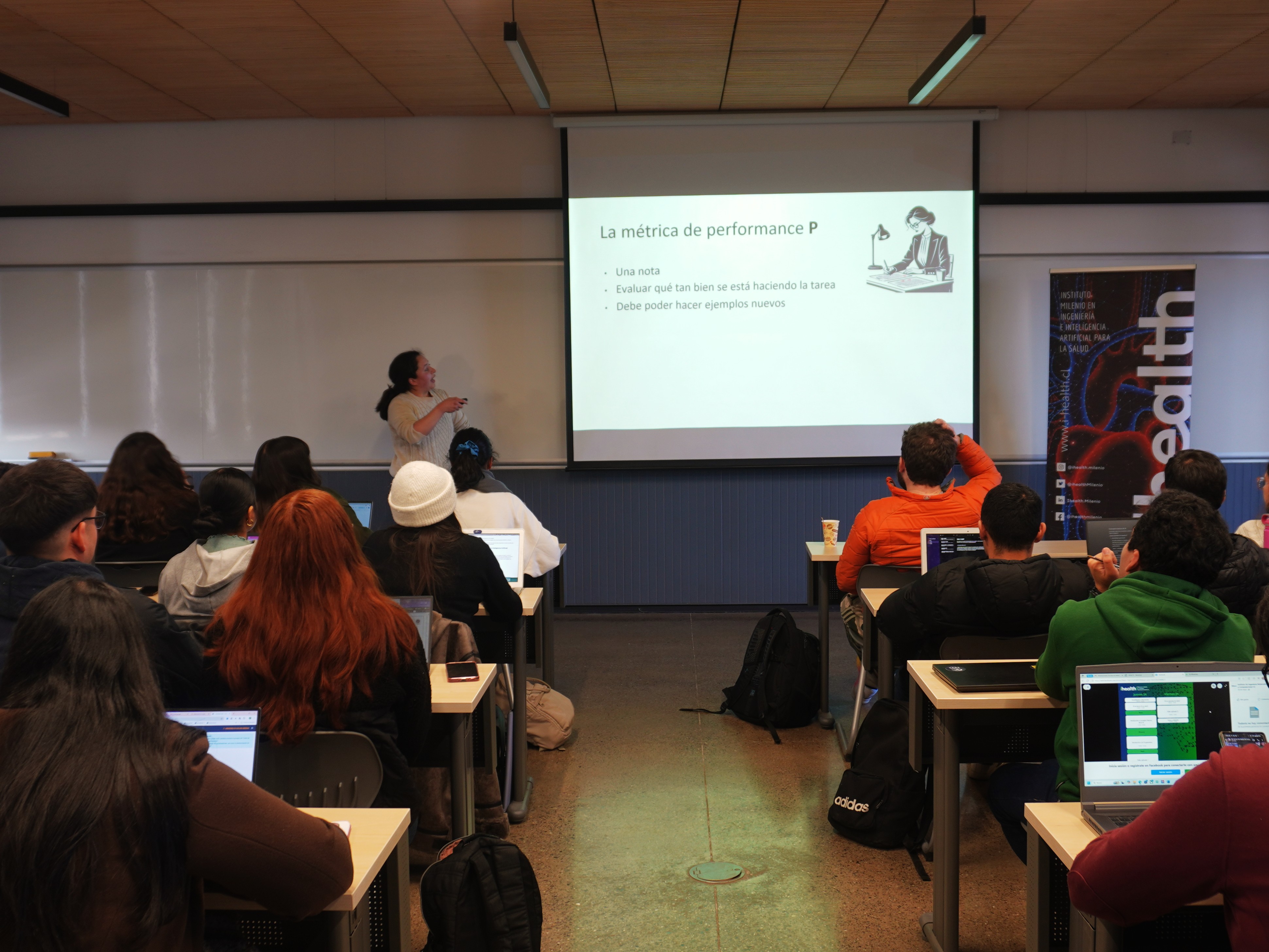
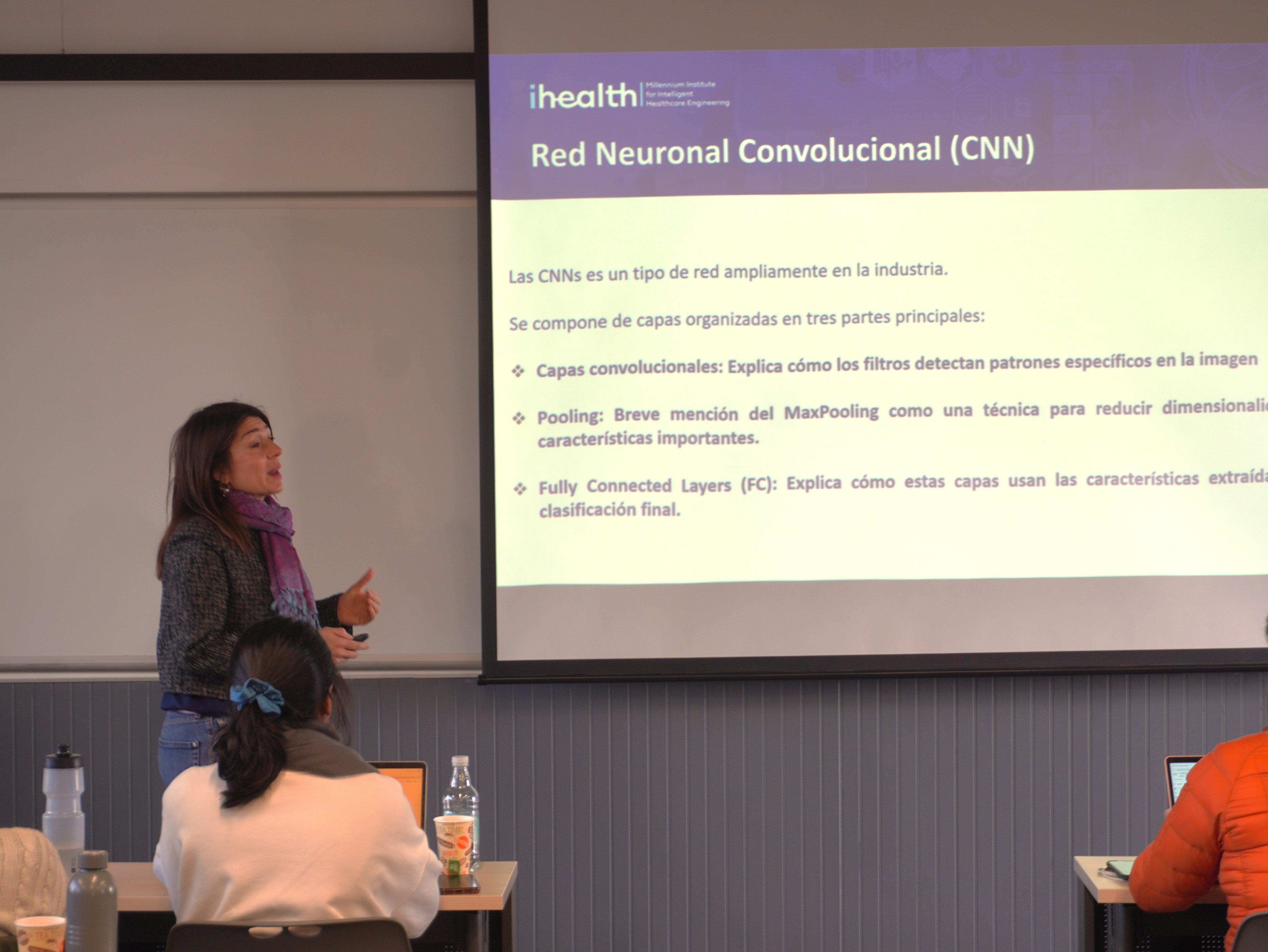
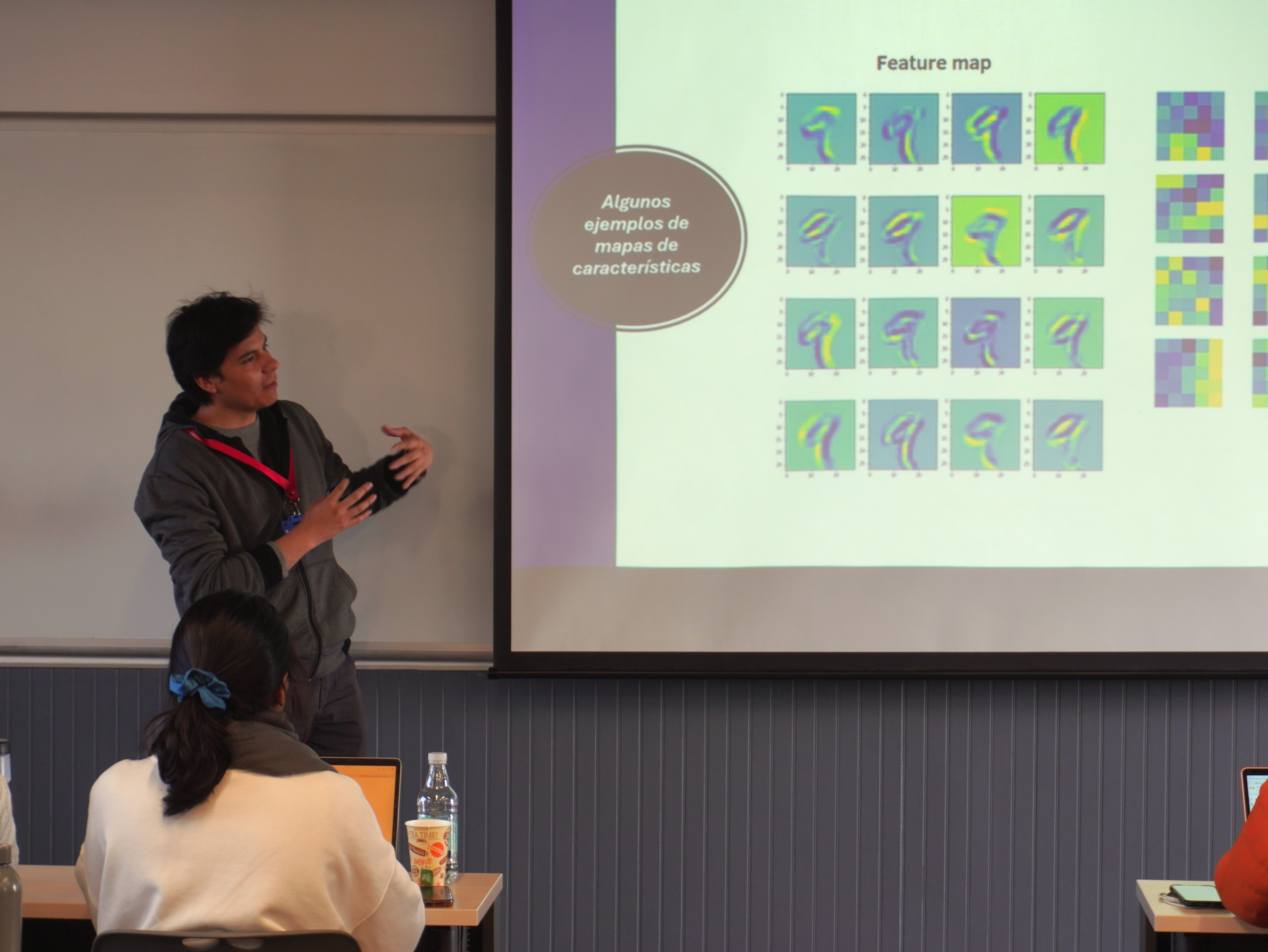
Later, Tabita Catalán, PhD student in Electrical Engineering at UC, presented the lecture “Introduction to Basic AI Concepts,” providing attendees with a clear overview of the fundamental principles of artificial intelligence required for its applications in health.
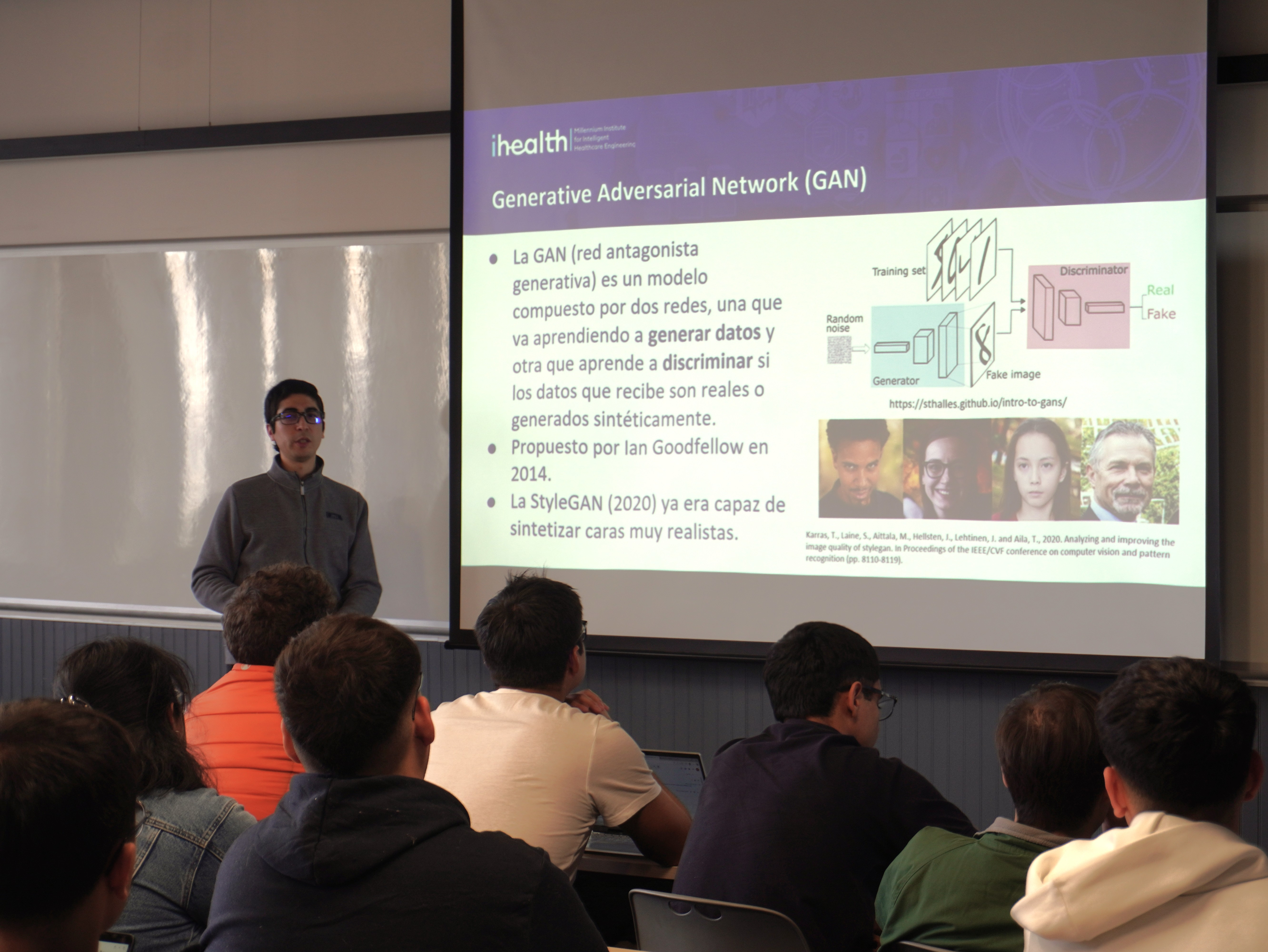
The program continued with Pablo Messina, PhD student in Computer Science at UC, who delivered “Introduction to Generative AI,” highlighting its potential and limitations in creating new content for medical research, such as generating clinical reports from medical images.
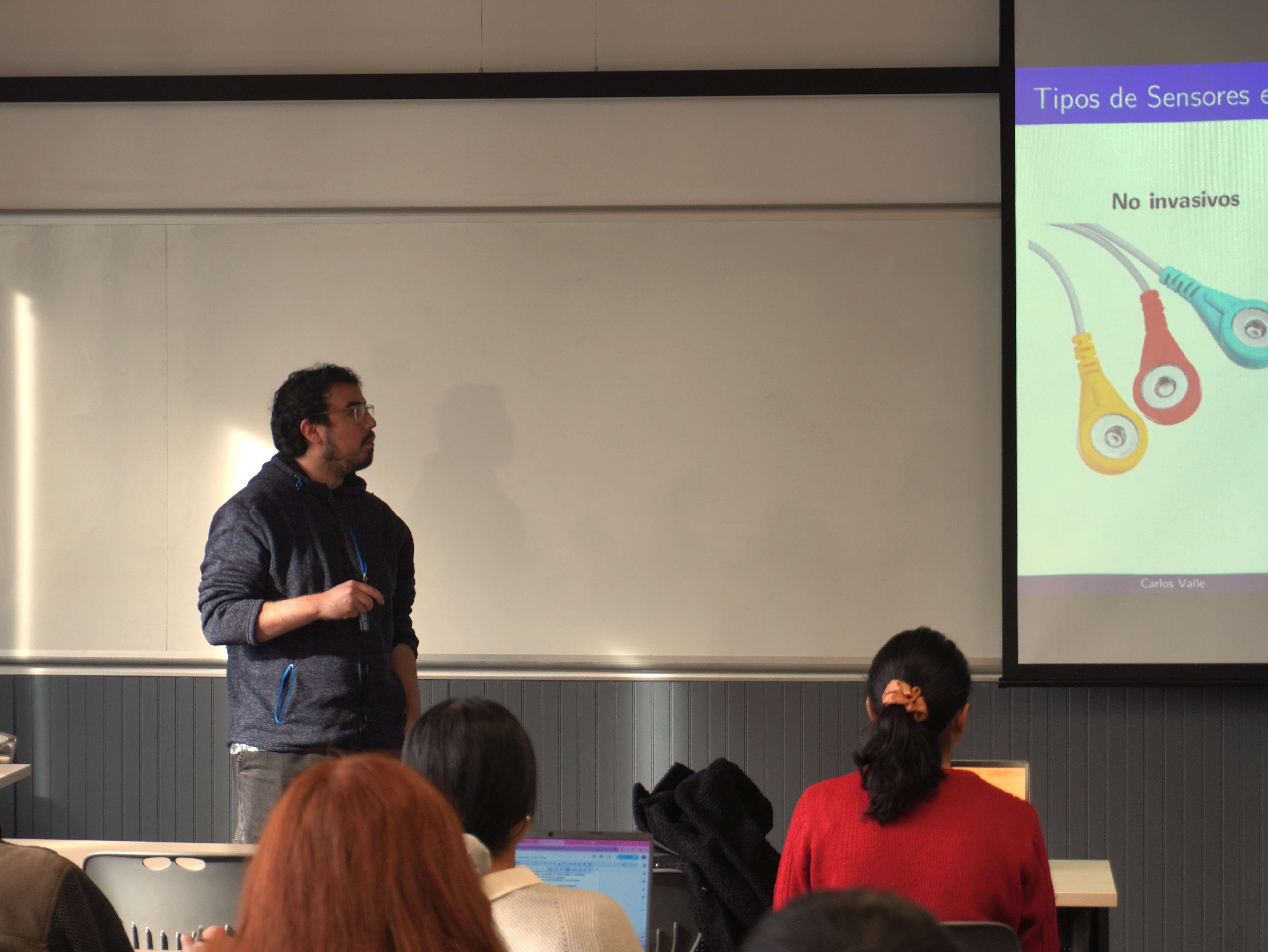
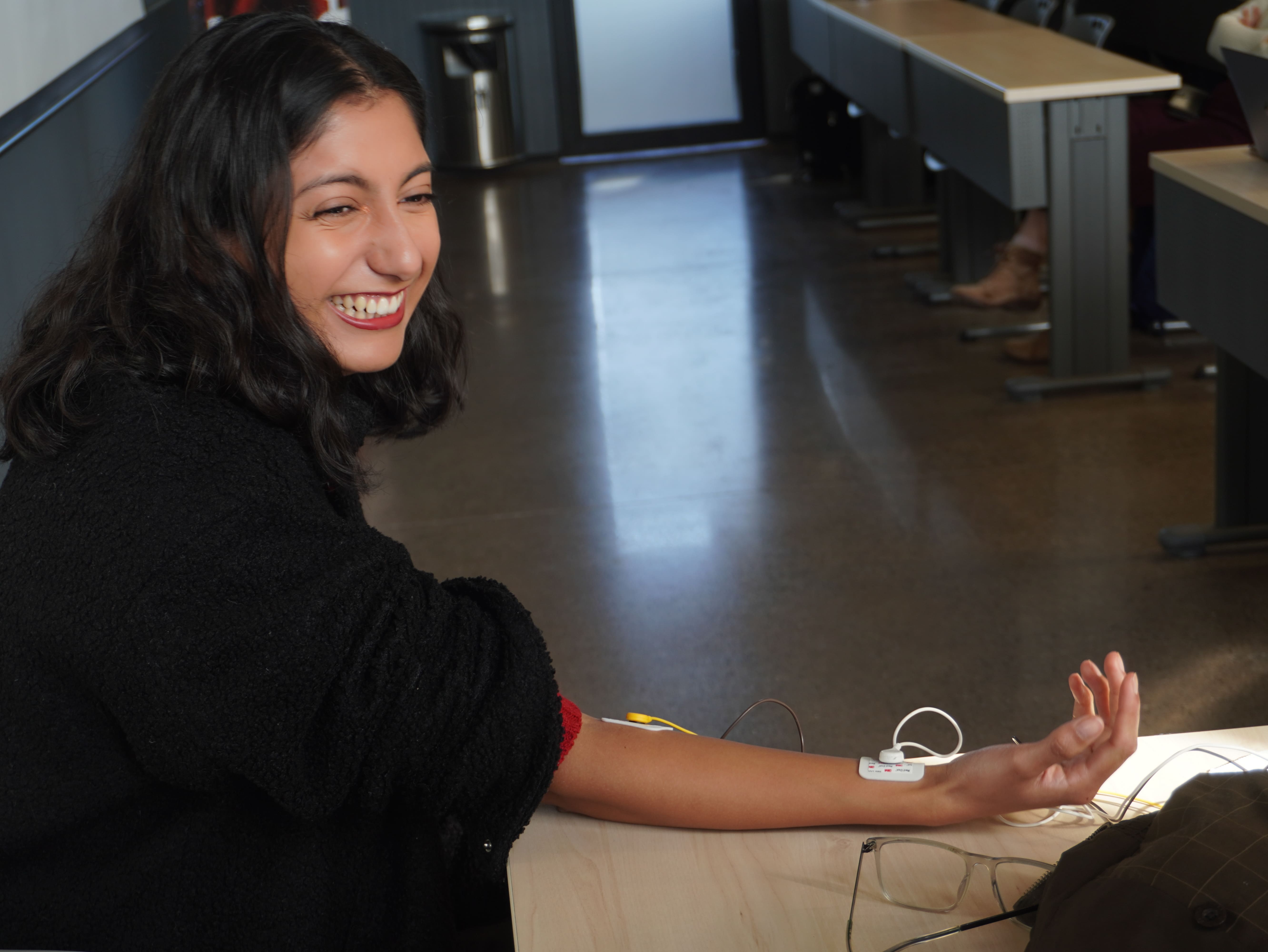
Dr. Carlos Valle, postdoctoral researcher at iHEALTH, led the session “AI in Health Sensors,” which included a live demonstration in which students, using electromyography, were able to control the famous Google Chrome dinosaur game through the nervous signals from their forearm muscles.
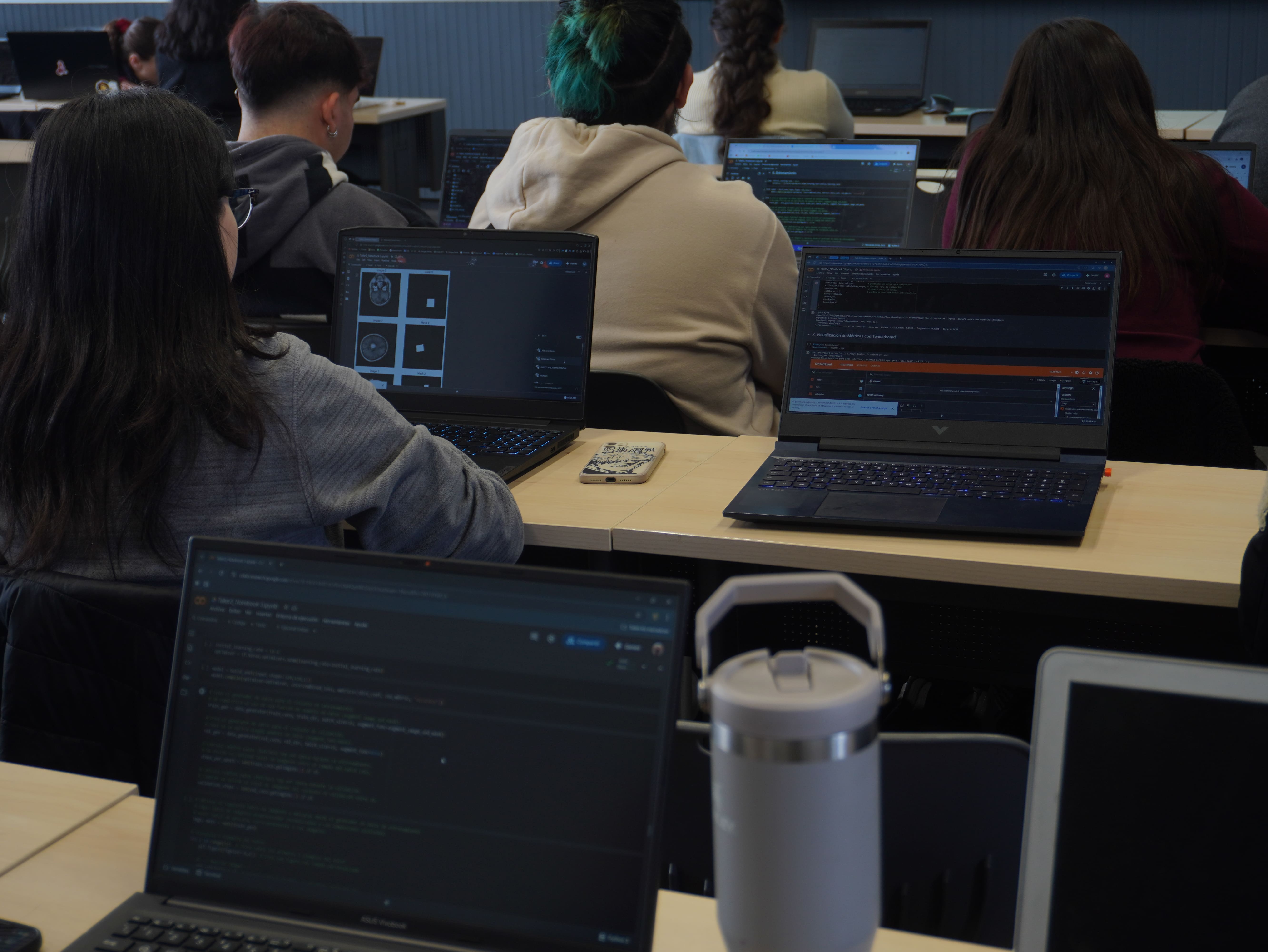
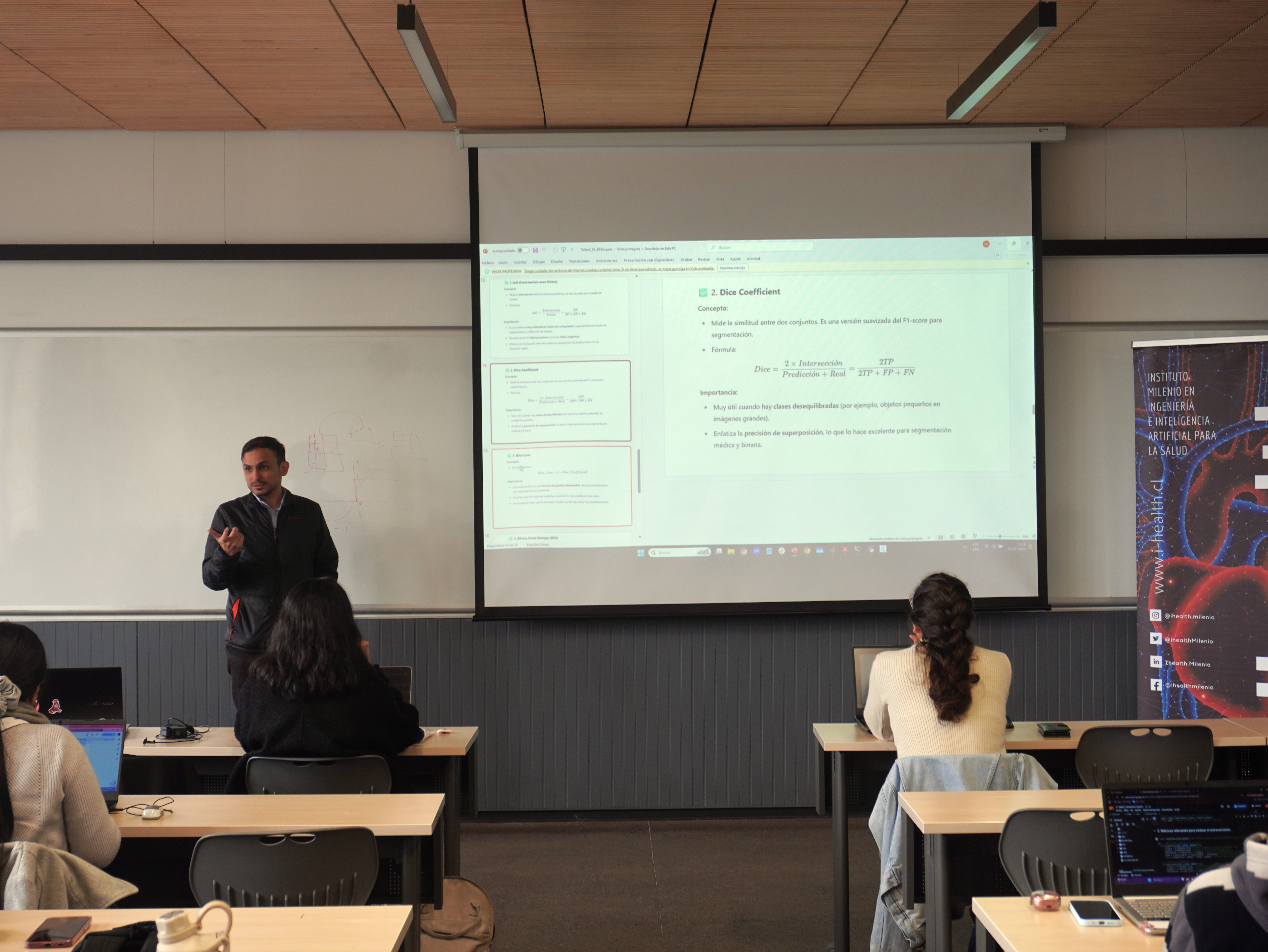
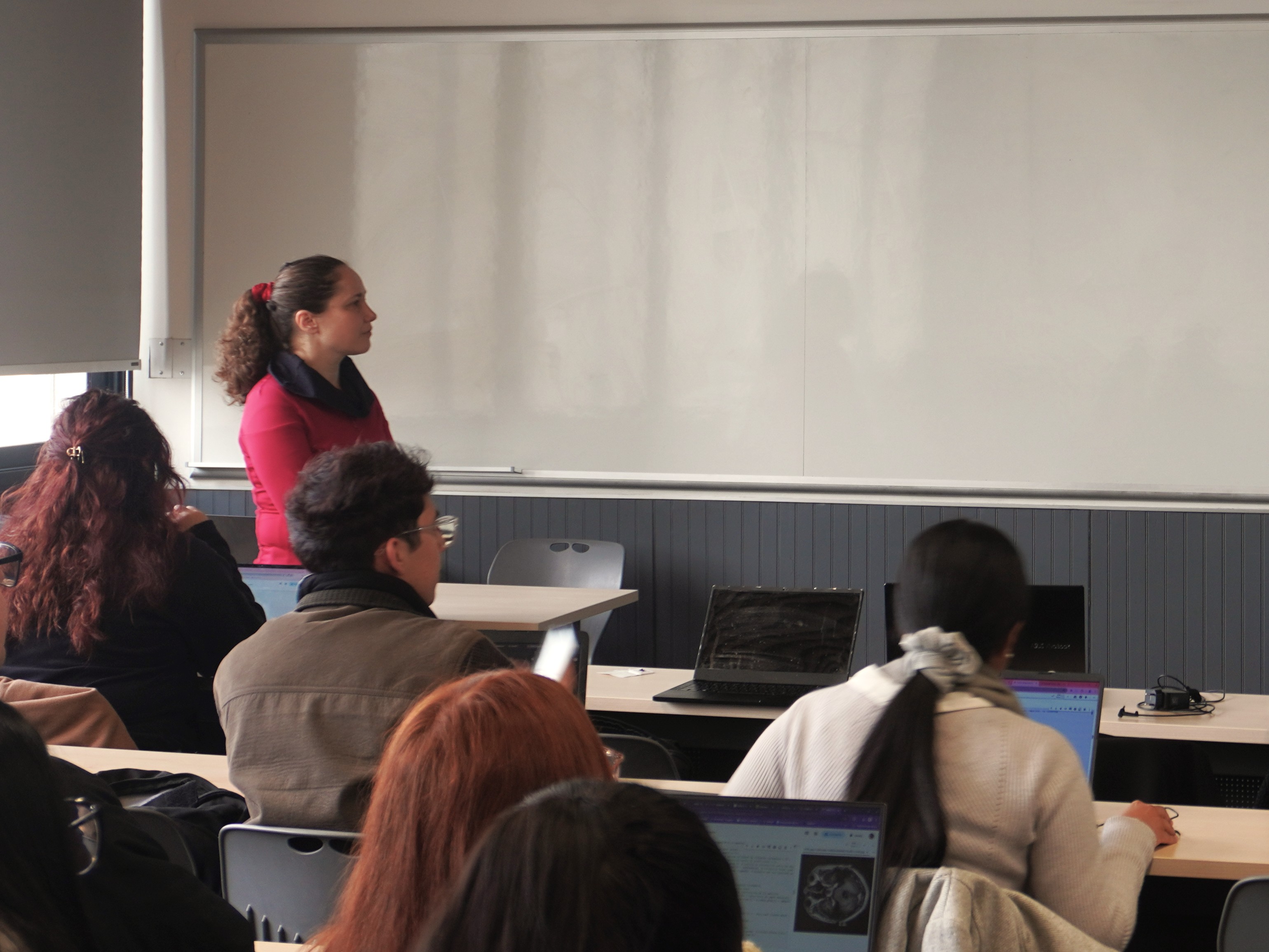
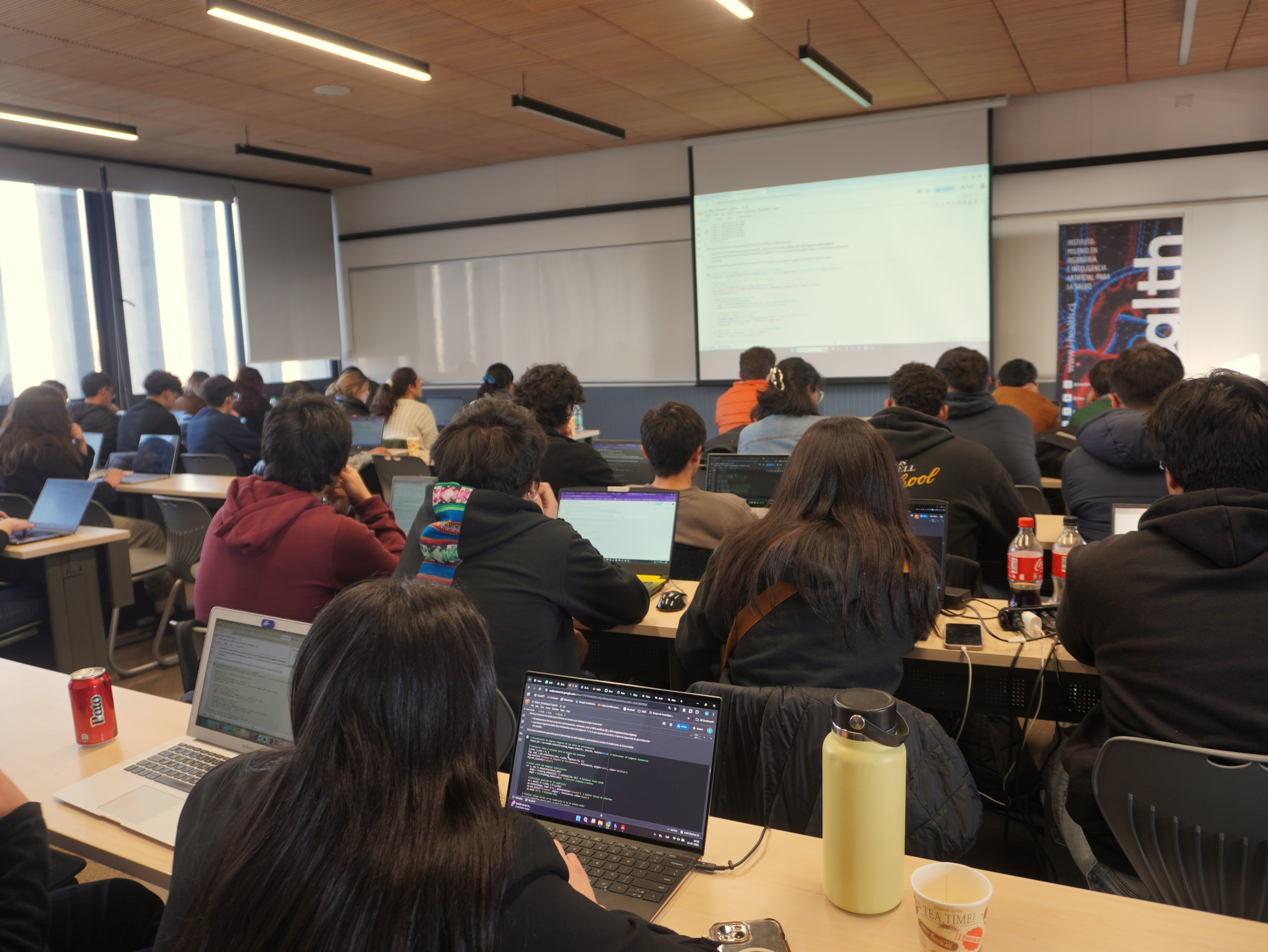
The Winter School also featured two hands-on workshops. The first was led by Dr. Ana María Cabanas, associate professor at the University of Tarapacá and early-career researcher at iHEALTH, together with Guillermo Sahonero, PhD student in Biological and Medical Engineering at UC. The second workshop was conducted by Dr. Ronal Coronado, professor at the University of Las Américas and the Pontificia Universidad Católica de Chile, and early-career researcher at the institute, accompanied by Verónica Marín, PhD student in Electrical Engineering at UC.
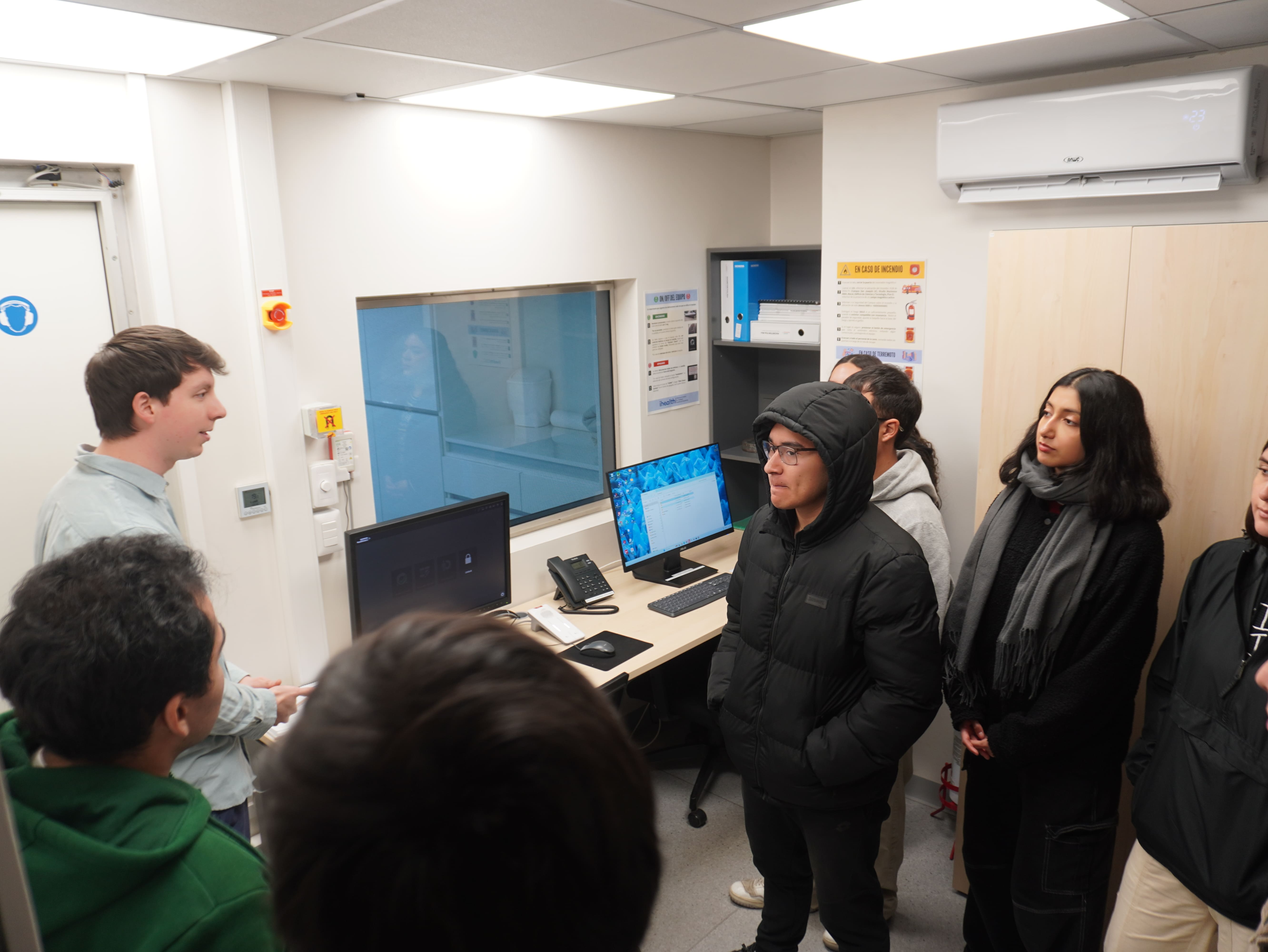
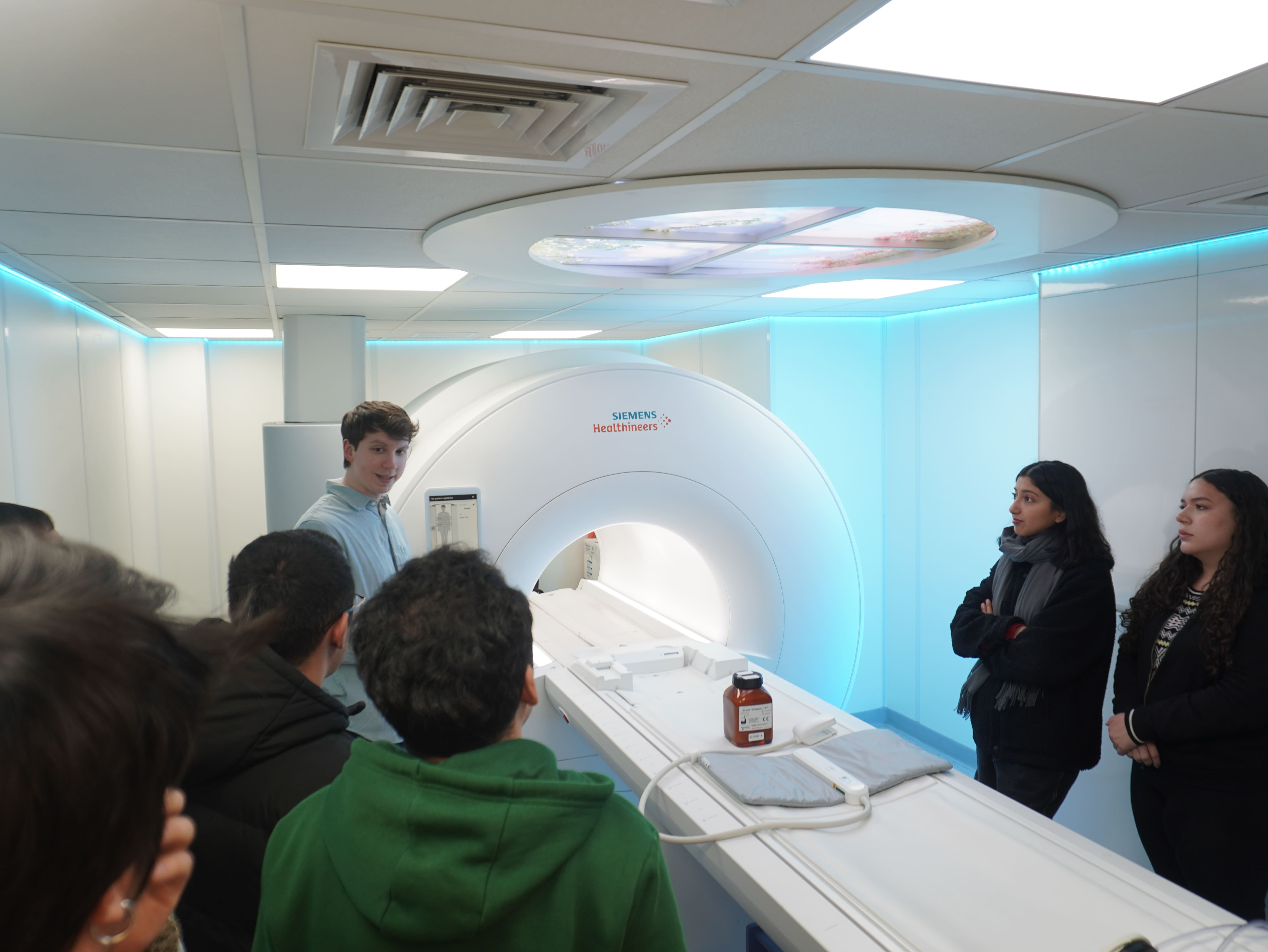
For the closing activity, participants visited iHEALTH’s Central Hub, where they were welcomed by Ignacio Celis, medical technologist and manager of the 0.55T low-field magnetic resonance imaging system used for biomedical research.
With theoretical lectures, practical activities, and the participation of experts from diverse fields, iHEALTH’s first Winter School successfully introduced students to the transformative potential of artificial intelligence in medicine, fostering interdisciplinary learning and scientific collaboration.