Seminar August 1TH, 2023
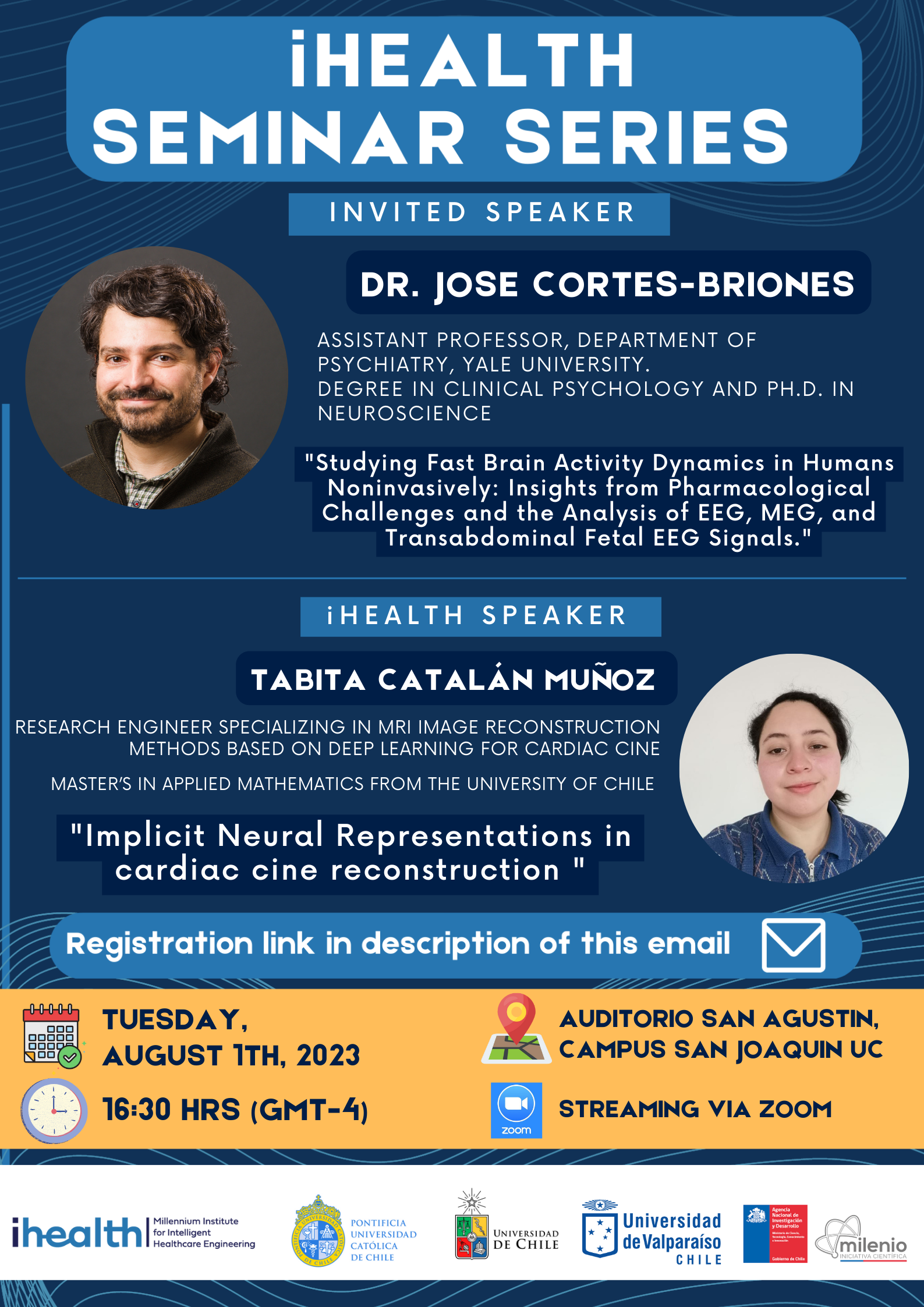
Hours: 16:30 - 18:00
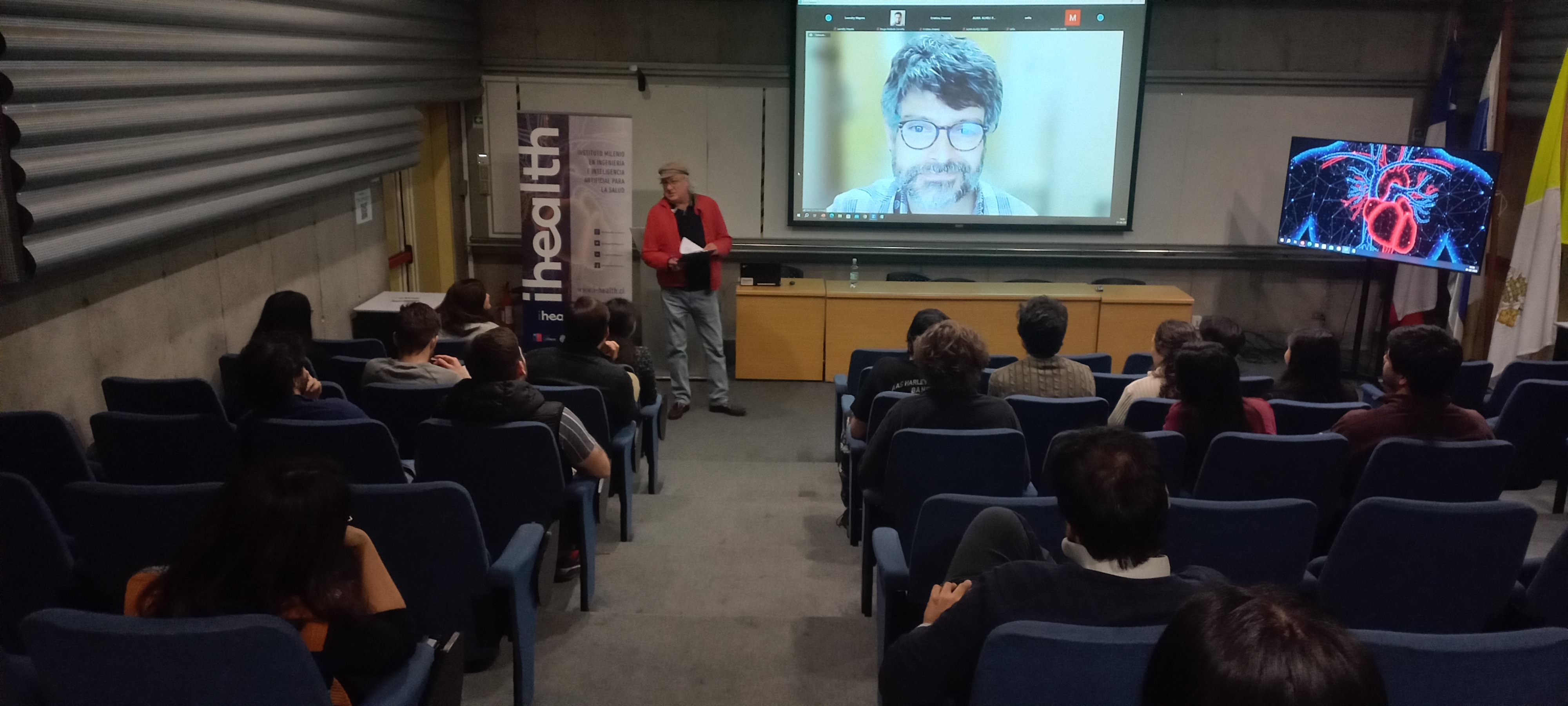
Dr.Jose Cortes-Briones
Title: Studying Fast Brain Activity Dynamics in Humans Noninvasively: Insights from Pharmacological Challenges and the Analysis of EEG, MEG, and Transabdominal Fetal EEG Signals.
Abstract: Studying Fast Brain Activity Dynamics in Humans Noninvasively: Insights from Pharmacological Challenges and the Analysis of EEG, MEG, and Transabdominal Fetal EEG Signals
There are many challenges associated with studying the fast dynamics of human brain activity noninvasively. These include the low spatial resolution in the reconstruction of brain sources from scalp signals, artifactual contamination from non-brain sources of electromagnetic signals, and the limited sensitivity of existing techniques to activity sources located deep within the brain (e.g., the amygdala) or the body (fetal brain in utero). In this talk, we will discuss research conducted at the Schizophrenia Neuropharmacology Research Group at Yale (SNRGY) and CortesLab, demonstrating how some of these difficulties can be addressed by interrogating the brain with the IV administration of psychoactive substances (e.g., delta-9-tetrahydrocannabinol, cannabidiol, and salvinorin A), using innovative AI-powered signal processing techniques and source analysis on MEG and simultaneous EEG/MEG data. Finally, I will present findings from the first transabdominal fetal EEG system, recently developed at CortesLab.
Bio: For over two decades, Dr. Jose Cortes-Briones, Assistant Professor, Department of Psychiatry, Yale University, has focused on developing mathematical tools to analyze diverse datasets, including behavioral, electrophysiological, and PET imaging data. He has a background in electrical engineering, physics, and astronomy, and had his first experience with artificial neural networks in 1998, with an algorithm designed for globular cluster detection in high-resolution astronomical images. He holds a degree in clinical psychology and earned a Ph.D. in neuroscience, studying EEG correlates of auditory verbal hallucinations.
Dr. Cortes-Briones is the director of CortesLab at the Yale School of Medicine and the Magnetoencephalography Imaging of Neuropsychiatric Disorders (MIND) Center of the National Center of PTSD at VACHS. He is also a member of the Schizophrenia Neuropharmacology Research Group at Yale (SNRGY). His primary research focus is on characterizing the acute and long-term effects of psychoactive substances on cognition, brain activity, and language. Currently, he is the principal investigator (PI) of a National Institute of Biomedical Imaging and Bioengineering three-year Trailblazer Award, aimed at developing an AI system to transcribe inner speech (verbal thoughts) into text from non-invasively collected electrophysiological signals.
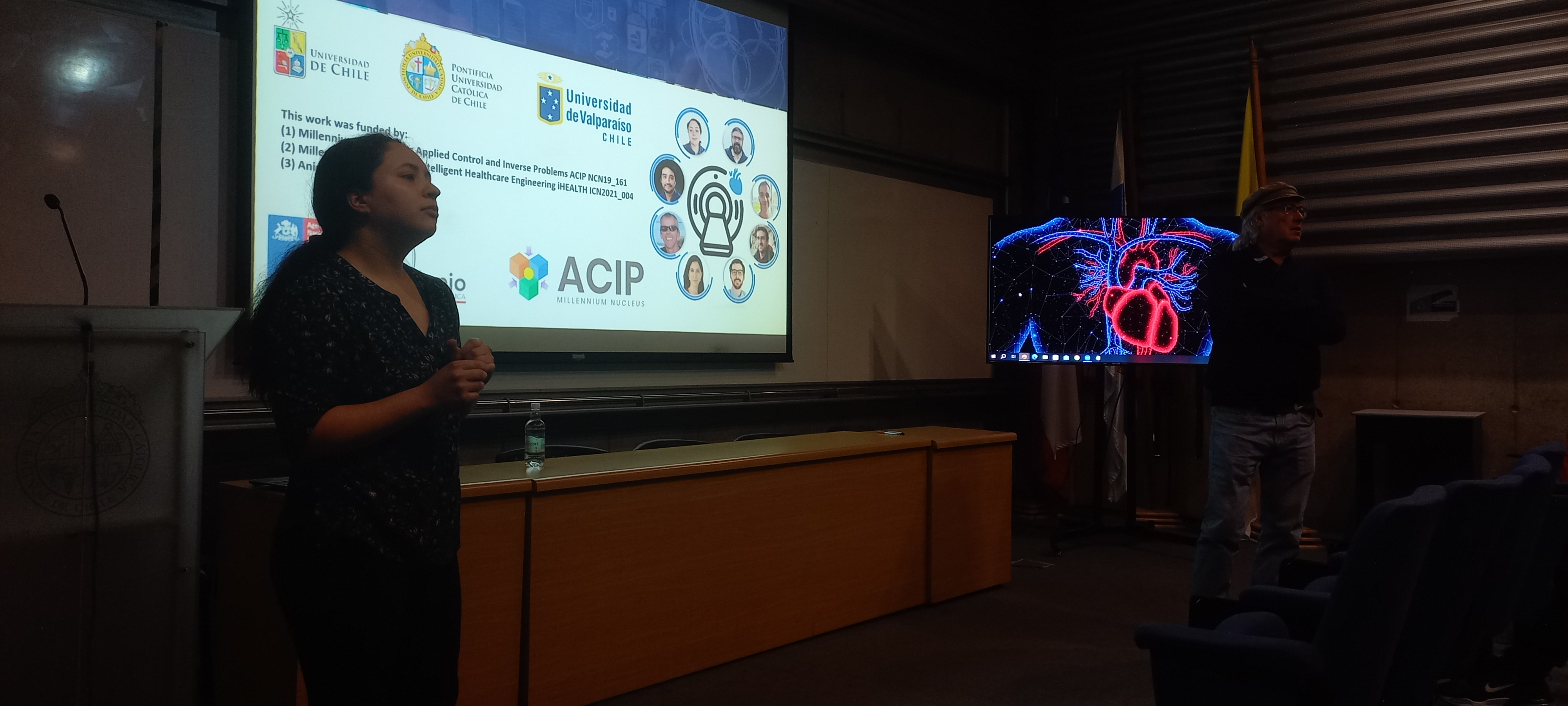
Tabita Catalán Muñoz
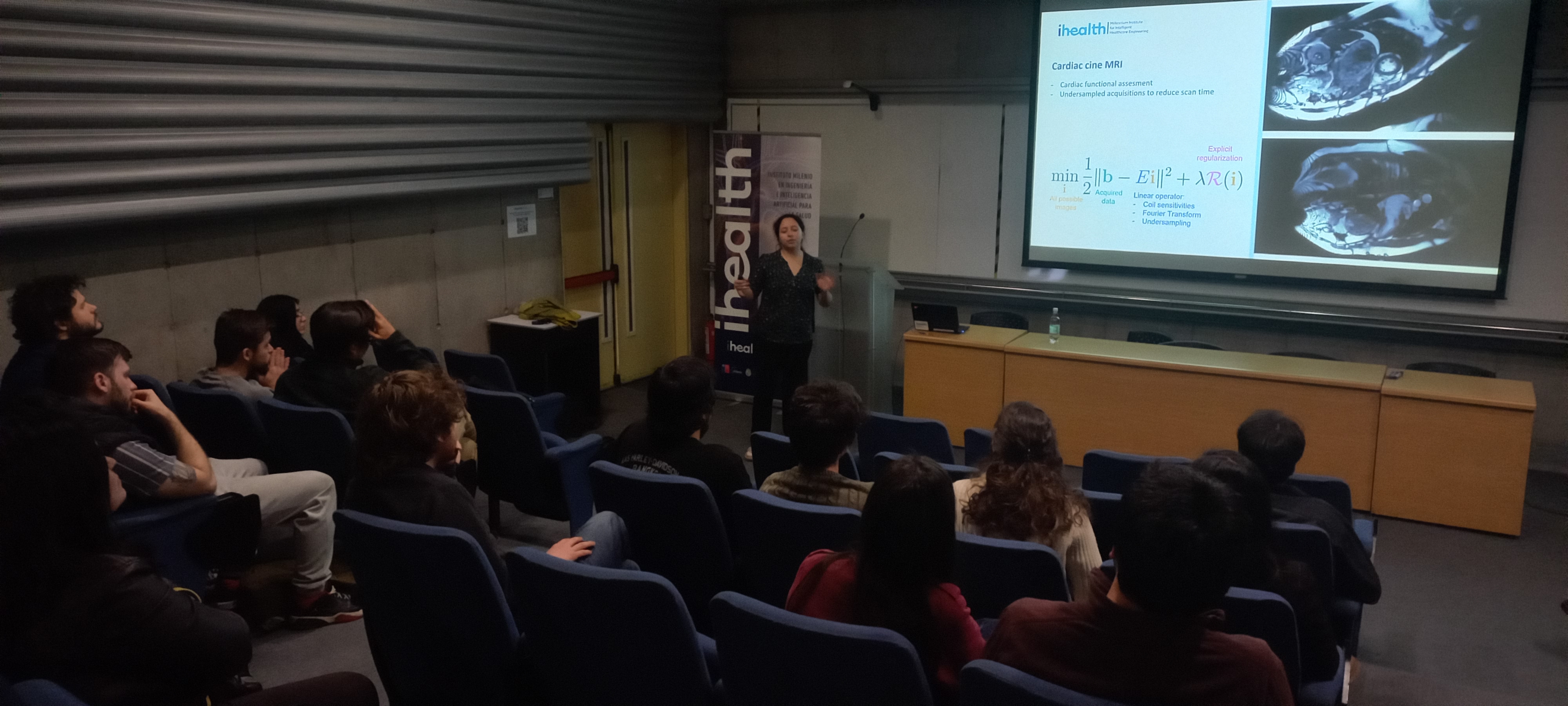
Title: Implicit Neural Representations in cardiac cine reconstruction
Abstract: Cardiac cine MRI is a fundamental tool for cardiac functional assessment, and is often acquired in an undersampled manner to reduce scan times. The reconstruction of images from these undersampled data can be formulated as a regularized optimization problem, and recently, as an optimization problem with neural-networks-based implicit regularization. In this presentation, I will introduce the concept of Implicit Neural Representation (INR), a type of neural network suitable for this purpose. I will also discuss the unique challenges posed by INRs when applied to dynamic reconstruction tasks. Next, I will show our results for 2D cine reconstruction from radial acquisitions. Finally, I will comment on the limitations of the proposed method and explore some promising ideas based on recent literature to tackle these challenges.
Bio: Tabita Catalán is a Research Engineer at Millennium Nucleus For Applied Control And Inverse Problems (ACIP), specializing in MRI image reconstruction methods based on deep learning for cardiac cine. She obtained her Master’s in Applied Mathematics from the University of Chile in 2022.