Researchers develop an artificial intelligence model to map dengue risk in Colombia
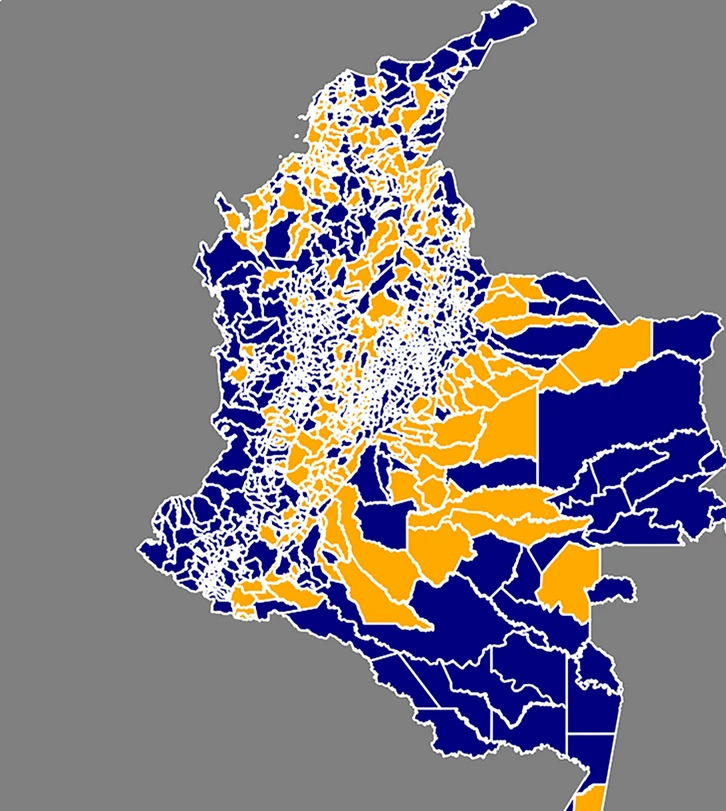
A research team with participation from iHEALTH developed an innovative deep learning framework capable of generating high-resolution maps of dengue risk in Colombia, integrating climate, environmental, demographic, and socioeconomic data into a single predictive model for the first time.
The study, titled "A spatiotemporal U-Net++ deep learning framework for dengue risk mapping in Colombia," addresses one of the greatest public health challenges in Latin America. Dengue is the world's most common mosquito-borne disease, and its advance is alarming: in 2024 the region recorded 12.6 million cases, the largest epidemic ever documented. In Colombia, incidence nearly doubled between 2022 and 2023.
Faced with this situation, the team—made up of Daira Velandia, Javiera Contador, Juan Zamora, Diana Martínez, Débora Buendía, Ximena Collao, and Rodrigo Salas, the latter a principal investigator at iHEALTH—proposed an approach based on the U-Net++ neural network architecture, widely used in the analysis of medical and satellite imagery. The model learns to recognize complex spatial patterns by combining information from satellite and census sources, such as temperature, precipitation, vegetation, nighttime lights, population density, and poverty conditions.
One of the study's central contributions is the evaluation of the model at two geographic scales: a national scale, covering the entire Colombian territory, and a regional scale, applied to five departments with high incidence (Boyacá, Meta, Cundinamarca, Tolima, and Norte de Santander). In both cases, the configuration that integrated climate, social, and environmental variables achieved the best performance, reaching accuracy levels that confirm the value of combining diverse data sources.
"The risk maps generated showed strong agreement with areas historically affected by the disease, which supports their potential as a complementary tool for epidemiological surveillance," noted Rodrigo Salas. While the study represents a retrospective evaluation rather than a real-time early warning system, its results lay the groundwork for future decision-support systems in public health, both at the national and local level.
Velandia, D., Contador, J., Zamora, J. et al. A spatiotemporal U-Net++ deep learning framework for dengue risk mapping in Colombia. Sci Rep 16, 24004 (2026). https://doi.org/10.1038/s41598-026-63542-8
