iHEALTH Successfully Concludes its 2nd Summer School in AI for Health
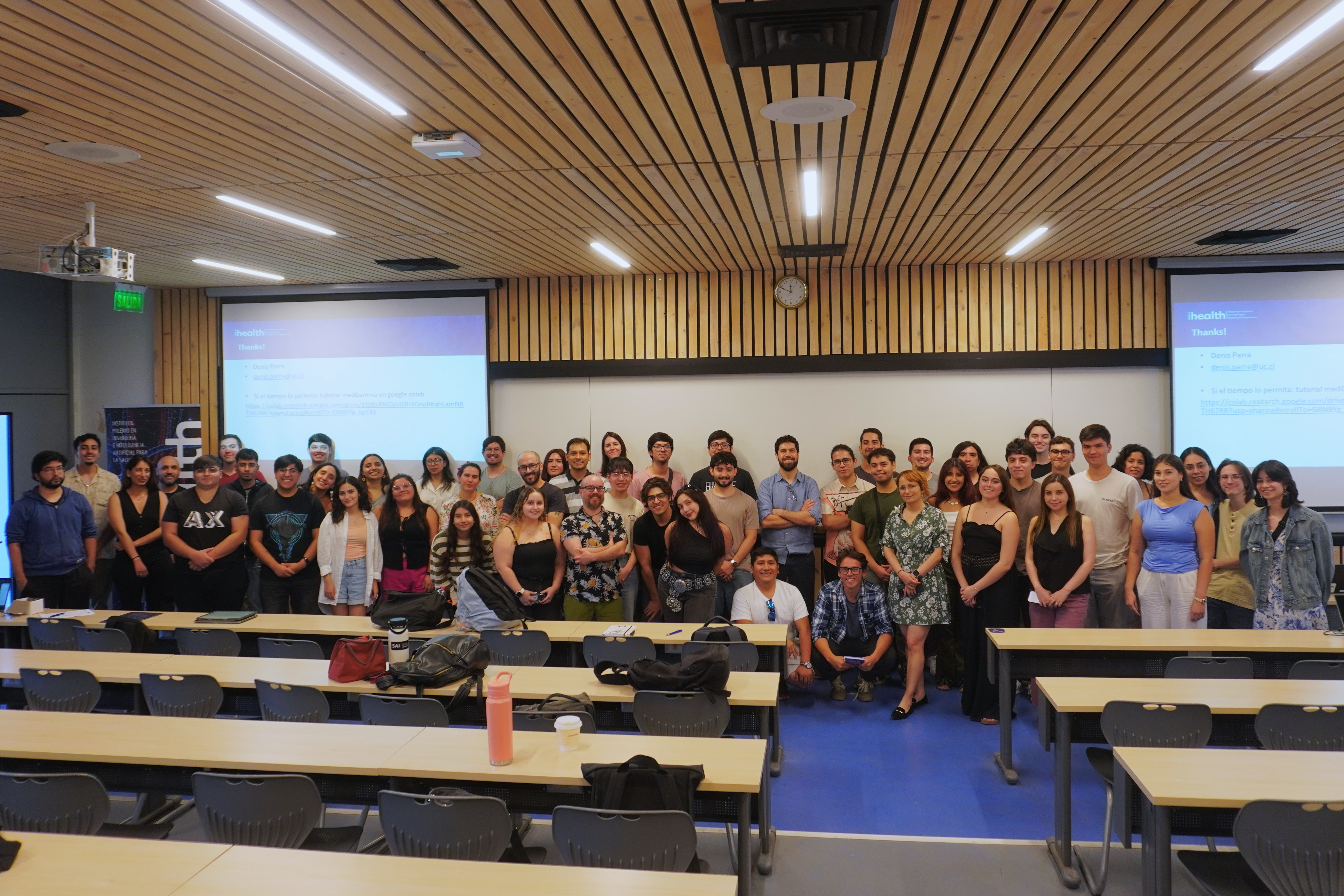
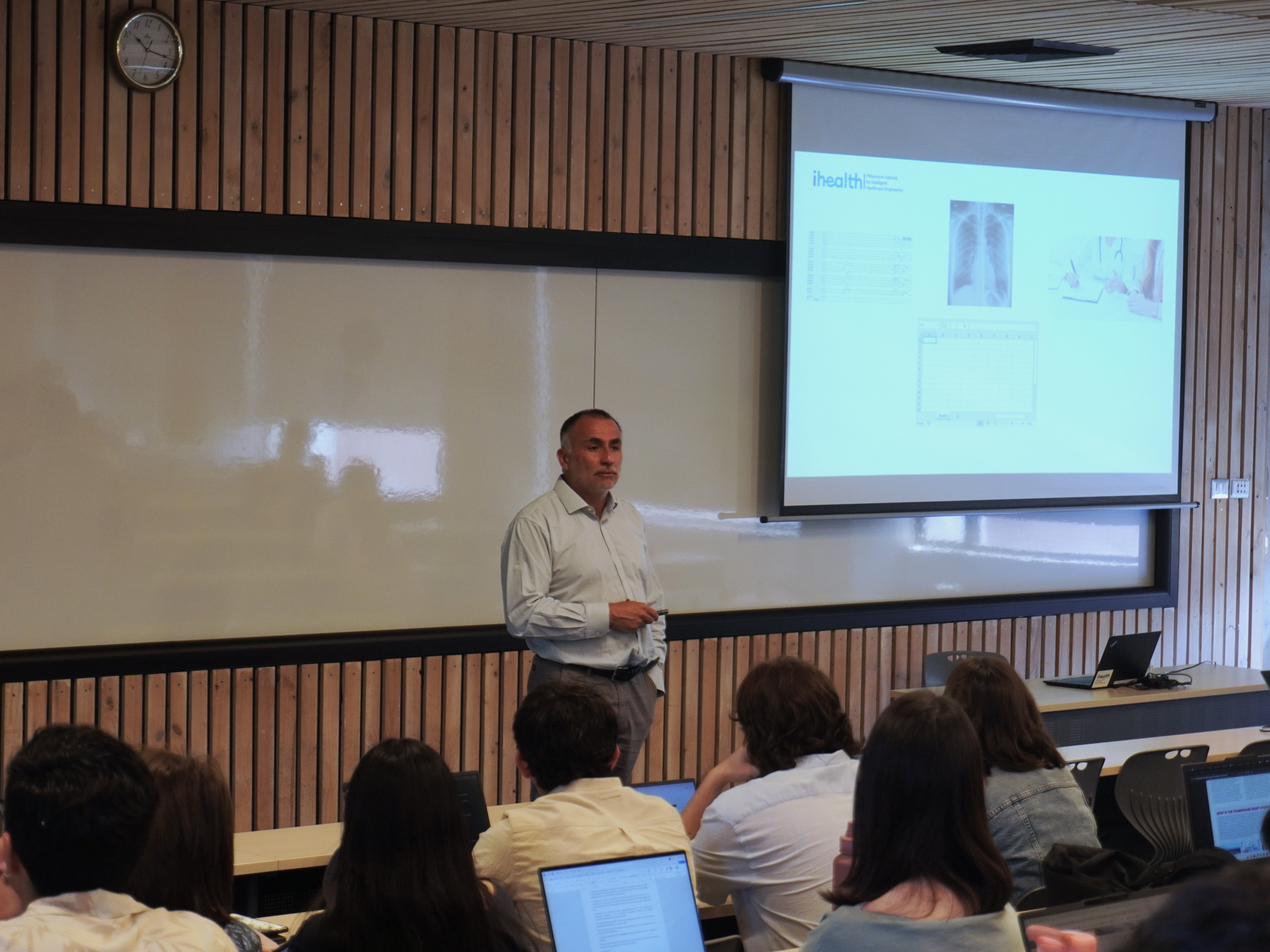
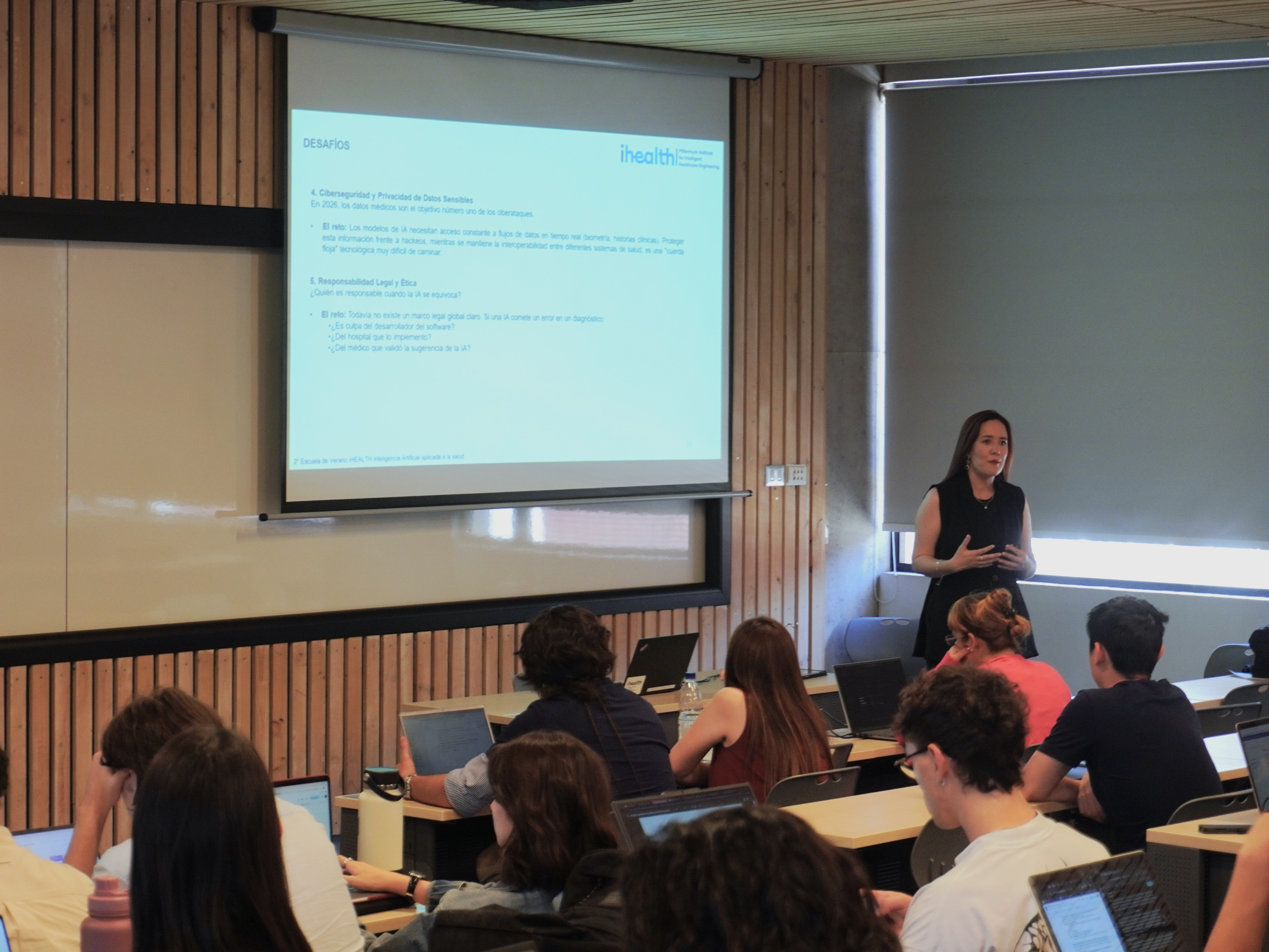
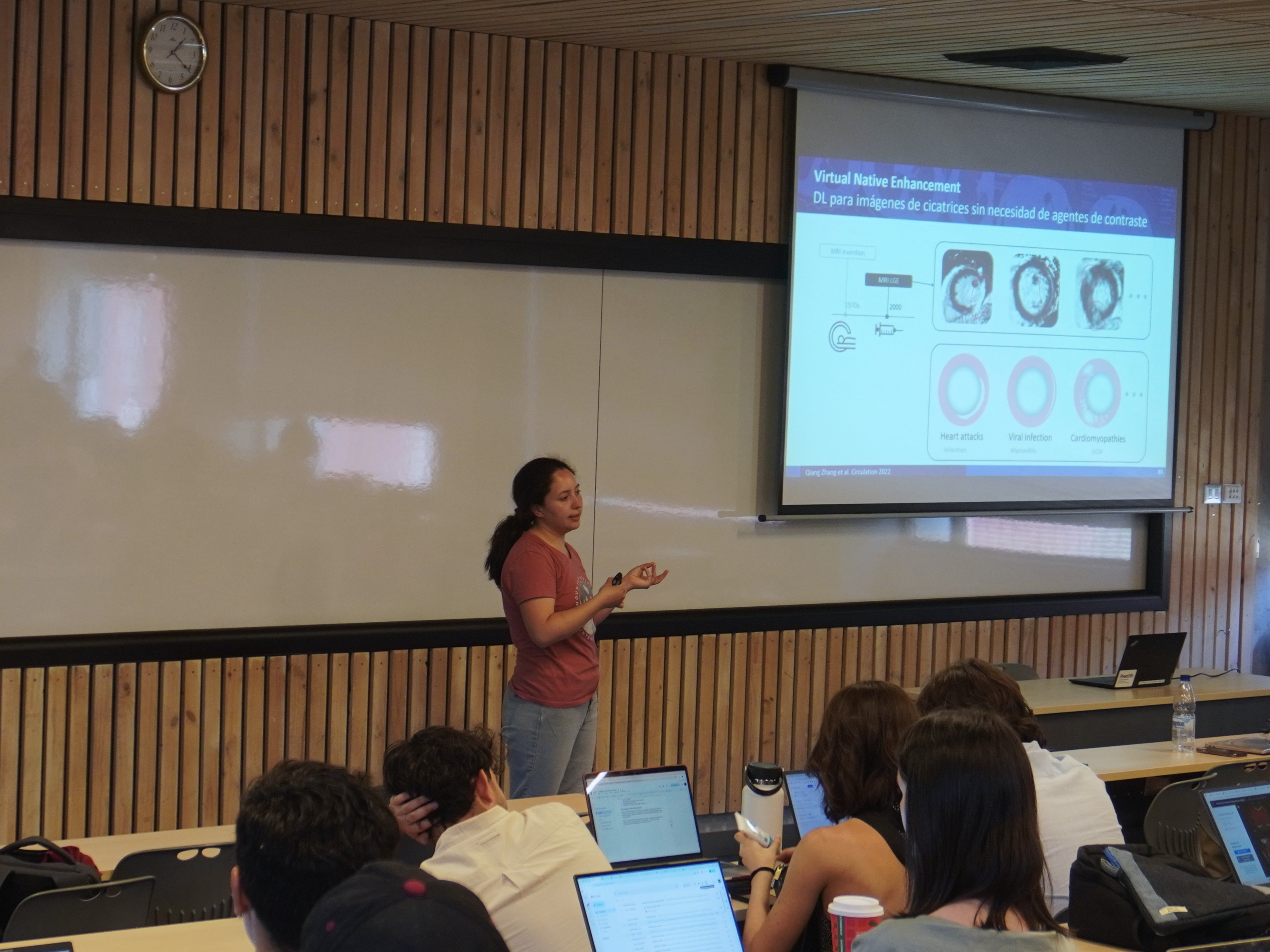
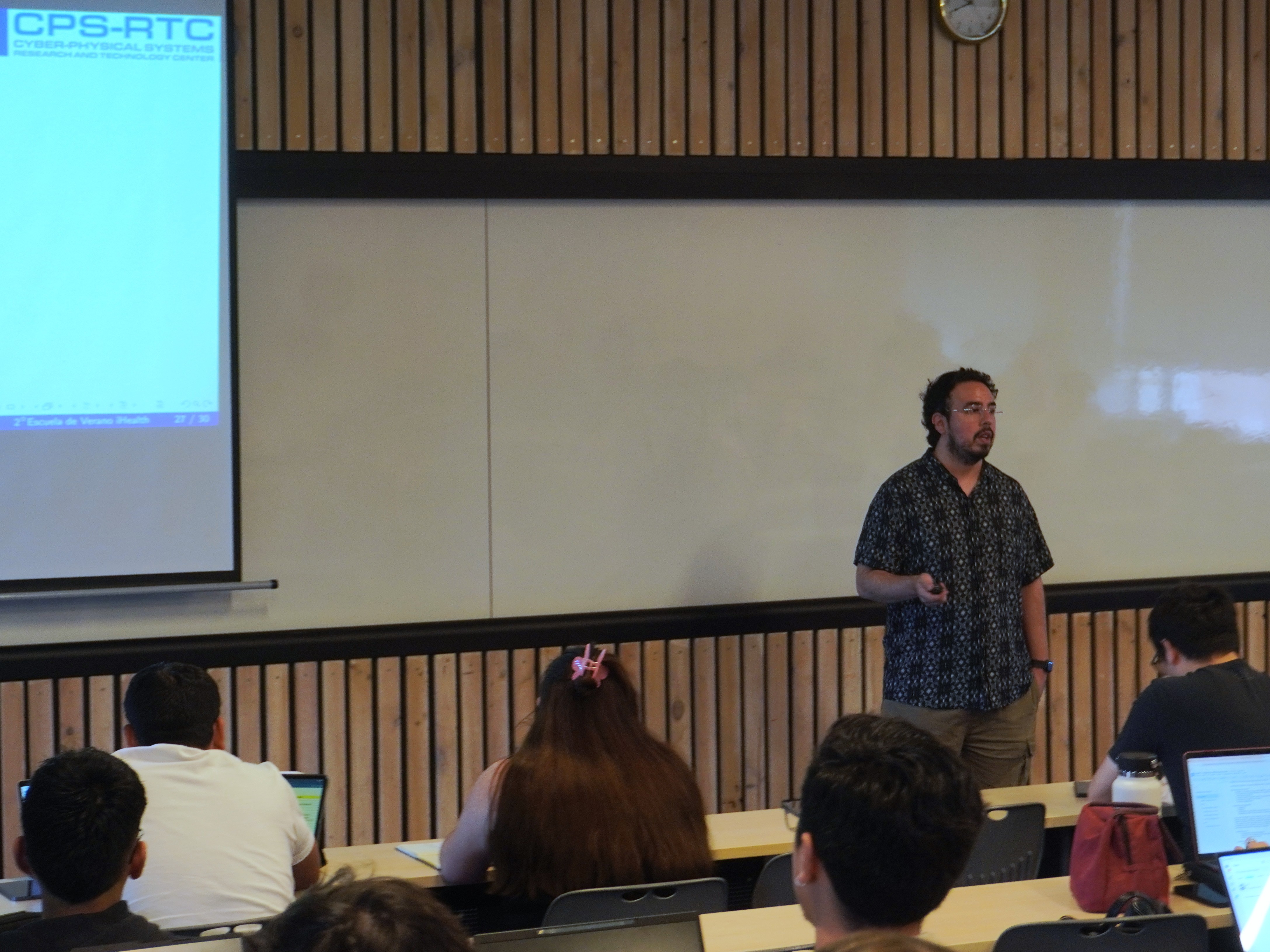
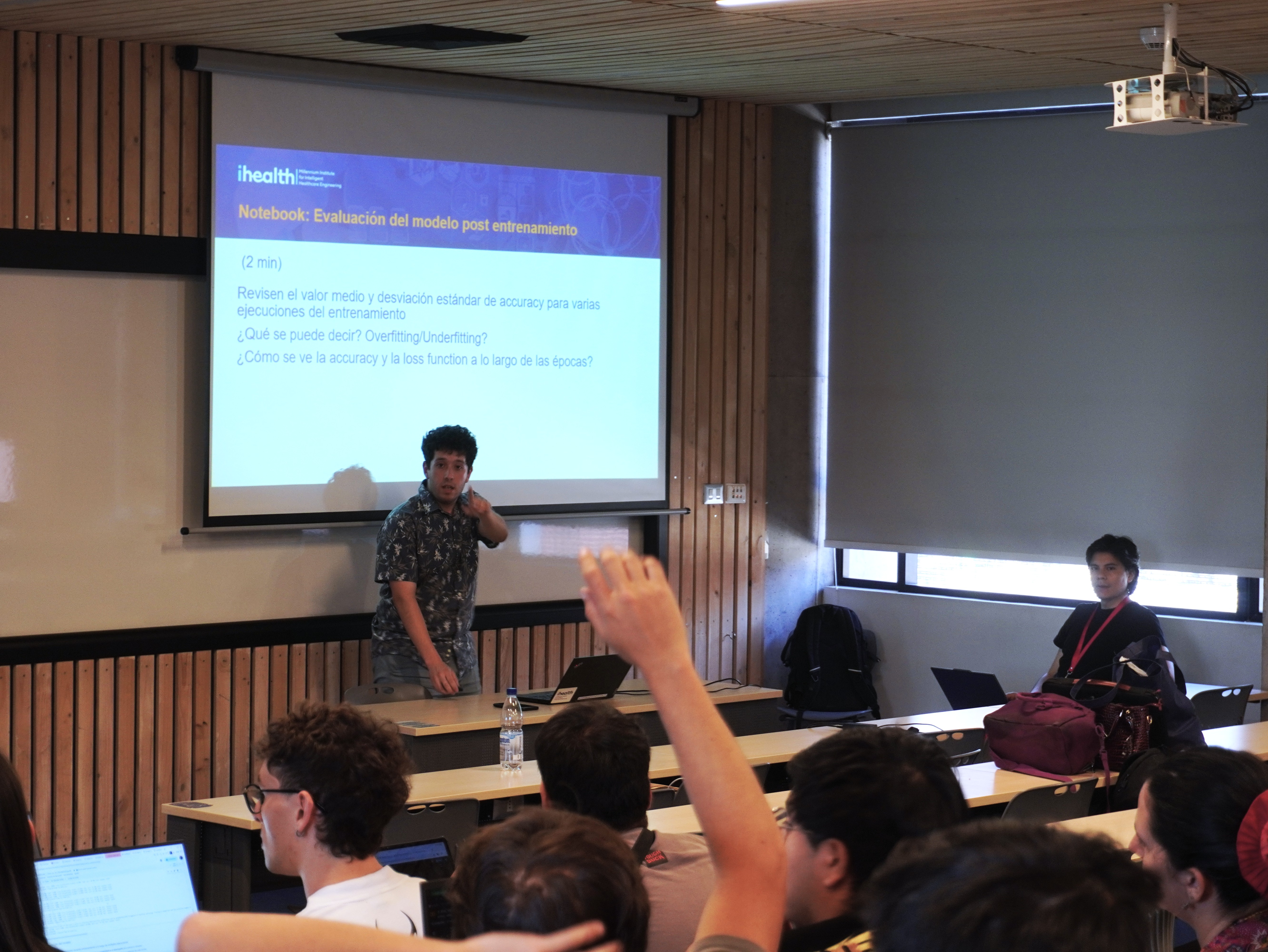
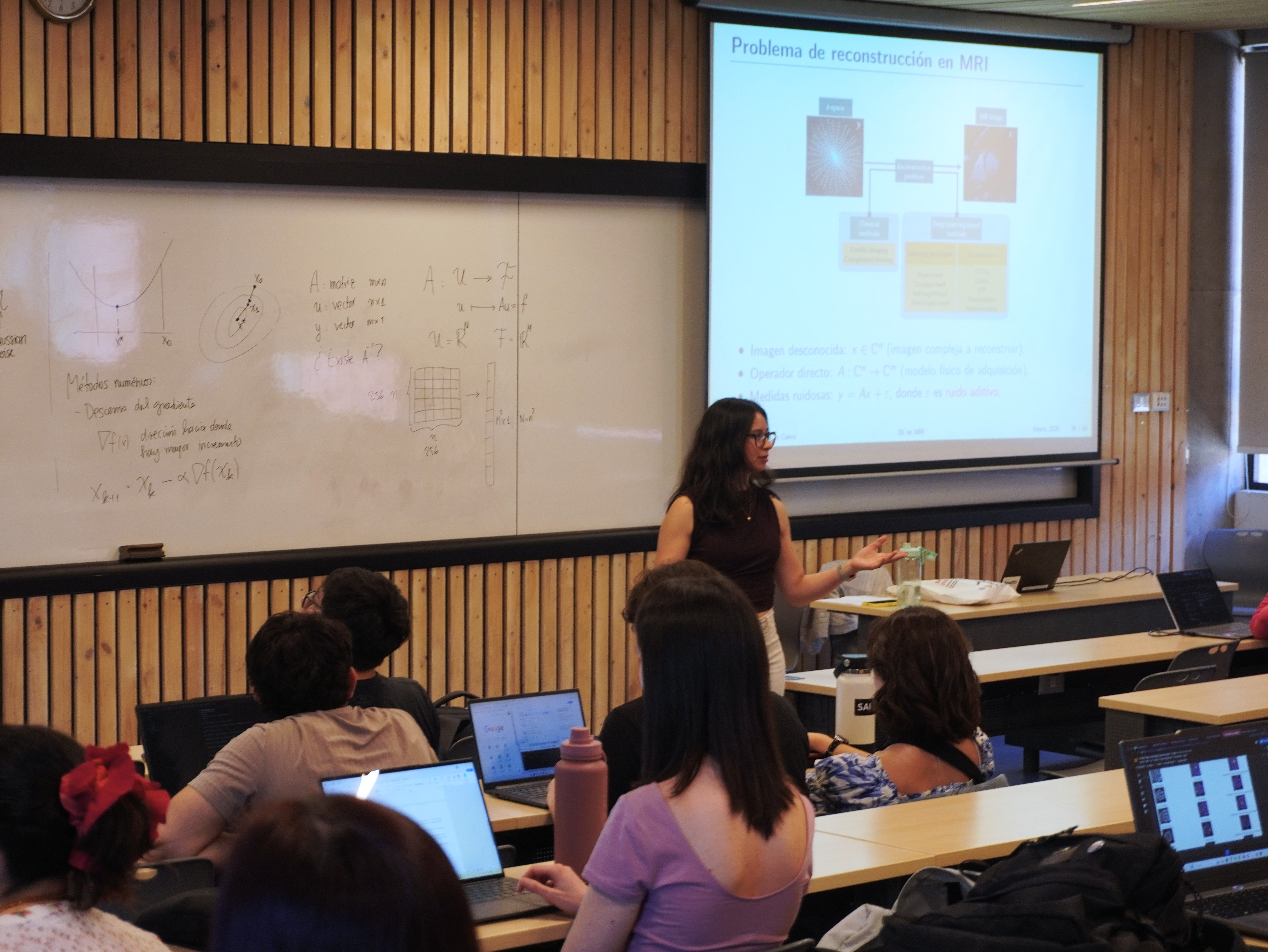
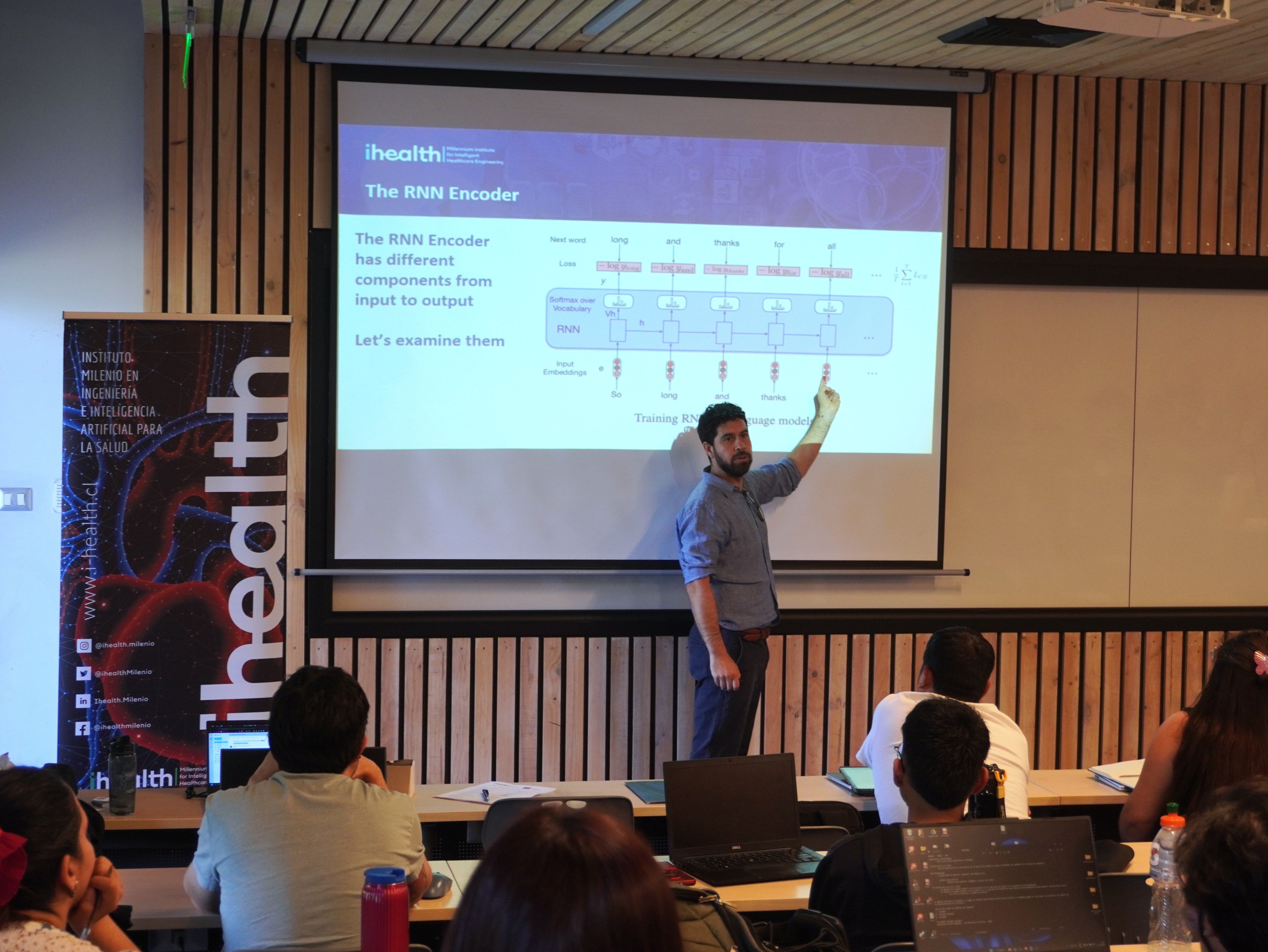
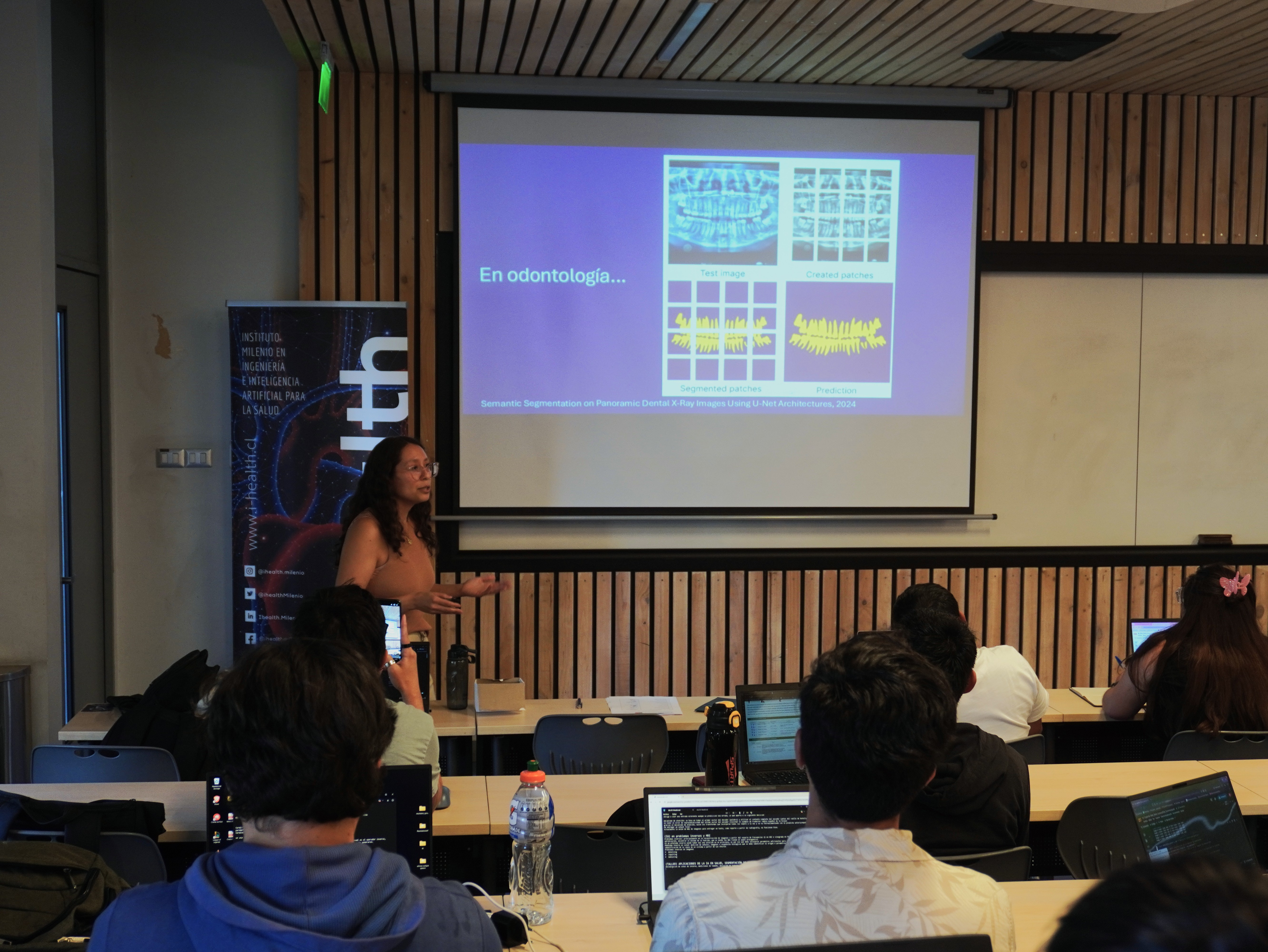
Between January 14 and 16, 2026, the iHEALTH Millennium Institute successfully held the second edition of its Summer School in Artificial Intelligence for Health at UC’s San Joaquín Campus, consolidating this initiative as a key space for cutting-edge interdisciplinary training.
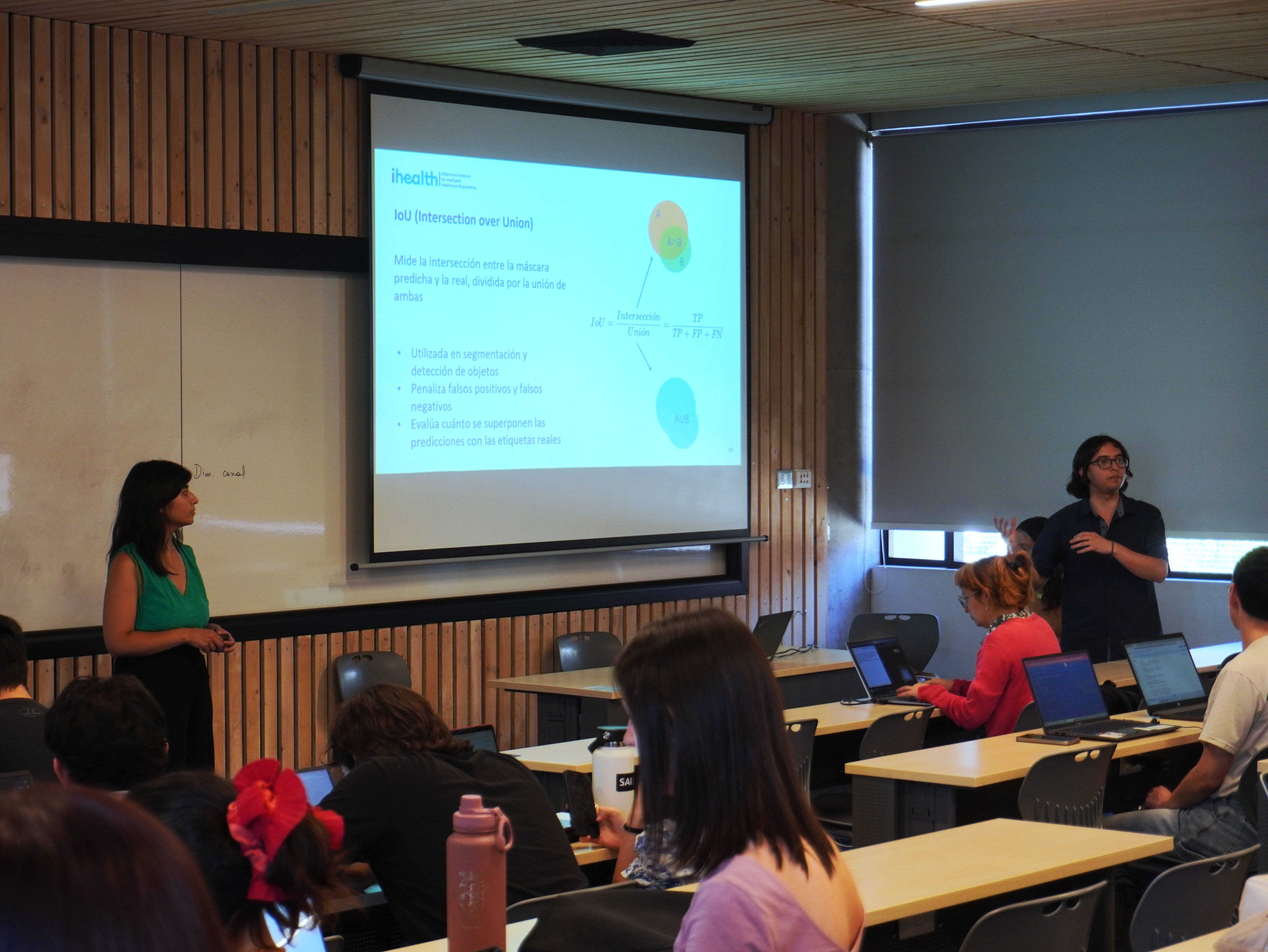
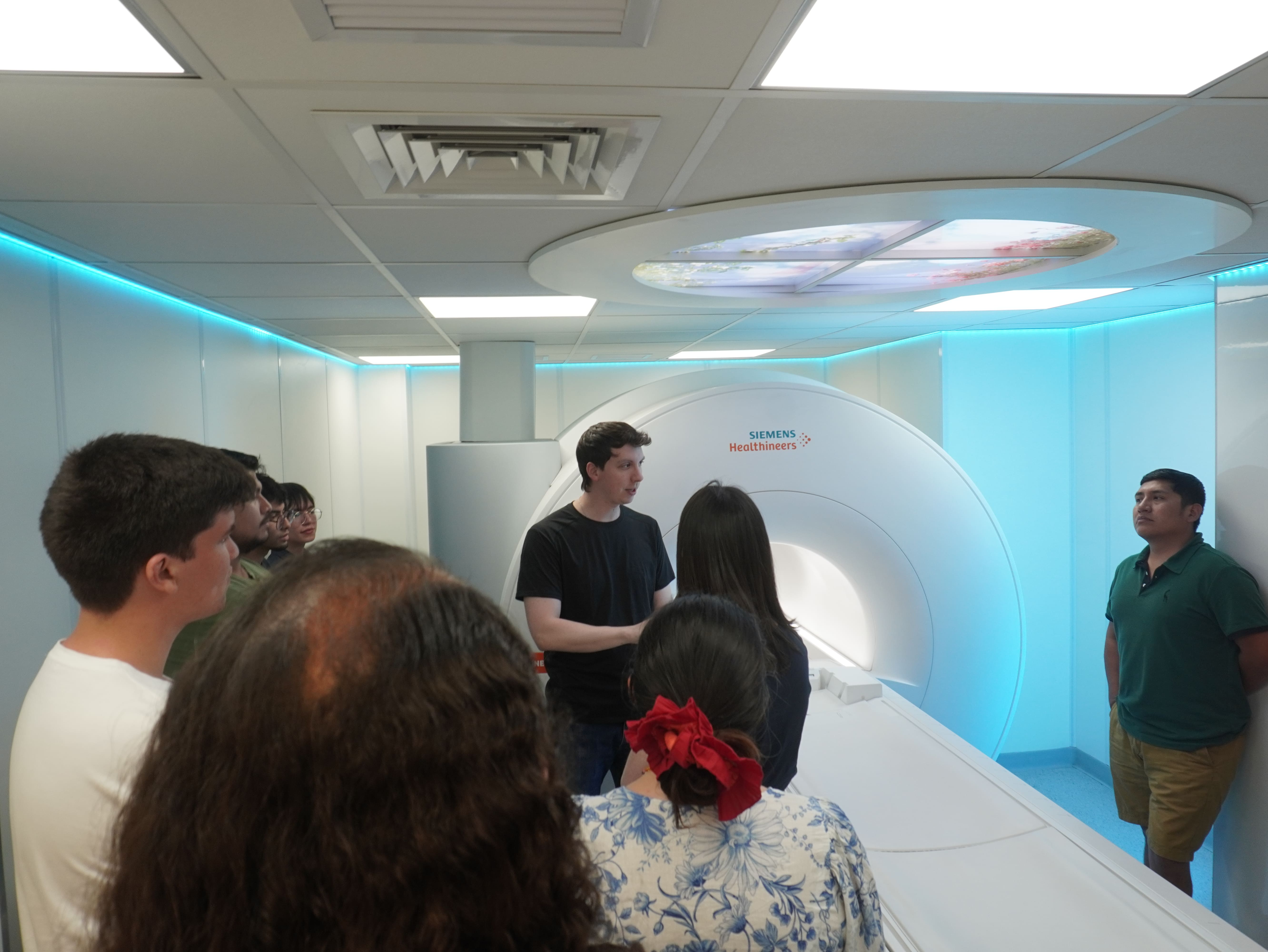
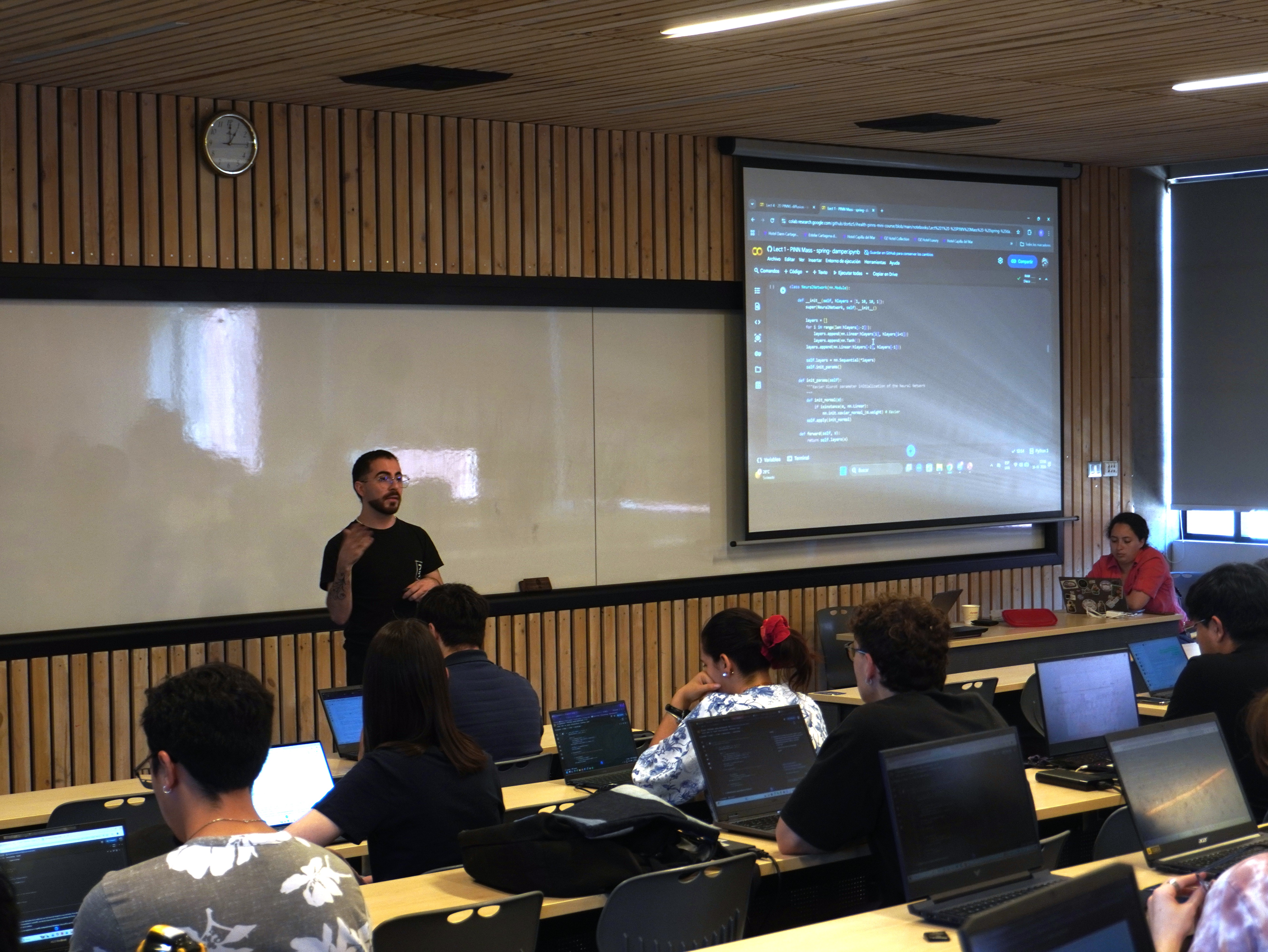
The school, which was free of charge and aimed primarily at undergraduate and graduate students, brought together participants from diverse fields (engineering, computer science, health sciences, and related disciplines) in an intensive program combining theoretical foundations, clinical applications, and hands-on workshops, ranging from medical image and physiological signal analysis to the use of natural language models and Physics-Informed Neural Networks (PINNs).
The classes were taught by iHEALTH members: Dr. Marcelo Andia, professor at UC Medicine and Director of the institute; Dr. Denis Parra, professor in UC's Department of Computer Science and a principal investigator at the institute; iHEALTH postdoctoral researchers Dr. Evelyn Cueva and Dr. Yoleidy Huérfano; UC PhD student Tabita Catalán; and young researcher from the Cyber-Physical Systems Research and Technology Center (CPS-RTC), Dr. Carlos Valle.
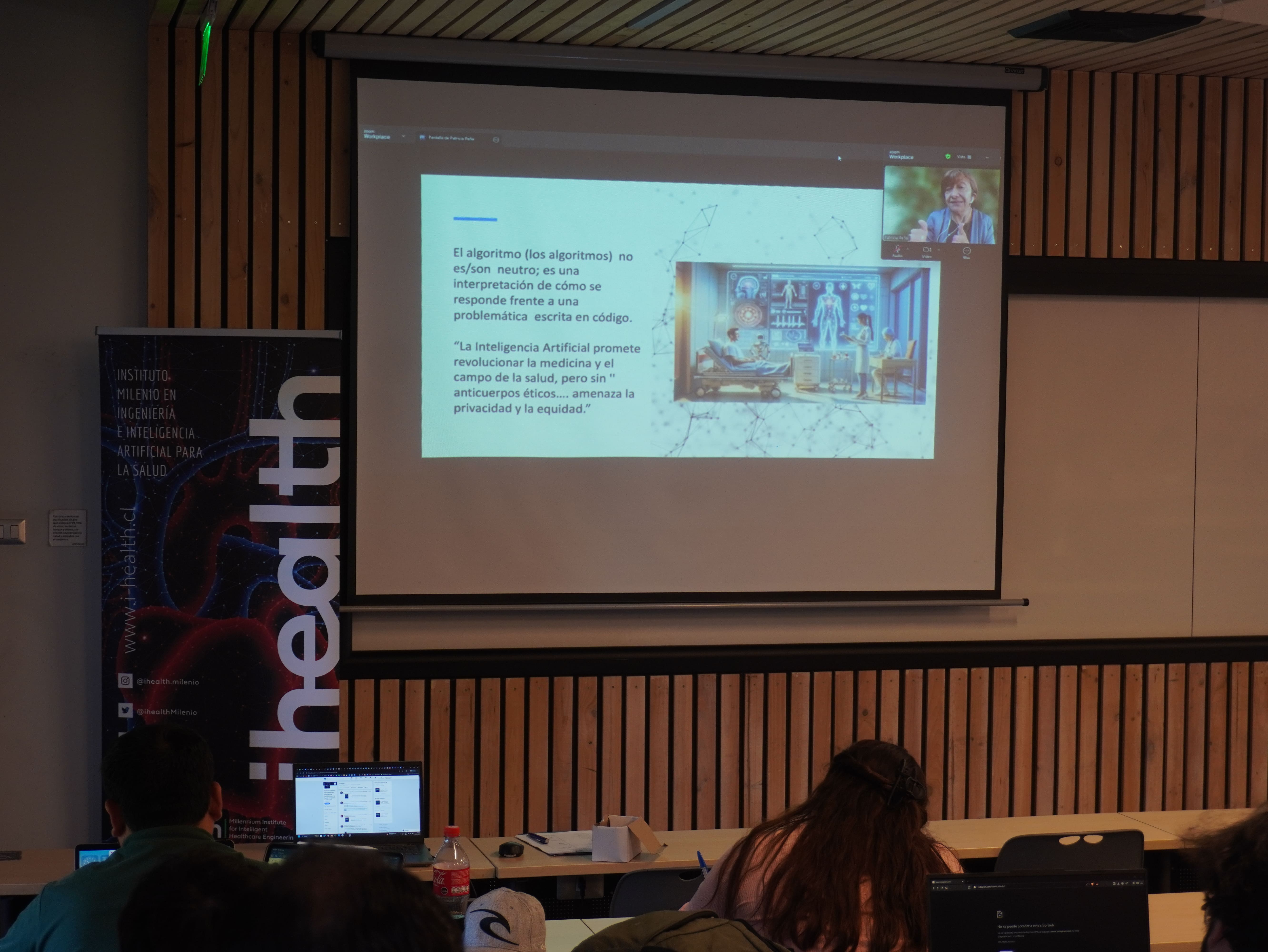
One of the highlights was the opening lecture on Friday, delivered by Dr. Patricia Peña, professor at the Faculty of Communication and Image of the University of Chile and Director of the Datos Protegidos Foundation. In her presentation, she addressed algorithmic bias, data protection, and ethical challenges in the development and implementation of AI in health, providing a critical and necessary perspective for future professionals who will work with sensitive technologies.
“It was an extremely enriching experience. I was able to deepen and consolidate key knowledge, and the introduction to ethical and data protection issues gave me a very valuable perspective,” commented one attendee.
Young researchers, engineers, and graduate students from iHEALTH also played a key role in leading the workshops. Guillermo Sahonero and Rafael Kaempfer led the introduction to AI; Marie González, Carmen Meza, and Bastián Castelli guided the workshop on health applications; while Tomás Banduc and Tabita Catalán were in charge of the PINNs session.
This dynamic not only facilitated a more horizontal knowledge transfer but also demonstrated iHEALTH’s capacity to train and empower its own pipeline of scientists and engineers.
“An excellent opportunity to expand knowledge,” noted one participant. Another highlighted “the quality of the information and highly capable, didactic professors,” while a third pointed out that it was “an environment suitable for sharing knowledge and delving deeper into medical imaging and AI.”
After two successful editions, the first having taken place in January 2025, the iHEALTH Summer School is establishing itself as a stable initiative within Chile’s specialized training ecosystem, responding to the growing demand for skills in artificial intelligence applied to concrete health challenges.