iHEALTH researchers develop a “digital twin” to personalize heart treatments
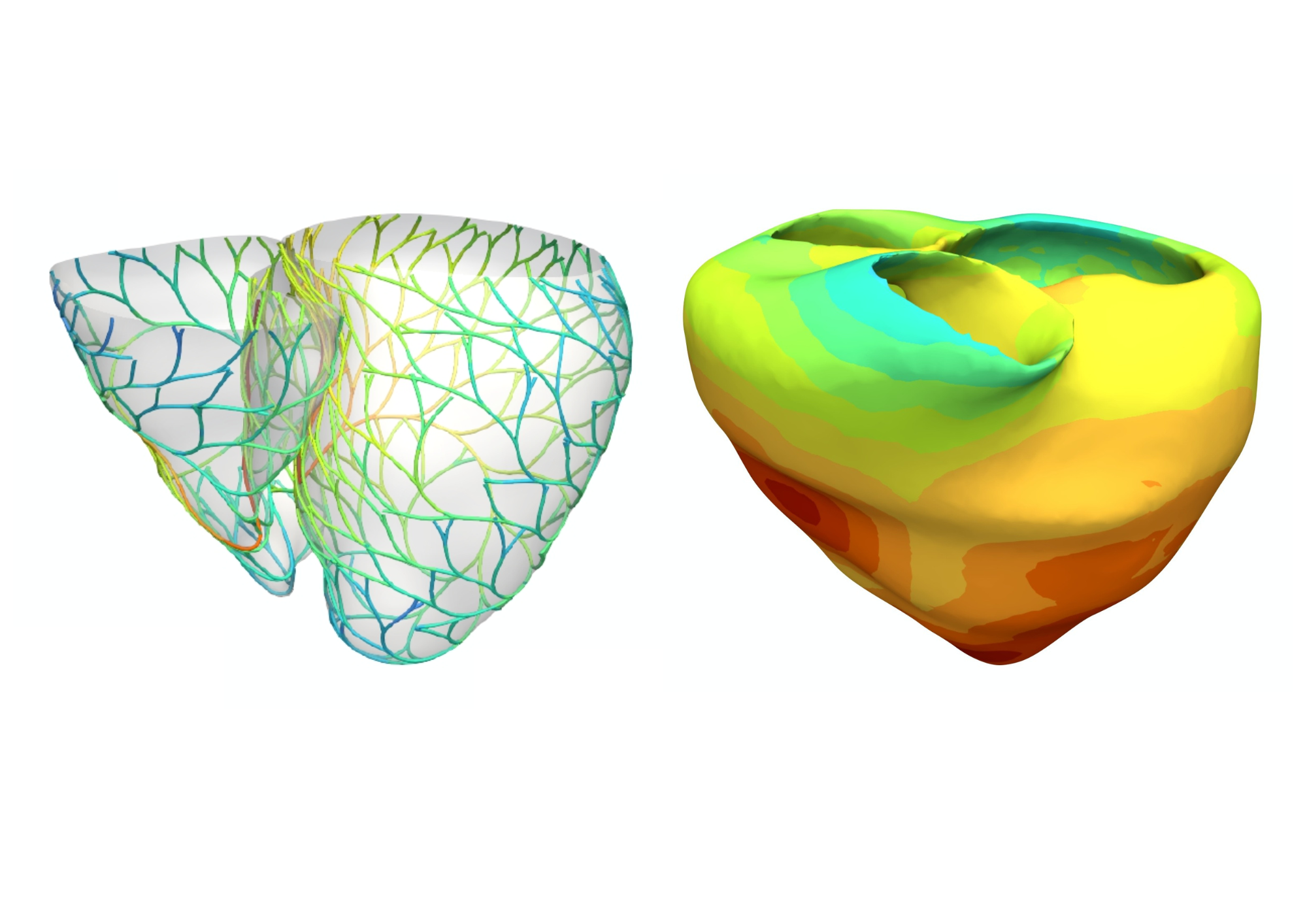
Artificial intelligence to map the heart’s “electrical system”: a breakthrough that promises personalized and precision medicine.
Simulation of the Purkinje network in the heart – Image by Francisco Sahli
During Heart Month, the Millennium Institute iHEALTH highlights an innovative study that uses artificial intelligence to reconstruct a key network in the heart’s rhythm from a simple electrocardiogram. The advance could transform the diagnosis and treatment of arrhythmias and heart failure.
Cardiovascular diseases cause 19 million deaths annually worldwide, according to the World Health Organization. In Chile, they are the leading cause of mortality, with nearly 30,000 deaths each year. Facing this challenge, a team from the Millennium Institute for Intelligent Healthcare Engineering (iHEALTH) developed a pioneering computational model that digitally reconstructs the Purkinje network—the heart’s electrical conduction system—through a standard electrocardiogram (ECG).
The research, published in Medical Image Analysis and led by Dr. Francisco Sahli, professor at the UC School of Engineering and principal investigator at iHEALTH, combines artificial intelligence, advanced cardiac modeling, and probabilistic analysis to create what specialists call a “digital twin” of the heart.
The Purkinje network is an essential structure that coordinates the heart’s beats, but until now it was impossible to fully visualize in patients without invasive procedures. “Our methodology allows us to create a personalized digital representation of this network using only non-invasive data such as the ECG. This opens new possibilities for personalized treatments of arrhythmias or heart failure,” explains Dr. Sahli.
The developed model incorporates algorithms that simulate how the heart would respond to different therapies—such as pacemakers or other devices—before actual implantation. In tests with real patients, the system showed the ability to identify abnormal electrical behavior of the cardiac muscle, reducing the need for invasive diagnostic procedures.
“It’s like having a detailed map of each patient’s heart wiring. This could help optimize where to place pacemaker electrodes or anticipate complications before they happen,” Sahli highlights, emphasizing the clinical projections of this technology.
Cardiovascular diseases in Chile account for 29% of all deaths, according to DEIS 2022, with an annual cost of approximately USD 1.7 billion for the healthcare system—despite estimates that 80% of cases are preventable through risk factor control such as hypertension, diabetes, and smoking.
The research team is now working on validating the model and exploring its integration with artificial intelligence to enable real-time analysis that could bring this technology closer to routine clinical practice.
