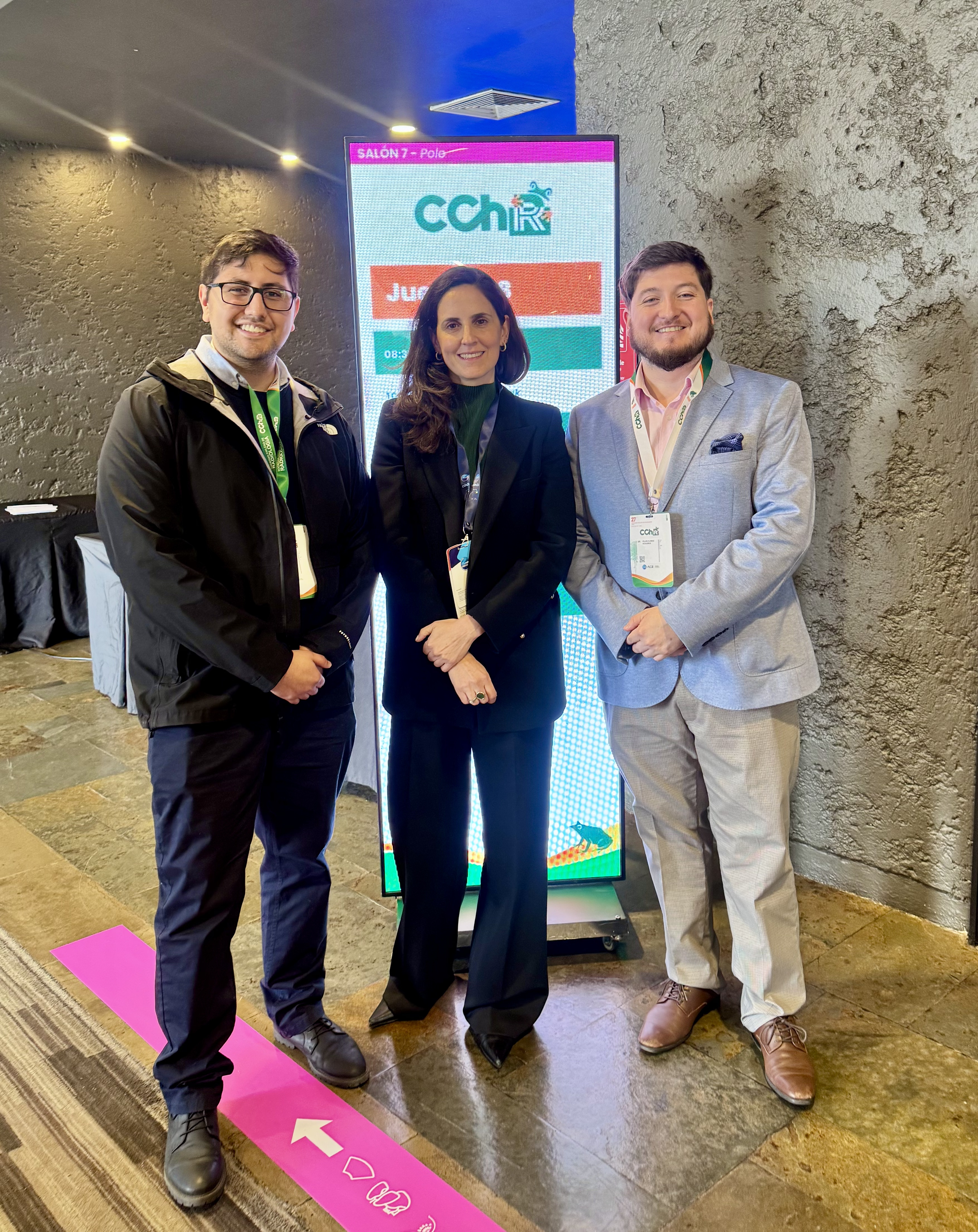
For the second year in a row, iHEALTH student wins first place at the Chilean Congress of Radiology
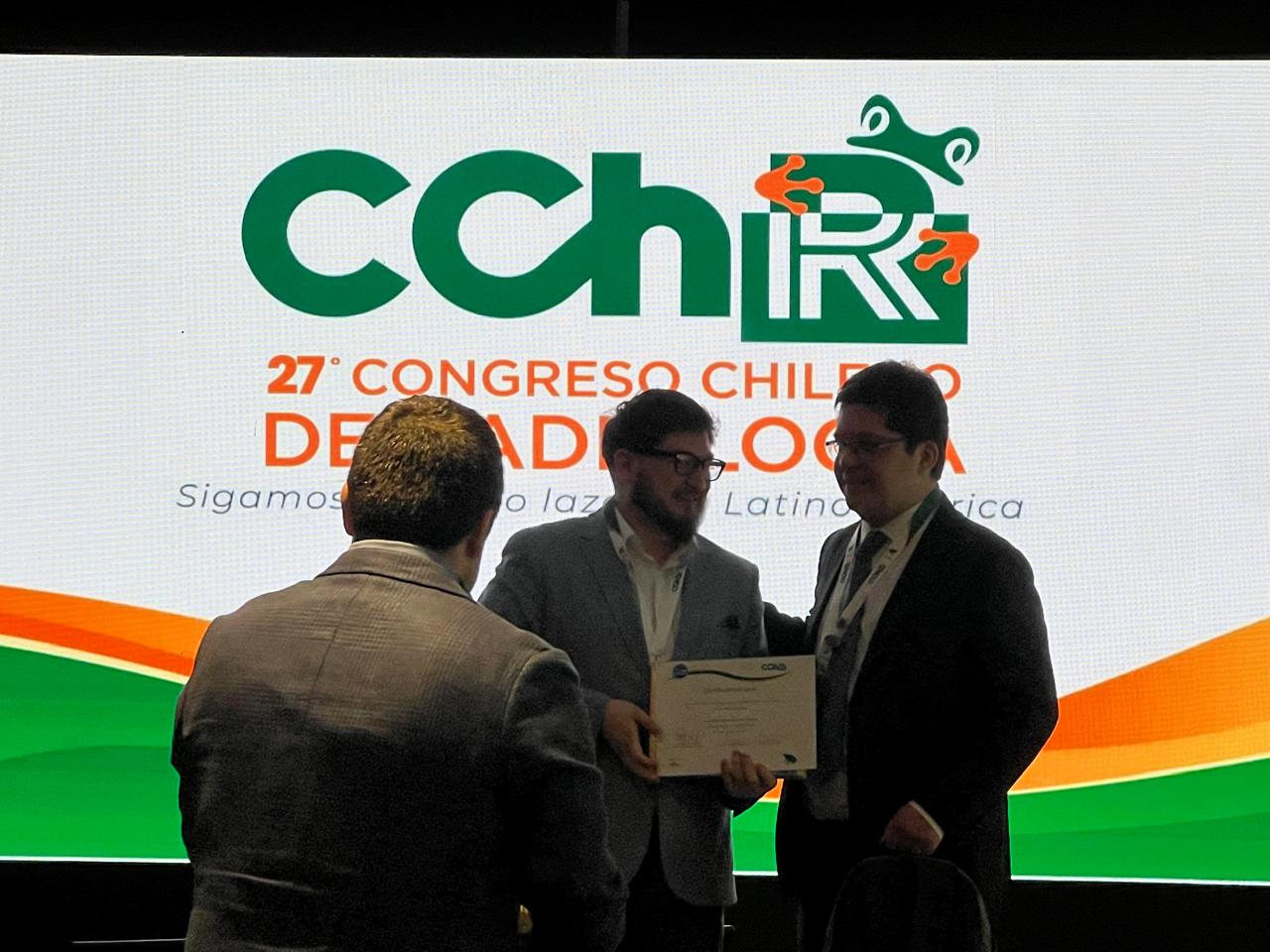
Felipe Flores, a medical student at Pontificia Universidad Católica de Chile (UC) and member of iHEALTH, once again won first place in the Oral Presentation category of the Undergraduate Meeting, held as part of the 2026 Chilean Congress of Radiology.
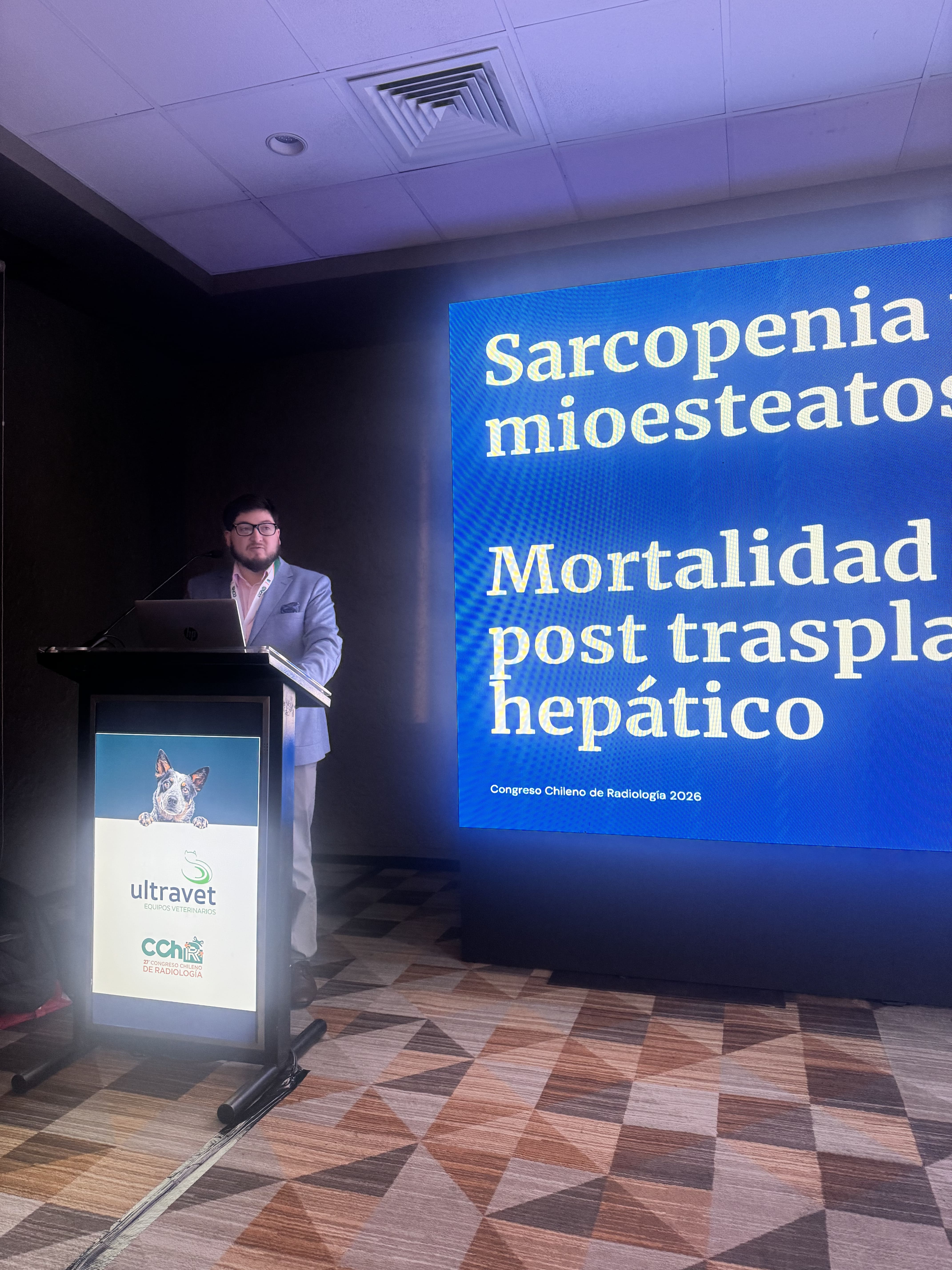
He received the award for his work “Sarcopenia and Myosteatosis: Mortality After Liver Transplantation.” The research, developed together with the UC Departments of Radiology and Gastroenterology, shows that fat accumulated in muscle can be measured with imaging before transplantation, and that this measurement can predict patients’ risk of mortality.
“I’m proud, because it represents many hours of extracurricular work, outside the university curriculum,” says Felipe. “I do research and take part in several projects because I enjoy it and because I believe contributing to knowledge is important and very valuable. For me, the award recognizes that effort to give a little more than what the university expects.”
Muscle composition as a risk predictor
The study is a retrospective review of patients who received a liver transplant at the Red de Salud UC Christus between 2016 and 2022. Using pre-transplant CT scans, the team measured the area and density of the psoas muscle in 113 patients.
Based on these measurements, the team looked for two muscle alterations: sarcopenia, understood as loss of muscle mass, and myosteatosis, the infiltration of fat into muscle. The results showed that patients with myosteatosis had a mortality risk nearly six times higher than those without it during the 72 weeks following transplantation. Sarcopenia, on the other hand, showed no significant association with mortality. Felipe sums it up this way: “Fatty muscle predicts that a liver transplant patient is more likely to die from any cause.”
“Myosteatosis, more than sarcopenia, is a fairly effective predictor of all-cause mortality at 72 weeks after liver transplantation,” he explains. “The cohort includes patients with different underlying conditions that led them to need a transplant, but the finding holds across all of them. Plus, it’s something we can assess through imaging before the transplant.”
The research team includes Dr. Carlos Benítez, gastroenterology fellow Dr. Gustavo Ayares, medical intern Matías Hernández, and Dr. Cecilia Besa, professor at UC School of Medicine and principal investigator at iHEALTH.
Multidisciplinary research
Felipe is a Harvard graduate, where he studied Human Developmental and Regenerative Biology. He joined iHEALTH through Dr. Besa, with PUC-CXR, a chest X-ray dataset with which he won this same award in 2025. The project was developed jointly by UC’s Department of Radiology and Department of Engineering and is currently in its second round of review for publication. “Other projects grew out of that, several of them at iHEALTH, where I have different roles. In this project, my main contribution is in data analysis and presentation,” he says.
“The institute is a reminder that research today needs to be multidisciplinary. Radiology is an extremely technical specialty that depends on the joint work of physics, engineering, mathematics, and medicine, which is what gives it clinical use. Having computational and mathematical skills has helped me find room to contribute to many ongoing projects,” he adds.
For Felipe, research is one of the pillars of his training. “For me it’s essential, because I really enjoy it and I believe a physician should also contribute to scientific knowledge. Being part of a center like iHEALTH has given me the opportunity to join more projects, meet more collaborators, and find people who think like me.”
To medical students considering research, Felipe recommends prioritizing time management and finding a good mentor. “There are always opportunities to do research, especially at a university like UC; what’s usually missing is time and motivation, and both are partly within our control. I was also lucky to find Dr. Besa as my mentor. She has always believed in me and given me every tool for my development as a researcher. I consider her a role model and I hope we can keep being a great team in the future.”
“Research is rewarding personally, because you discover something new and contribute to knowledge, and professionally, because it opens doors,” he concludes. “You shouldn’t think of it only in terms of how many points you earn for an application: research is more important than that.”