Applications open for summer 2026–2027 internships and research placements
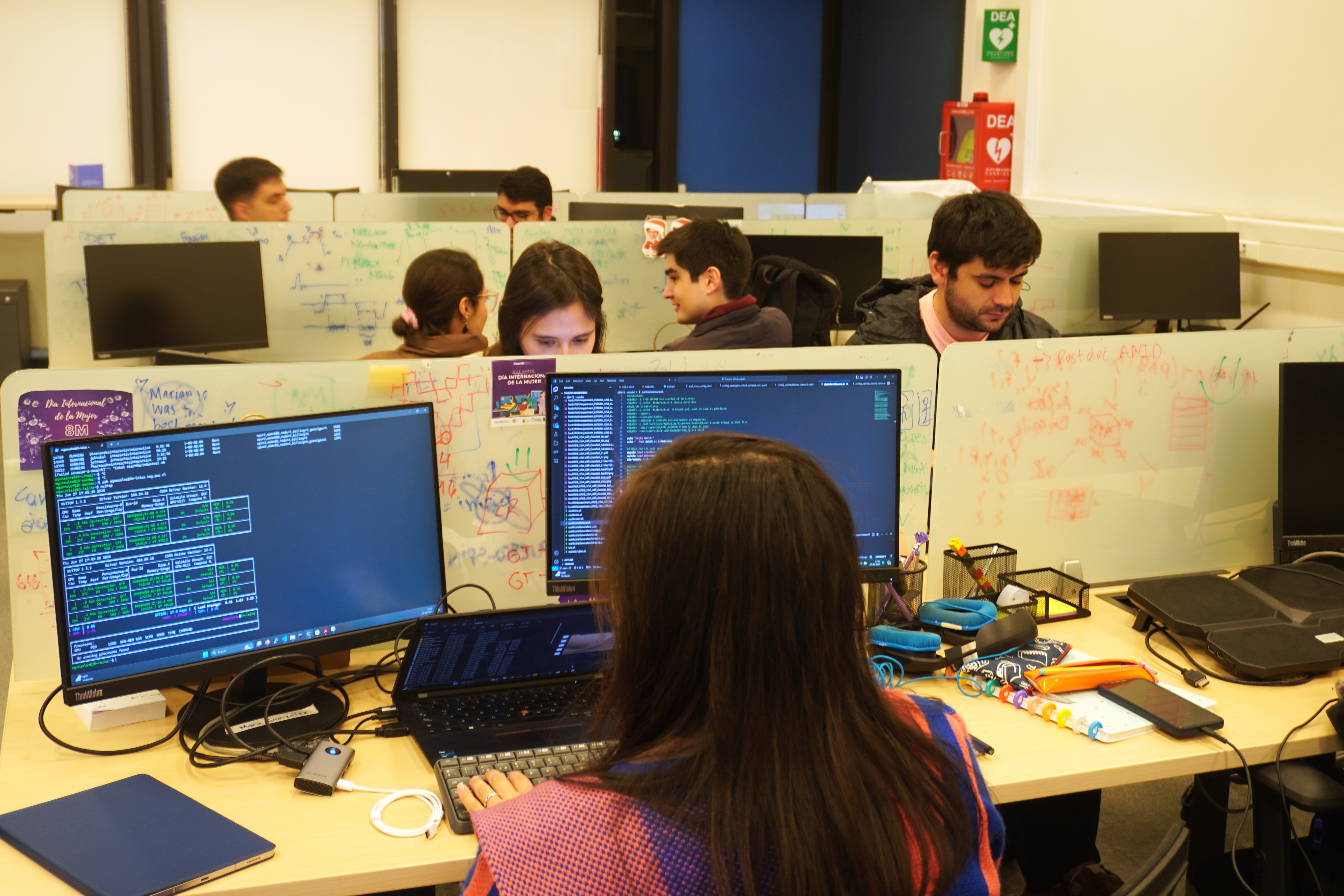
Engineering, health sciences and related students can join one of 31 research projects in medical imaging, artificial intelligence and health for one or two months. Applications are open until November 16, 2026.
iHEALTH has opened its summer 2026–2027 calls. The aim is to bring students from Universidad de Valparaíso, Universidad de Chile, Pontificia Universidad Católica de Chile and Universidad Técnica Federico Santa María closer to the research carried out at the institute.
This year there are three calls: Summer Internships, for final-year undergraduate students; AI Research Internships for Health Sciences Students; and Research Internships for Women, with places reserved specifically for female students. Projects begin in December 2026 or January 2027 and require a minimum commitment of 30 hours per week.
Key dates
Applications open: November 2, 2026
Applications close: November 16, 2026
Results announced: November 23, 2026
Projects begin: December 2026 or January 2027
The three calls
Call | Who can apply | Funding | Projects |
|---|---|---|---|
Summer Internships | Final-year undergraduate students in engineering, health sciences (nursing, medical technology, physical therapy, speech therapy, nutrition, etc.) and related fields | Up to CLP 280,000 gross per month, for a maximum of 2 months | 18 |
AI Research Internships for Health Sciences Students | Undergraduate students from their third year onwards, or graduate students, in health programs (nursing, medical technology, physical therapy, speech therapy, nutrition, medicine, etc.) and related fields | Up to CLP 200,000 gross per month, for a maximum of 2 months | 3 |
Research Internships for Women | Undergraduate students from their third year onwards in engineering, health sciences and related fields | Up to CLP 200,000 gross per month, for a maximum of 2 months, plus a CLP 100,000 bonus for students with children under 5 | 10 |
Requirements
Be a currently enrolled student at Universidad de Valparaíso, Universidad de Chile, Pontificia Universidad Católica de Chile or Universidad Técnica Federico Santa María.
Meet the year of study and program requirements for each call (see table).
Apply individually, stating the project or projects you are interested in, and attach your CV, a cover letter and a current certificate of enrollment.
Commit a minimum of 30 hours per week to the project.
For Summer Internships, each student is responsible for having the internship recognized by their university. Students should check with their program and report any required documentation before starting.
Selection will be based on each student’s interest in pursuing research related to the institute’s work.
Projects: Summer Internships
1. Web development of a 3D Slicer viewer in JavaScript
Supervisors: Denis Parra and Cecilia Besa · Duration: December 2026 to January 2027 (2 months)
Profile: computer engineering or computer science student with extensive experience in JavaScript and Linux servers. Optional: knowledge of DICOM images and the 3D Slicer software.
What you’ll do: implement Slicer’s 3D views and annotation tools in Cornerstone.js for the ReaderPool annotation platform, and upload annotated cases to it.
2. Exploratory implementation of a system to generate synthetic magnetic resonance images from computed tomography
Supervisors: Pablo Estévez and Steren Chabert · Duration: December 2026 to January 2027 (2 months)
Profile: experience in artificial intelligence (essential). Desirable: knowledge of medical imaging modalities (MRI, CT, PET).
What you’ll do: review the state of the art, select a reference method from the literature and implement it using public data.
3. Estimating portal venous pressure from MRI: reduced-order modelling and inference on a digital twin
Supervisors: Jeremías Garay and Marcelo Andía · Duration: December 2026 to January 2027 (2 months)
Profile: final-year student motivated by medical applications, comfortable programming in Python and interested in physical models. Experience with differential equations, fluid mechanics or numerical methods is a plus but not essential.
What you’ll do: in a joint USM–UAH–iHEALTH project, build a reduced-order model of the portal venous network, calibrate it with simulations and infer portal pressure from MRI measurements, comparing methods such as least squares, Kalman filters and physics-informed neural networks (PINNs).
4. Building and improving gradient amplifiers for low-field MRI
Supervisors: Cristián Tejos, Pablo Irarrázaval and Marcelo Andía · Duration: December 2026 to January 2027 (2 months)
Profile: Electrical, Biomedical or related Engineering student who has passed IEE2413 Electronics and is interested in power electronics. Experience in PCB design (KiCad/Altium), soldering or circuit debugging is valued.
What you’ll do: take version V2 of the amplifiers for the lab’s low-field (50 mT) scanner to a working prototype, adding protections, designing its PCB and characterizing its performance.
5. Setting up the MaRCoS open-source console on a low-field educational scanner
Supervisors: Cristián Tejos, Pablo Irarrázaval and Marcelo Andía · Duration: December 2026 only (1 month)
Profile: Electrical, Biomedical, Computer Engineering or related student who has taken IEE2713 Digital Systems, with basic Python programming. Experience with Linux, FPGAs or embedded systems is valued.
What you’ll do: migrate the EARNIE scanner to MaRCoS, an open, low-cost FPGA-based console, improve its graphical interface, acquire an image of a phantom and document the system.
6. Implementation of a multimodal vision-language model to generate neuroradiology reports from magnetic resonance images
Supervisors: Rodrigo Salas, Pablo Estévez, David Ortiz and Steren Chabert · Duration: December 2026 to January 2027 (2 months)
Profile: engineering student with strong programming skills and an interest in deep learning, medical image processing and language models.
What you’ll do: develop and evaluate models that combine anonymized brain MRI scans of glioma patients from Hospital Carlos Van Buren with the information in their radiology reports, for tasks such as estimating tumor grade.
7. Geometric descriptors of spinodoid microstructures to improve their AI-based inverse design
Supervisors: David Ortiz Puerta, Rodrigo Salas and Steren Chabert · Duration: December 2026 to January 2027 (2 months)
Profile: final-year student in biomedical, mathematical, mechanical or physics engineering, or a related field, with knowledge of machine learning and Python. Experience in image processing and mesh generation is valued.
What you’ll do: compute geometric descriptors of microstructures for bone scaffolds and incorporate them into a neural network-based inverse design model, as part of FONDECYT Regular Grant No. 1260671.
8. Impulsa IA Salud project: design and implementation of an educational platform
Supervisors: Sofía Gac and Pablo Pino · Duration: December 2026 to January 2027 (2 months)
Profile: students interested in designing and deploying digital products, from user experience (UX/UI) to technical implementation.
What you’ll do: design and deploy the minimum viable product of Impulsa IA Salud, a platform to train health professionals in AI fundamentals, with videos, progress tracking and automatic digital certificates.
9. Design and development of an integrated digital platform for iHEALTH’s institutional management: phase one
Supervisors: Sofía Gac and Katherine Rivera · Duration: December 2026 to January 2027 (2 months)
Profile: engineering student with a focus on technology management (computer science, computer engineering, information and management control engineering or related), who can program. Desirable: web development, databases, user authentication, automation, APIs and interface design.
What you’ll do: assess needs and design the architecture of a modular platform for managing the institute, and develop its first working module.
10. Optimizing the workflow of the administrative team’s management and tracking processes
Supervisor: Sofía Gac · Duration: December 2026 or January 2027 (1 month)
Profile: student of Industrial Engineering, process engineering, management control, business engineering, administration or related fields, proficient in Google Drive, document management and process mapping.
What you’ll do: map the institute’s management processes and propose and implement a shared document and information structure for the administrative team.
Projects: AI Research Internships for Health Sciences Students
1. Relationship between coronary stenosis, culprit plaque and myocardial edema in acute coronary syndrome using 3D multi-contrast magnetic resonance imaging (BOOST)
Supervisors: René Botnar and Claudia Prieto · Duration: December 2026 to January 2027 (2 months)
Profile: student of medicine, medical technology or related programs, with programming skills (Python and/or MATLAB) and image processing knowledge. An interest in cardiovascular imaging and basic knowledge of cardiac anatomy and statistics are valued.
What you’ll do: analyze 3D cardiac MRI scans of patients with acute coronary syndrome to relate arterial narrowing and culprit plaque to edema of the heart muscle, and demonstrate the potential of a single scan to assess both.
2. Integrating chest CT imaging and circulating biomarkers in lung cancer using explainable machine learning
Supervisor: Rodrigo Salas. In collaboration with Nicole Roldán and Leonel Muñoz (Hospital Gustavo Fricke and Universidad de Valparaíso), Dr. Raúl Oyarce (Hospital Gustavo Fricke) and Andreas Rubilar (Universidad de Valparaíso) · Duration: December 2026 to January 2027 (2 months)
Profile: master’s or PhD student in health sciences, biological sciences or engineering, interested in medical imaging, biomarkers and AI. Desirable: reading proficiency in English and basic knowledge of Python or spreadsheets. Training will be provided.
What you’ll do: review the literature on models that combine chest CT with blood biomarkers, support the curation of an image database from a surgical cohort and train a simple machine learning model.
3. Manual and automated segmentation of adrenal adenomas and glands on CT to develop a radiomic score for cortisol hypersecretion in adrenal incidentalomas
Supervisors: Cecilia Besa, Paola Caprile and René Baudran · Duration: December 2026 to January 2027 (2 months)
Profile: Medicine student, ideally in third year or above, with knowledge of abdominal anatomy and an interest in radiology and AI. Experience with 3D Slicer is valued, although training will be provided.
What you’ll do: segment adrenal nodules and glands in 3D Slicer under radiological supervision and validate automatic segmentation tools, working with a team from radiology, engineering and UC Endocrinology. This is a hybrid internship.
Projects: Research Internships for Women
1. Motion-corrected 3D reconstruction of coronary magnetic resonance angiography
Supervisors: Claudia Prieto and René Botnar · Duration: December 2026 to January 2027 (2 months)
Profile: engineering student (electrical, biomedical, physics or computer engineering) or related, with Python and/or MATLAB programming and signal or image processing skills. No MRI experience is required.
What you’ll do: reconstruct 3D coronary angiograms of around 80 healthy subjects acquired at iHEALTH, check and assess their quality, and build a curated database of high-quality coronary images.
2. Joint 3D quantitative T1/T2 mapping of the myocardium with motion correction
Supervisors: Claudia Prieto and René Botnar · Duration: December 2026 to January 2027 (2 months)
Profile: engineering student (electrical, biomedical, physics or computer engineering) or related, with Python and/or MATLAB programming and signal or image processing skills.
What you’ll do: reconstruct 3D T1/T2 maps of the heart, segment the myocardium and establish reference values in healthy subjects, comparing them with conventional 2D techniques.
3. Motion-corrected 3D reconstruction of bright- and black-blood magnetic resonance images
Supervisors: René Botnar and Claudia Prieto · Duration: December 2026 to January 2027 (2 months)
Profile: engineering student (electrical, biomedical, physics or computer engineering) or related, with Python and/or MATLAB programming and signal or image processing skills.
What you’ll do: reconstruct cardiac images acquired with a new sequence developed by the group, assess their quality and measure cardiac chamber volumes.
4. Synthetic Coronary Angiography with Fluid–Structure Interaction
Supervisors: Jeremías Garay and Francisco Sahli · Duration: December 2026 to January 2027 (2 months)
Profile: student motivated by medical applications and numerical simulation, comfortable programming in Python, with a basic understanding of numerical methods for differential equations and able to read papers in English. An interest in machine learning is valued.
What you’ll do: simulate contrast agent transport in coronary arteries with elastic walls, generate synthetic angiograms and use physics-informed neural networks to estimate microvascular resistance without invasive procedures.
5. Simulating the portal venous system: fluid–structure interaction and synthetic MRI for non-invasive pressure estimation
Supervisors: Jeremías Garay and Marcelo Andía. In collaboration with Cristóbal Arrieta (UAH) · Duration: December 2026 to January 2027 (2 months)
Profile: student motivated by medical applications, comfortable programming in Python and interested in physical models. Experience with differential equations or fluid mechanics is a plus but not essential.
What you’ll do: in a USM–UAH–iHEALTH project, simulate a patient’s portal vein under different pressure scenarios, generate synthetic MRI scans and organize the results into an open dataset.
6. Liquid biopsy and artificial intelligence in cervical cancer: a review of models integrating circulating biomarkers and imaging
Supervisor: Rodrigo Salas. In collaboration with Nicole Roldán and Leonel Muñoz (Hospital Gustavo Fricke and Universidad de Valparaíso) and Dr. José Solís (Hospital Carlos Van Buren) · Duration: December 2026 to January 2027 (2 months)
Profile: master’s or PhD student in health sciences, biological sciences or engineering, interested in biomarkers and AI. Desirable: reading proficiency in English and basic knowledge of Python or spreadsheets.
What you’ll do: conduct a structured review of studies that use blood biomarkers, alone or combined with imaging, for the diagnosis and follow-up of cervical cancer, and train a simple machine learning model.
7. Recruitment and clinical characterization of pregnant women to develop explainable artificial intelligence models for predicting fetal vascular dysfunction (San Felipe)
Supervisors: Fabián Pardo and Rodrigo Salas · Duration: December 2026 to January 2027 (2 months)
Profile: Midwifery student in third year or above, interested in clinical research and maternal-fetal health, and available to work on-site at CESFAM Segismundo Iturra in San Felipe. No programming or AI experience is required.
What you’ll do: support the recruitment and clinical characterization of pregnant women, manage study data and learn how this information feeds predictive models of fetal vascular dysfunction.
8. Artificial intelligence and geospatial analysis to study the association between maternal exposure to air pollution and perinatal complications
Supervisors: Fabián Pardo and Rodrigo Salas · Duration: December 2026 to January 2027 (2 months)
Profile: student in third year or above of Statistics, Data Science, Mathematical Engineering, Computer Science, Biomedical Engineering or related fields, with Python or R and statistics. On-site attendance at Universidad de Valparaíso’s San Felipe Campus is required.
What you’ll do: cross-reference more than 5,000 pregnancy records from Hospital San Camilo in San Felipe with air pollution data, and apply explainable machine learning models to explore their relationship with perinatal complications.
9. Design of a battery charging and enclosure system for gradient amplifiers
Supervisors: Cristián Tejos, Pablo Irarrázaval and Marcelo Andía · Duration: December 2026 only (1 month)
Profile: Electrical, Mechanical, Biomedical or related Engineering student who has passed IEE2123 Electric Circuits or an equivalent course. Experience with circuits, 3D design or printing, and batteries is valued.
What you’ll do: design and implement a safe, practical system for charging, enclosing and connecting the battery banks that power the gradient amplifiers.
10. Improving field homogeneity in a low-field educational scanner
Supervisors: Cristián Tejos, Pablo Irarrázaval and Marcelo Andía · Duration: January 2027 only (1 month)
Profile: Engineering, Physics or related student interested in applied optimization and with hands-on building skills. Experience in 3D modeling and printing and in programming is valued.
What you’ll do: map the magnetic field of the EARNIE educational scanner (50 mT) and design, build and implement magnet or shimming improvements that reduce its inhomogeneity.
How to apply
Send your application, including your CV, cover letter and current certificate of enrollment, to comunicaciones@i-health.cl by November 16, 2026.
The email subject line must read: “title of the project”.
Questions can also be sent to comunicaciones@i-health.cl. Results will be announced on November 23, 2026.
