Seminario 12 de Septiembre 2023
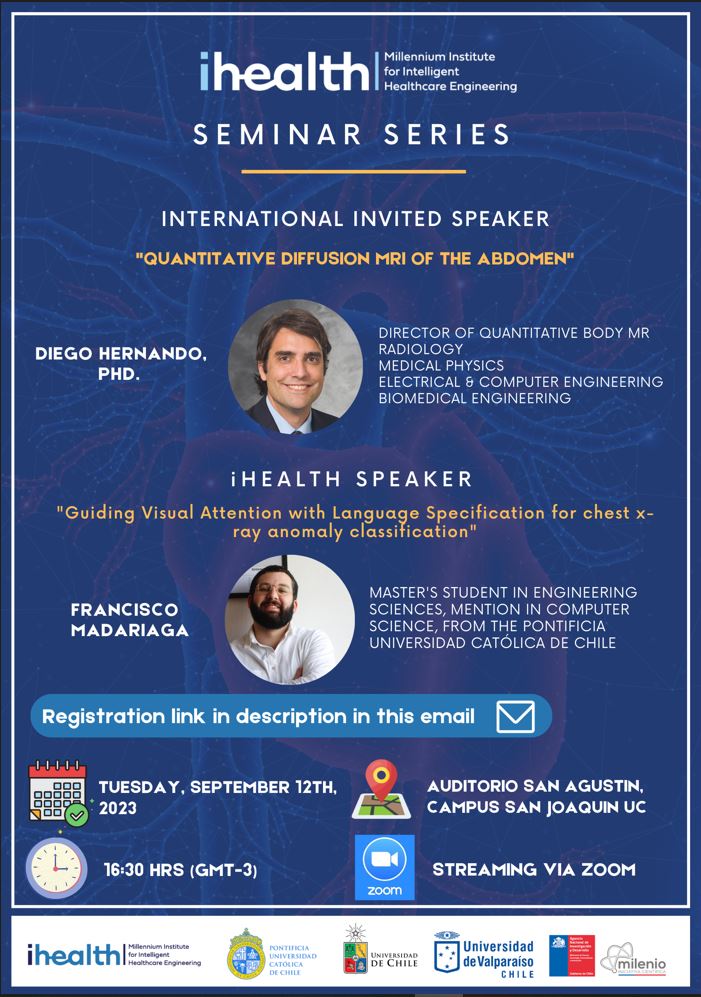
Horario: 16:30 - 18:00
Diego Hernando
Título: Resonancia magnética de difusión cuantitativa del abdomen
Resumen: La resonancia magnética de difusión tiene un enorme potencial y utilidad en la evaluación de diversos procesos de enfermedades abdominales y pélvicas, incluido el cáncer y las imágenes no cancerosas del hígado, la próstata y otros órganos. La resonancia magnética de difusión cuantitativa se basa en adquisiciones con múltiples codificaciones de difusión seguidas de un mapeo cuantitativo de parámetros de difusión que son sensibles a la microestructura del tejido. En comparación con la resonancia magnética ponderada por difusión cualitativa, la resonancia magnética por difusión cuantitativa puede mejorar la estandarización de la caracterización del tejido según sea necesario para la detección, estadificación y seguimiento del tratamiento de la enfermedad. Sin embargo, al igual que muchos otros métodos de resonancia magnética cuantitativa, la resonancia magnética por difusión enfrenta múltiples desafíos, incluidos artefactos de adquisición, limitaciones en el modelado de señales y variabilidad biológica. En la resonancia magnética de difusión abdominal y pélvica, los desafíos técnicos de adquisición incluyen el movimiento fisiológico (respiratorio, peristáltico y pulsátil), distorsiones de la imagen y una baja relación señal-ruido. Si no se abordan, estos desafíos conducen a un rendimiento técnico deficiente (sesgo y precisión) y a los resultados clínicos de la resonancia magnética de difusión cuantitativa. Los desarrollos técnicos emergentes y novedosos buscan abordar estos desafíos y pueden permitir una resonancia magnética de difusión cuantitativa confiable del abdomen y la pelvis. A través de la validación sistemática en fantasmas, voluntarios y pacientes, incluidos estudios multicéntricos para evaluar la reproducibilidad, estas técnicas emergentes pueden finalmente demostrar el potencial de la resonancia magnética de difusión cuantitativa para aplicaciones de imágenes abdominales y pélvicas.
Biografía: Diego Hernando es profesor asociado de los Departamentos de Radiología y Física Médica de la Universidad de Wisconsin. Es originario de Valladolid, España, donde asistió a la universidad con especialización en Ingeniería de Telecomunicaciones. En la Universidad de Wisconsin, Diego es el Director de resonancia magnética corporal cuantitativa en el Departamento de Radiología y dirige un grupo de investigación activo financiado por los NIH dedicado al desarrollo y la validación traslacional de técnicas de imágenes cuantitativas. Diego está particularmente interesado en contribuir a la transformación de la resonancia magnética en una modalidad de imagen verdaderamente cuantitativa. Al medir las propiedades físicamente significativas del tejido, su grupo tiene como objetivo desarrollar biomarcadores de imágenes cuantitativos para mejorar la detección, estadificación y seguimiento del tratamiento de diversas enfermedades.
Francisco Madariaga
Título: Guía de la atención visual con especificación del lenguaje para la clasificación de anomalías en las radiografías de tórax.
Resumen: Han sido numerosos los esfuerzos para abordar tareas de clasificación altamente desequilibradas en la atención médica, especialmente en el ámbito de la generación de informes de radiografías radiológicas de tórax, una tarea persistentemente desafiante. Este proyecto consta de dos fases: en primer lugar, la detección de una anomalía en la radiografía de tórax y, en segundo lugar, aprovechar esa clasificación para generar un informe radiológico en texto libre. Para abordar la detección de anomalías, esta investigación propone el uso de un marco novedoso denominado "Guía de la atención visual con especificación del lenguaje" (GALS). GALS emplea de forma única una especificación de lenguaje de alto nivel como consejo para dirigir la evidencia de clasificación a características relevantes para la tarea y al mismo tiempo minimizar la atención a los distractores. Posteriormente, esta técnica supervisa la atención espacial del clasificador para mejorar la precisión en la identificación de características relevantes e ignorar el contexto que distrae.
Biografía: Ingeniero Industrial egresado de la Universidad de Concepción. Su interés por el campo de la inteligencia artificial lo llevó a cursar la Diplomatura en Inteligencia Artificial en la Pontificia Universidad Católica de Chile. Actualmente continúa profundizando sus conocimientos como estudiante de maestría en Ciencias de la Ingeniería, con mención en Informática en la misma universidad, donde investiga la generación automática de informes radiológicos a partir de imágenes médicas.
