Seminario 6 de Junio 2023
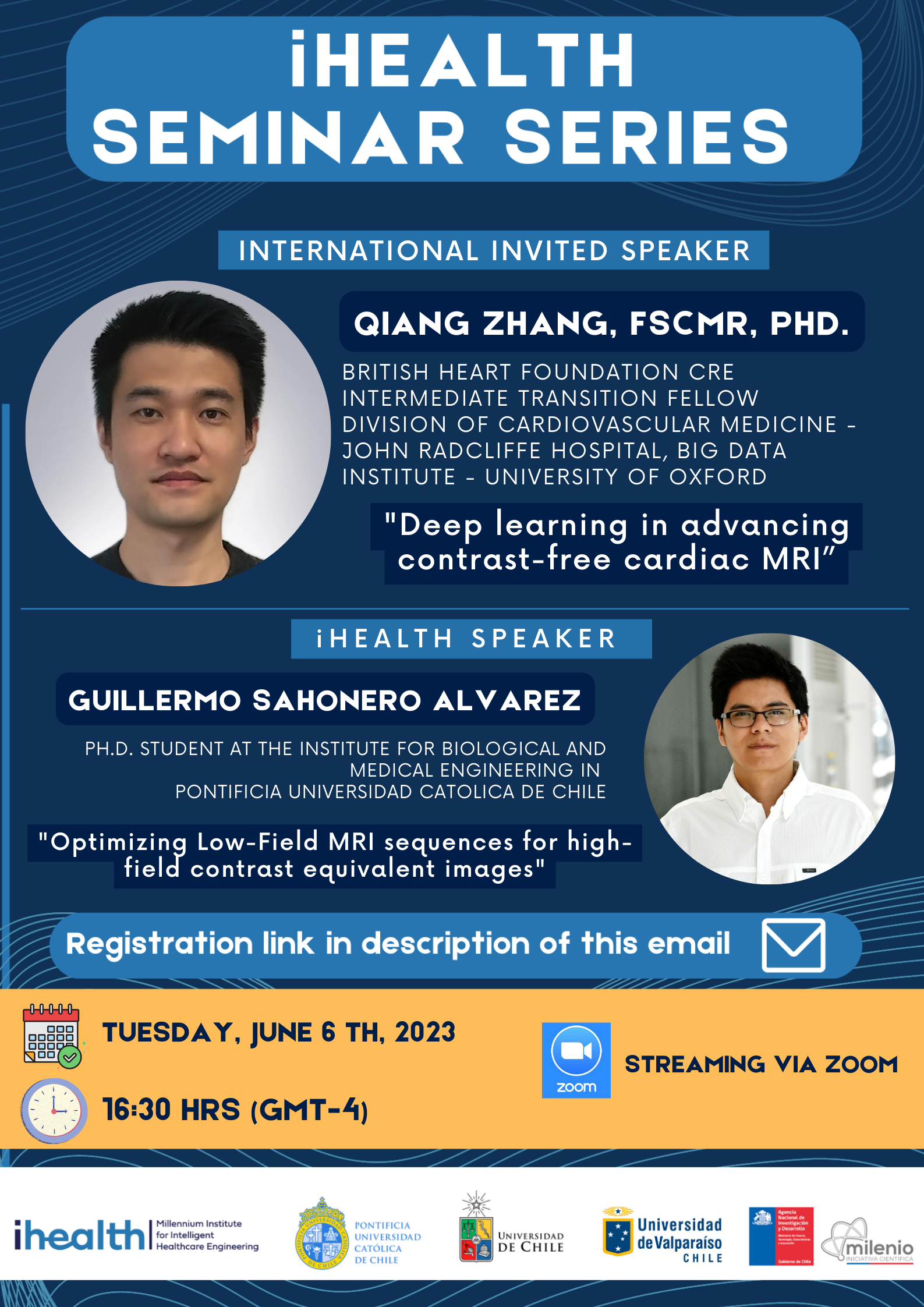
Horario: 16:30 - 18:00
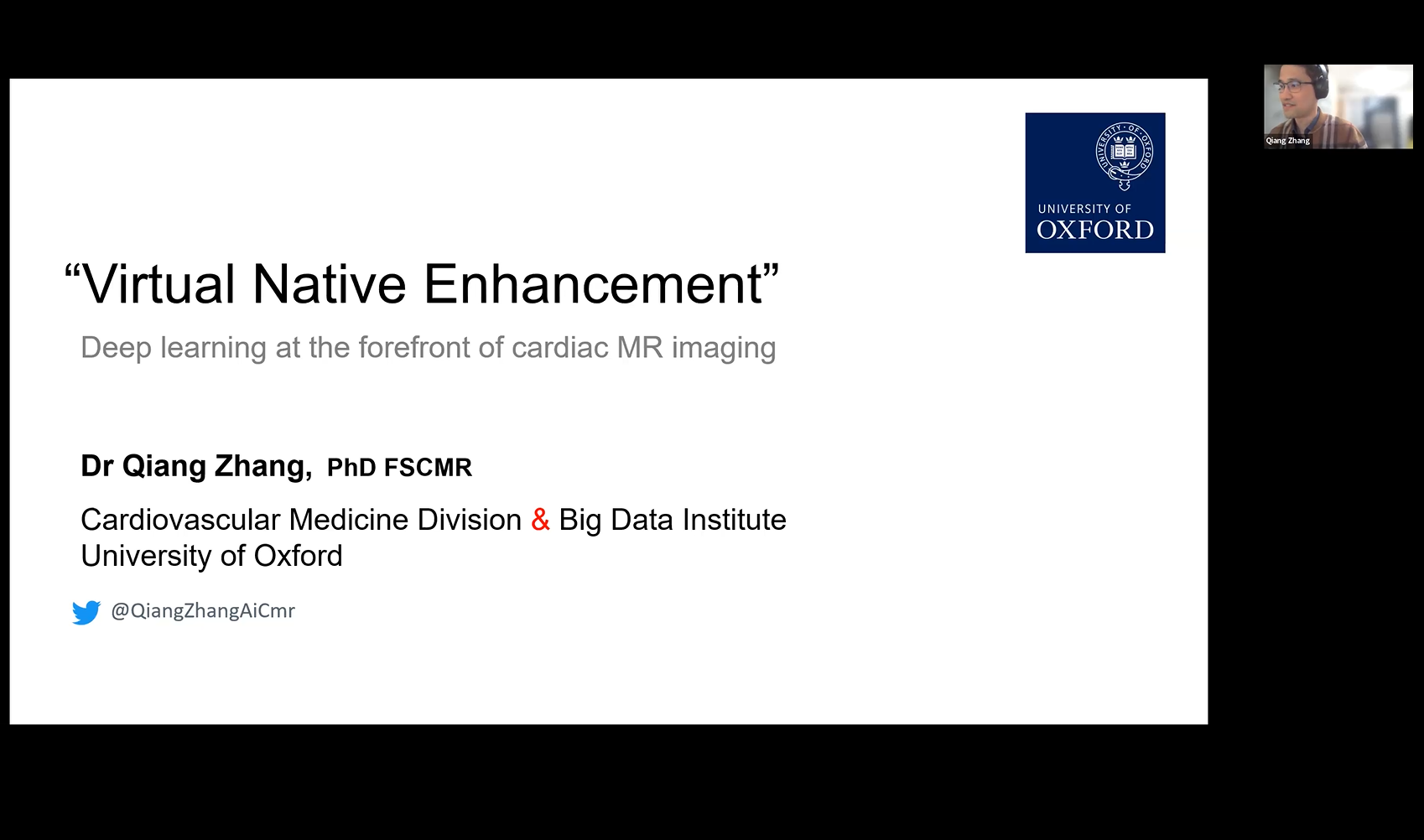
Qiang Zhang
Título: Aprendizaje profundo en el avance de la resonancia magnética cardíaca sin contraste
Resumen: La cicatrización miocárdica es una vía final común para la mayoría de las enfermedades cardíacas. Clínicamente, se evalúan con MRI, utilizando un método de imágenes llamado realce tardío de gadolinio o LGE. Sin embargo, LGE requiere inyección de contraste, lo que aumenta el tiempo y los costos de exploración y tiene contraindicaciones. Una nueva tecnología basada en IA llamada "mejora nativa virtual" (VNE) ofrece una alternativa sin contraste. Esto combina imágenes de RM que normalmente no necesitan inyecciones de contraste y utiliza IA para entrenar máquinas para generar una imagen "LGE virtual". Durante esta presentación, el Dr. Zhang presentará los últimos avances en VNE y discutirá los próximos pasos hacia su aplicación en la práctica clínica.
Biografía: Qiang Zhang es científico de aprendizaje profundo y miembro intermedio de BHF CRE en la División RDM de Medicina Cardiovascular de la Universidad de Oxford. Trabajando con médicos y científicos de RM en el día a día, su principal objetivo de investigación es cerrar la brecha entre el aprendizaje automático y las necesidades clínicas, y traducir las soluciones de IA a la práctica clínica del mundo real. Su enfoque de investigación reciente se ha centrado en la mejora de la IA de la resonancia magnética para obtener imágenes del corazón más rápidas, seguras e informativas.
Guillermo Sahonero Álvarez
Título: Optimización de secuencias de resonancia magnética de campo bajo para imágenes equivalentes de alto contraste de campo
Resumen: La resonancia magnética de campo bajo ha ganado recientemente un interés significativo debido a su potencial para democratizar el acceso a los análisis médicos basados en resonancia magnética. Sin embargo, la adopción de esta tecnología enfrenta varios desafíos que van desde aspectos técnicos, como la reconstrucción de imágenes y la eliminación de ruido, hasta la renuencia médica a adoptar tecnologías relativamente nuevas o no tan conocidas. Los sistemas de resonancia magnética de 1,5 T y 3 T son los más comunes, por lo que el trabajo actual se ha centrado en desarrollar y mejorar las técnicas de procesamiento de imágenes para eliminar el ruido y mejorar las imágenes de campo bajo, de modo que puedan parecer imágenes de campo alto. Desafortunadamente, se ha trabajado poco en la optimización y adaptación de secuencias para adquirir imágenes de campo bajo que podrían ser potencialmente tan útiles como las imágenes adquiridas en campos más altos. En este trabajo en curso, proponemos un enfoque para generar secuencias de campo bajo para reducir la diferencia relativa entre imágenes de campo alto y campo bajo. De esta manera, esperamos encontrar adaptaciones sistemáticas para hacer que los sistemas de resonancia magnética de campo bajo sean más atractivos para el personal médico.
Bio: Guillermo Sahonero es Ph.D. Estudiante del Instituto de Ingeniería Biológica y Médica de UC Chile e iHEALTH. Anteriormente, fue profesor e investigador de tiempo completo en la UCB (Bolivia), donde trabajó en el desarrollo de BCI basados en EEG en tiempo real y sistemas de reconocimiento de la marcha para vigilancia inteligente utilizando paradigmas informáticos de punta y aprendizaje profundo. También contribuyó al desarrollo del estándar IEEE para una terminología unificada para interfaces cerebro-computadora. Sus intereses de investigación se centran en MRI, Deep Learning, BCI y Computer Vision.