Seminar July 15TH, 2025
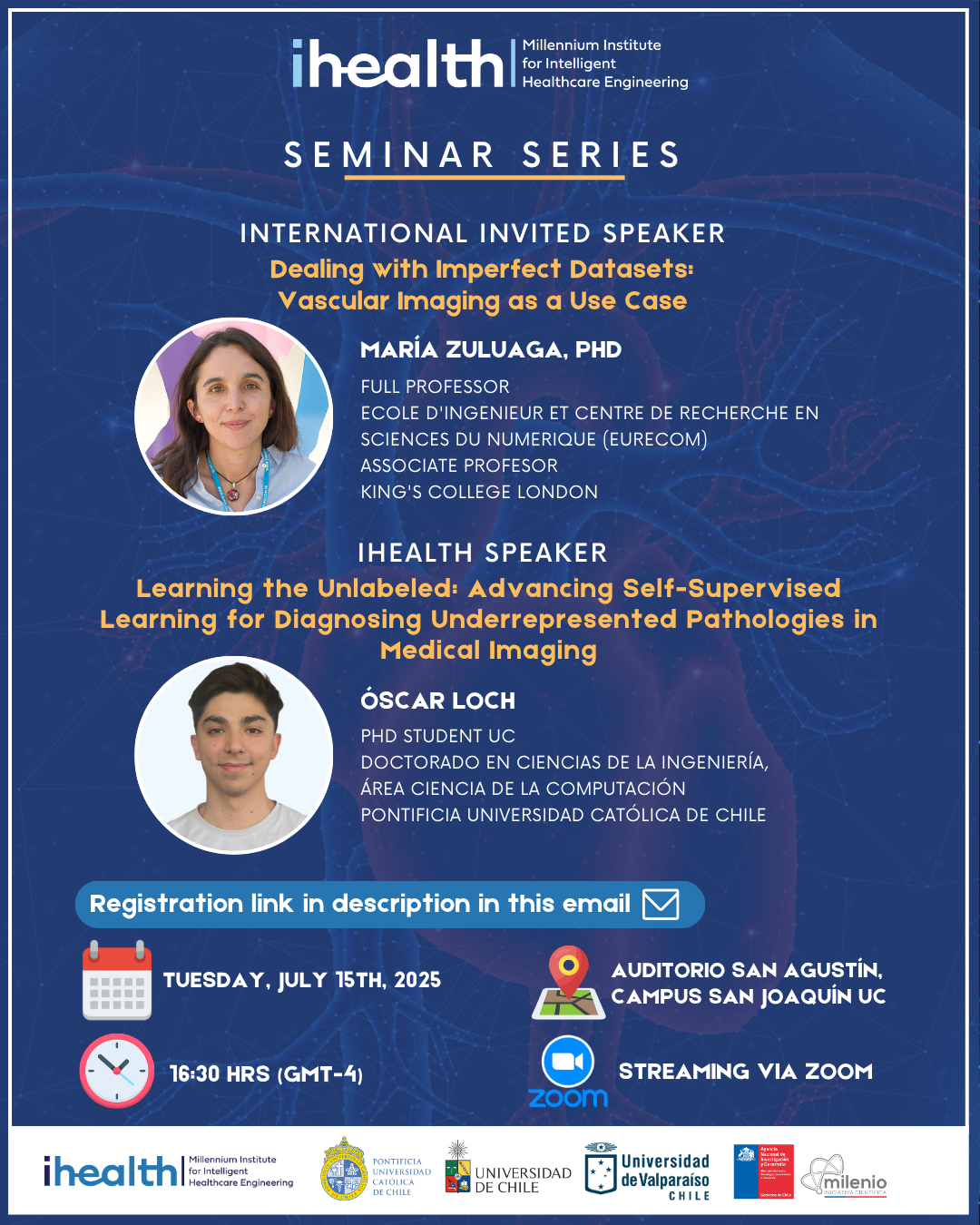
Hours: 16:30 - 18:00
INTERNATIONAL INVITED SPEAKER
MARIA ZULUAGA
SHORT BIO: María Zuluaga is an associate professor at EURECOM, a Graduate School and Research Centre in Digital Sciences (French Riviera), with an affiliate position within the School of Biomedical Engineering & Imaging Sciences at King’s College London. She holds a PhD in Signal and Image Processing from Université de Lyon, France. Her research team focuses on developing novel machine learning methods from multi-modal data that can be safely used to advance healthcare research and improve clinical practice.
TITLE: "Dealing with Imperfect Datasets: Vascular Imaging as a Use Case"
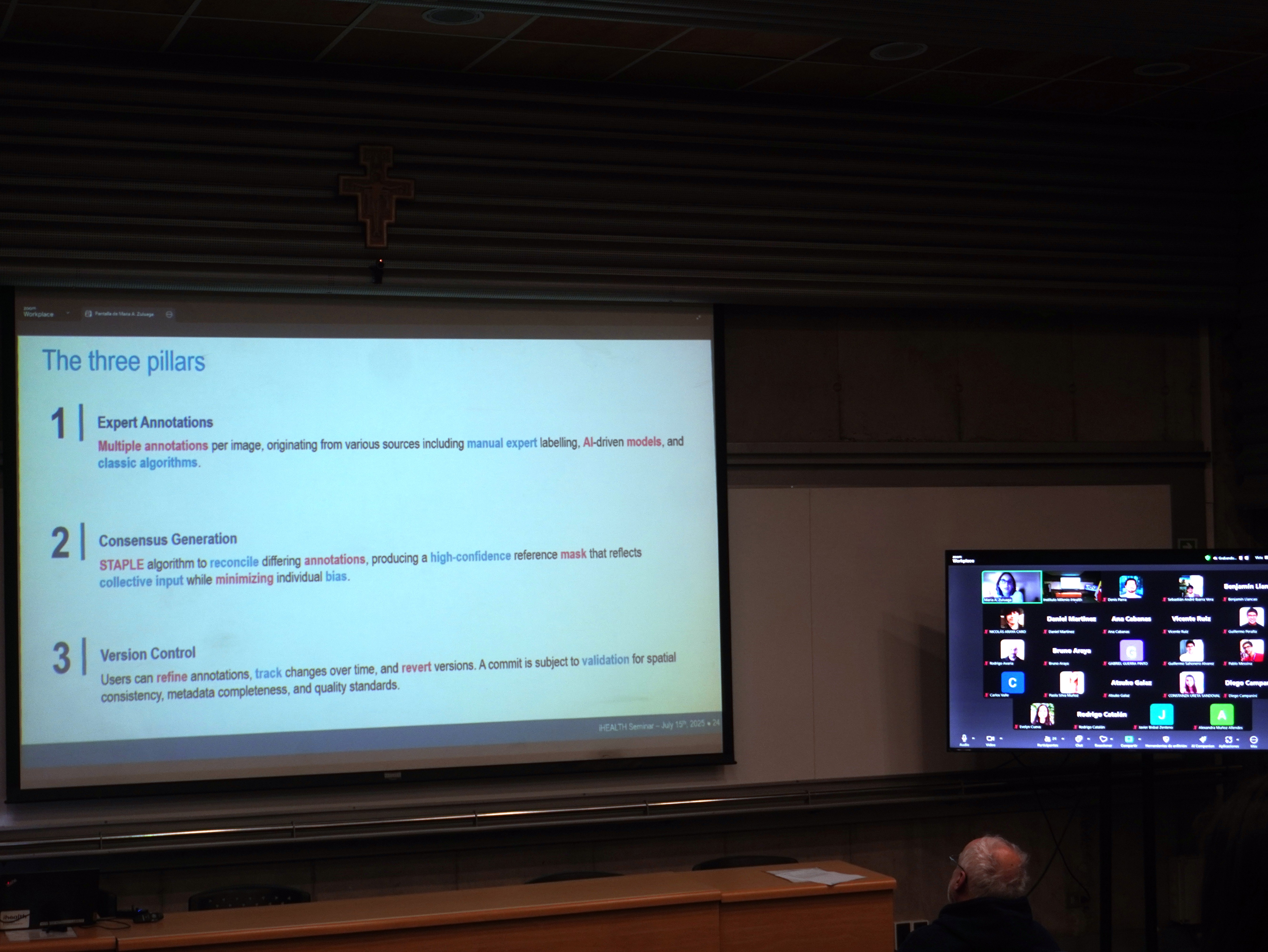
ABSTRACT: High-quality data is essential for developing medical image algorithms. It plays a critical role in training supervised learning models, which typically require a substantial amount of paired image data and annotations. While the medical imaging community has made significant strides in acquiring and curating large, high-quality datasets, challenges remain. Noisy data, low-quality images, and annotation errors can still occur, potentially impacting the performance of the models developed using such data. In this talk, I will address the issue of imperfect datasets, where imperfections arise from discrepancies or errors in annotations. Assuming that annotations are inherently flawed, I will introduce a novel methodology and framework designed to systematically track the evolution of annotations. This framework allows for multiple expert annotations and iterative refinements, integrating them through a consensus generation process. Using vascular imaging as a case study, I will demonstrate how this framework enabled us to create VesselVerse, the largest annotated multi-modal neurovascular image dataset, consisting of over 1,000 annotated images published to date.
iHEALTH SPEAKER
OSCAR LOCH
SHORT BIO: Oscar Loch is a PhD Student in Engineering Sciences, Computer Science area at Pontificia Universidad Católica de Chile. His research focuses on addressing the long tail problem in medical image diagnosis.
TITLE: “Learning the Unlabeled: Advancing Self-Supervised Learning for Diagnosing Underrepresented Pathologies in Medical Imaging”
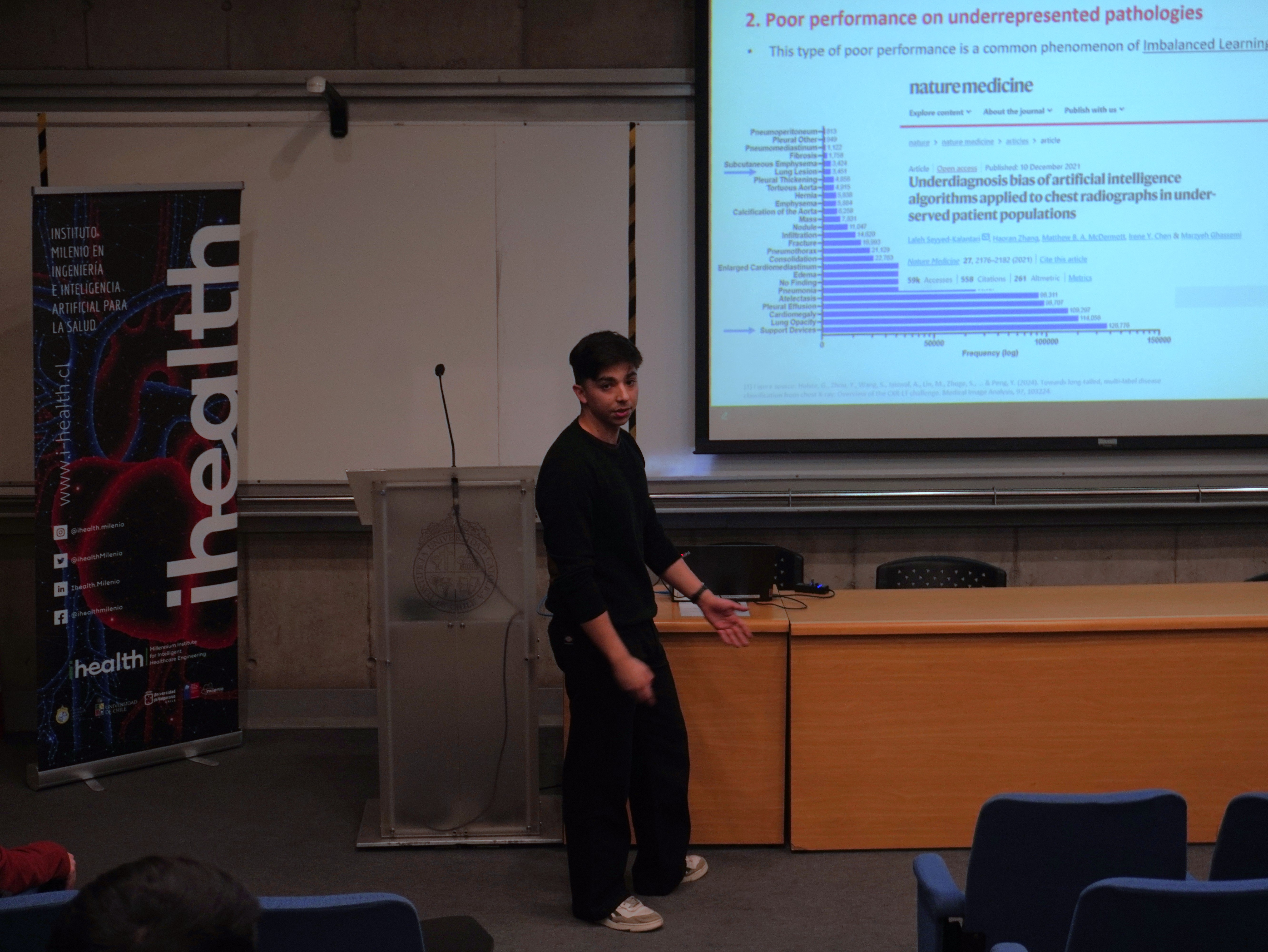
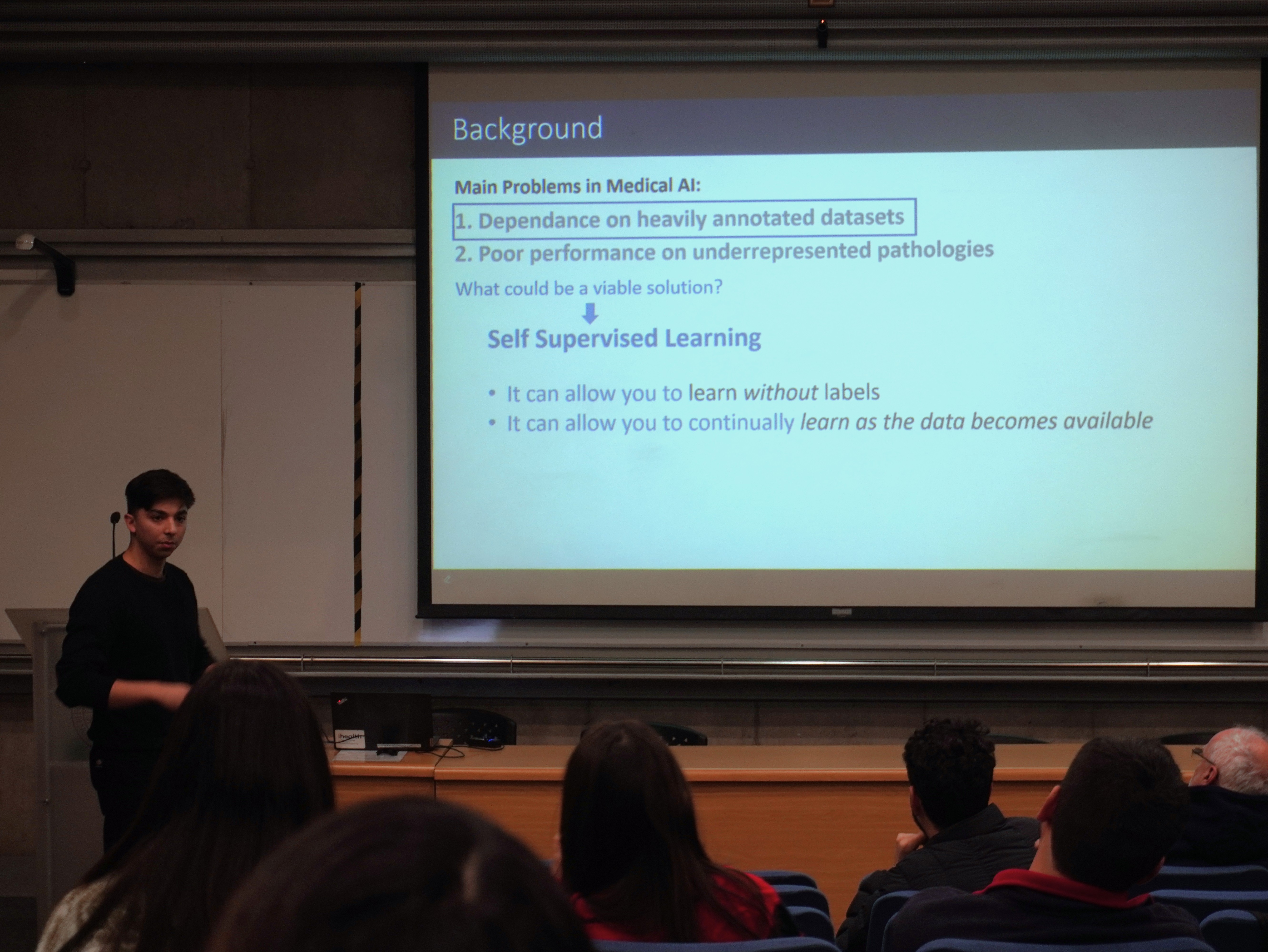
ABSTRACT: This presentation addresses the challenges in automated chest radiograph analysis, especially in underserved regions with limited access to radiologists. It highlights the potential of self-supervised learning (SSL) to reduce reliance on expensive labeled datasets and improve diagnostic performance, particularly for rare or underrepresented conditions. Despite advances, current models struggle with class imbalance and are not yet ready for clinical deployment. The proposed work aims to develop advanced SSL techniques to enhance the detection and characterization of rare chest abnormalities, ultimately improving accessibility and accuracy in medical imaging.