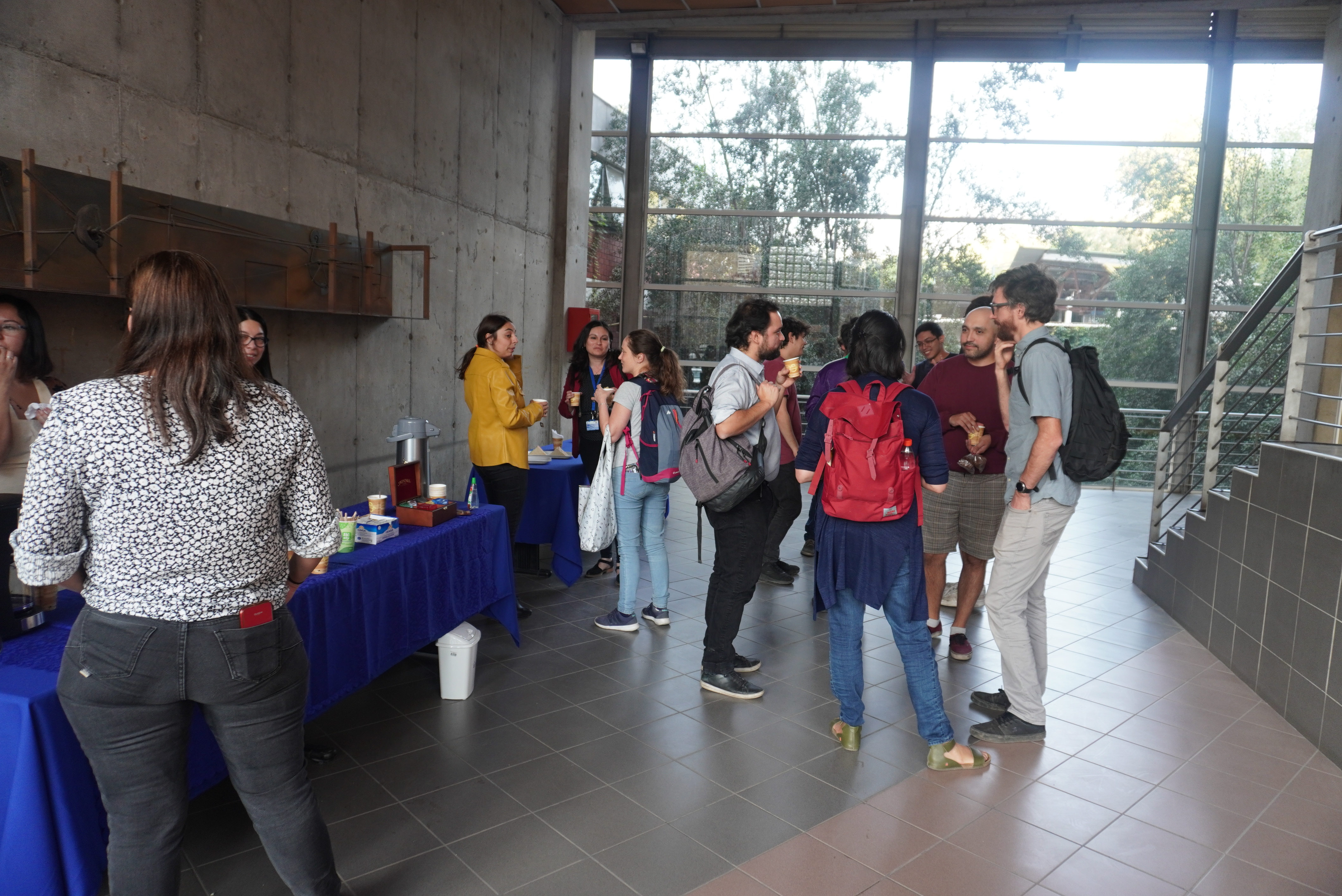
Seminar April 11th, 2023
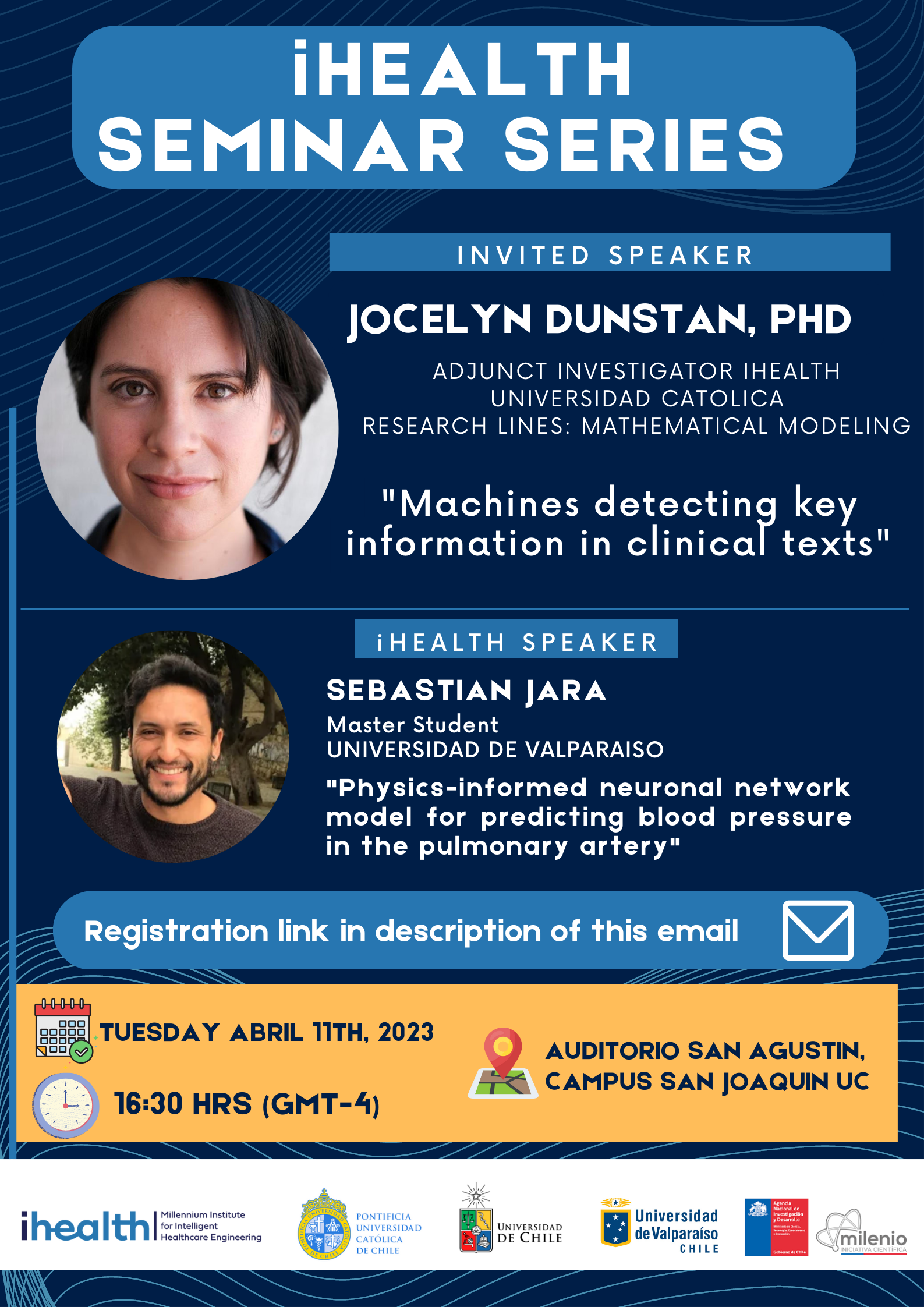
Hours: 16:30 - 18:00
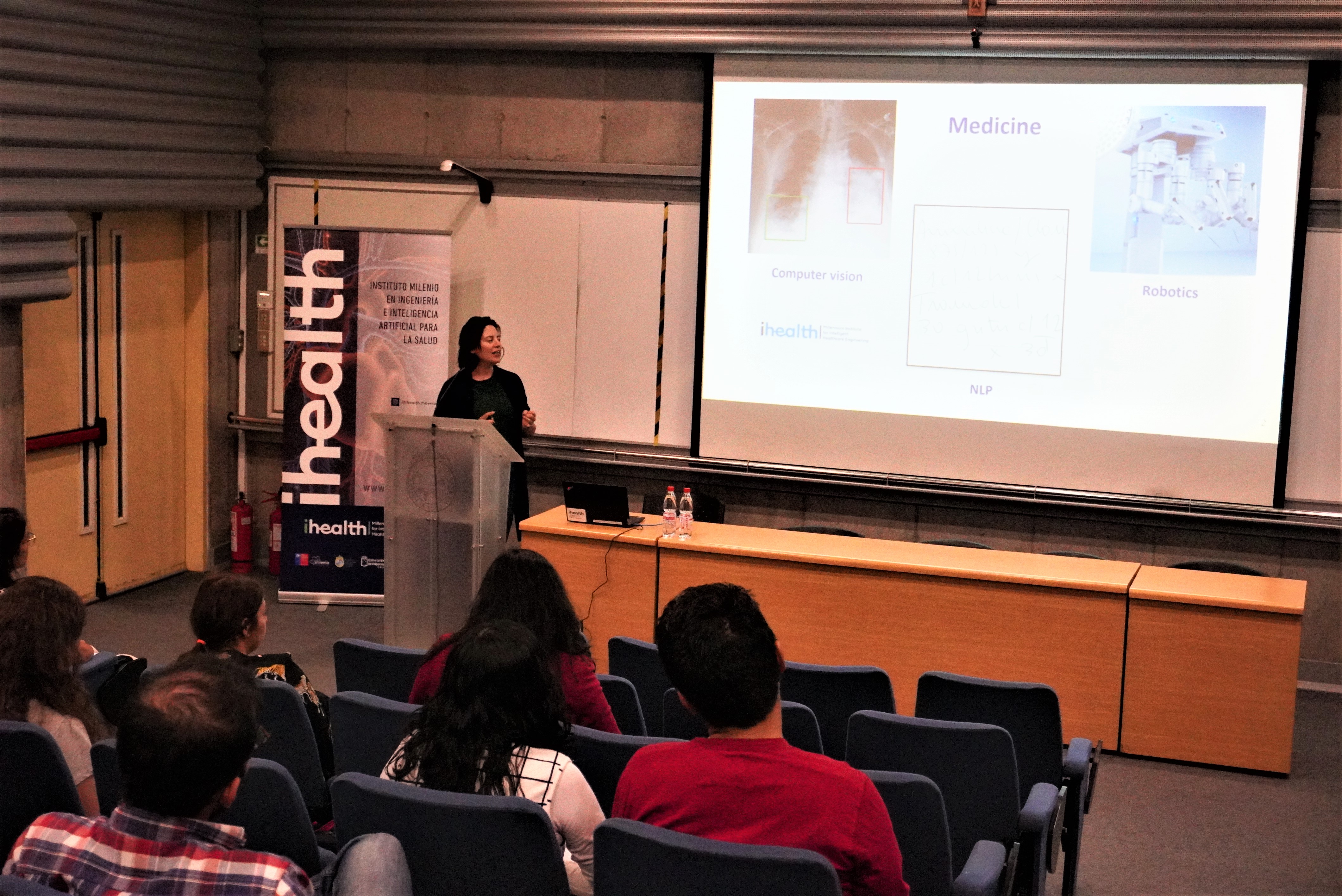
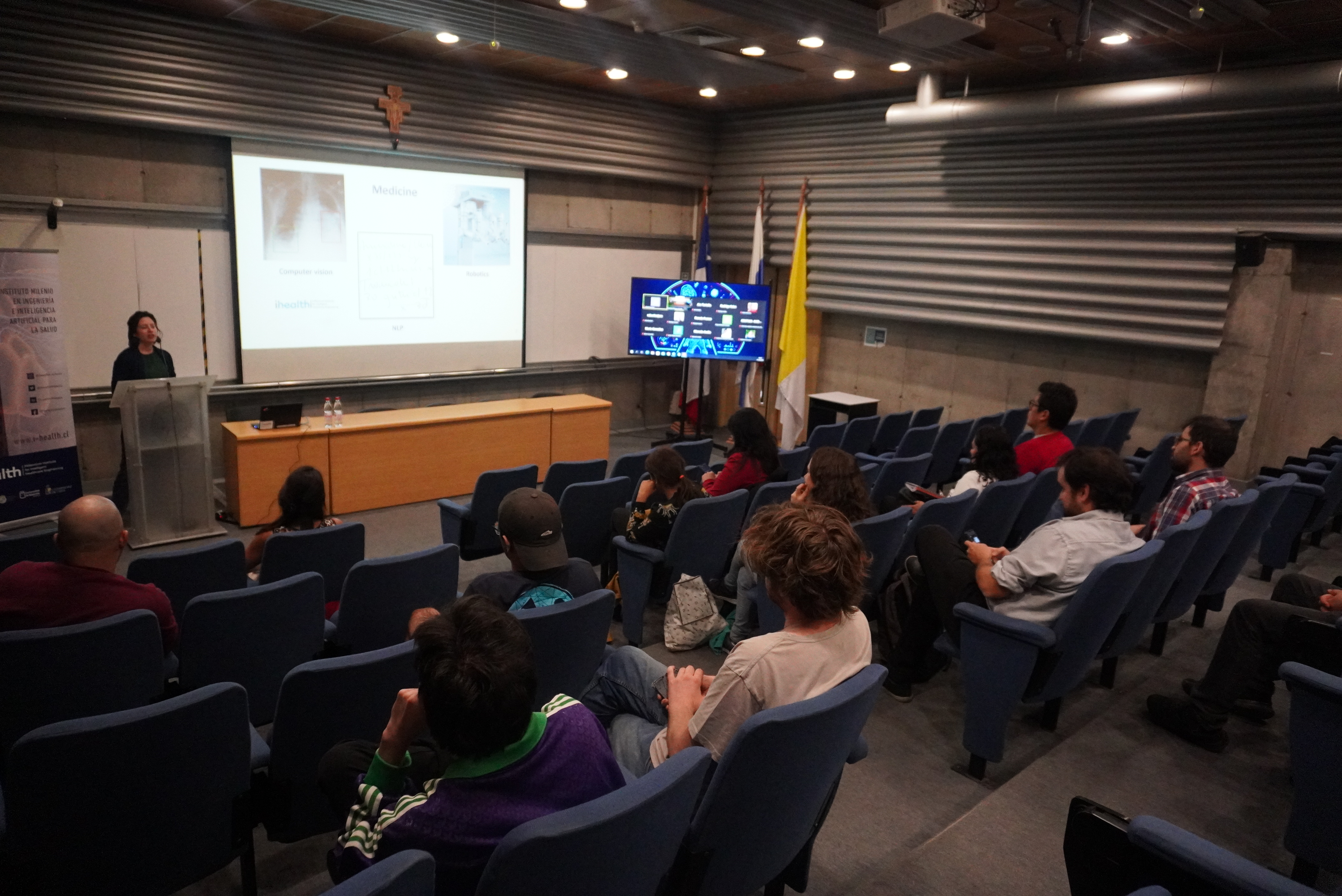
JOCELYN DUNSTAN, PHD
Title: "Machines detecting key information in clinical texts"
Bio: Jocelyn Dunstan is a physicist working in public health, especially interested in using machine learning and natural language processing to solve key problems. She is an academic at the Catholic University of Chile with a joint appointment between the Department of Computer Science and the Institute for Mathematical Computing. She is also a researcher at the Center for Mathematical Modeling (CMM), the Millenium Institute for Foundational Research on Data (IMFD) and the Institute for Intelligent Healthcare Engineering (iHealth). Her research focuses on clinical text mining and patient prioritization and today she’s going to talk about how machines can detect key information in clinical texts.
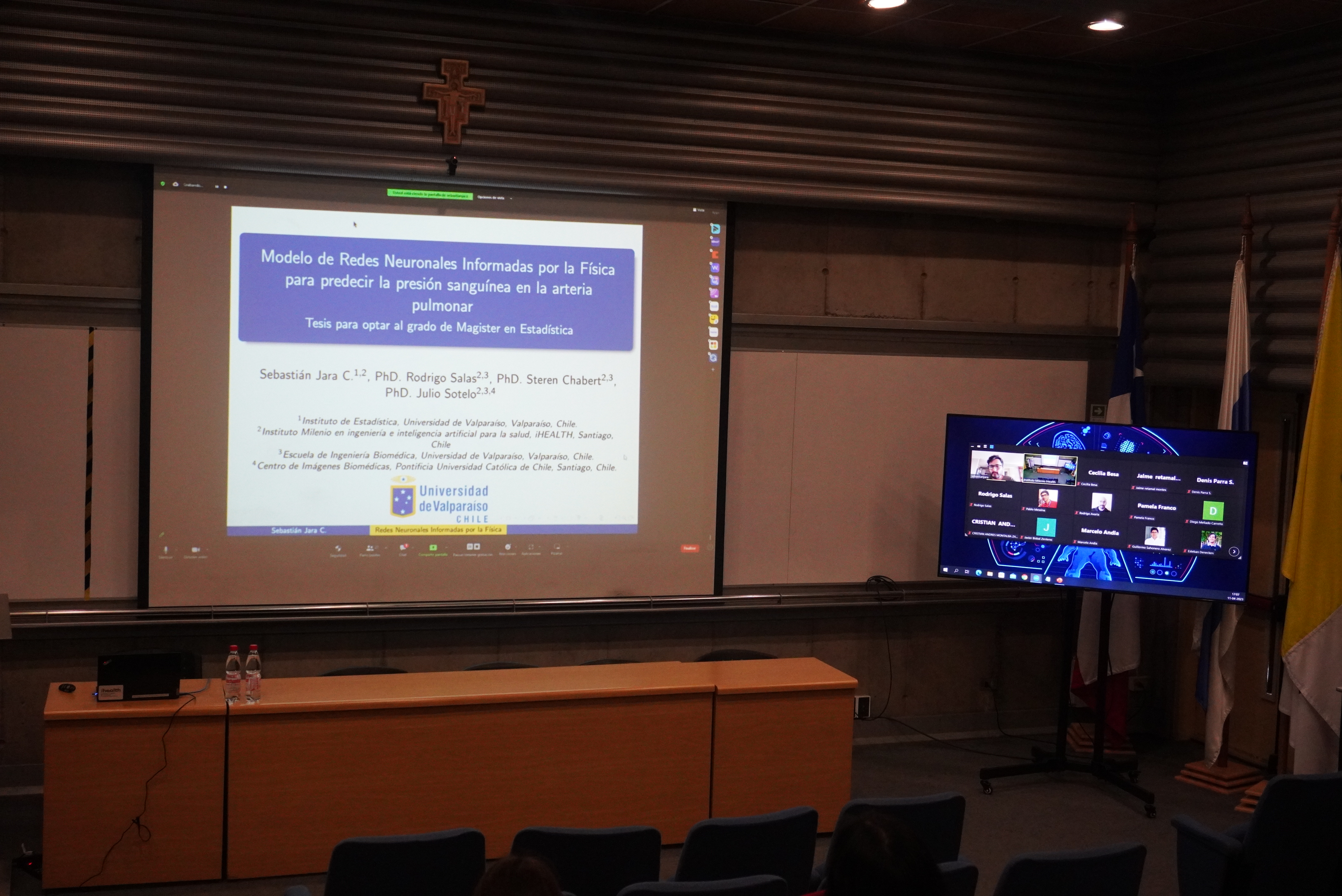
SEBASTIAN JARA
Title: "Physics-informed neuronal network model for predicting blood pressure in the pulmonary artery"
Abstract: Current non-invasive techniques for measuring pulmonary artery pressure resulting in expensive and very limited, we also offer scarce and noisy data. In some cases invasive tests, such as right heart catheterization, may be necessary. Although this is considered a safe test, like any invasive procedure, potential risks. This research proposes a model of Physics Informed Neural Networks (PINN) that allows estimating, in a non-invasive way and from a set of data limited, the pressure in the pulmonary artery. Using clinical velocity and area measurements on a few cross sections of the pulmonary artery bifurcation, and including a 1D equation model differentials deduced from the Navier-Stokes equations, a PINN model stands out which predicts pressure, blood velocity and sectional area variations, along the entire arterial bifurcation.
Bio: Sebastían is a mathematics teacher, with over eight years of experience in teaching mathematics, physics and statistics at university level. He has a masters in statistics from Universidad de Valparaíso and is currently enrolled at the PhD program in informatic engineering at Universidad Técnica Federico Santa María (UTFSM), where he is interested in the applications of neuronal networks to the numeric solution of differential equations. Today, he’s going to talk about the work he developed during his master’s thesis, under the guidance of Rodrigo Salas, Julio Soterlo and Steren Chabert.